



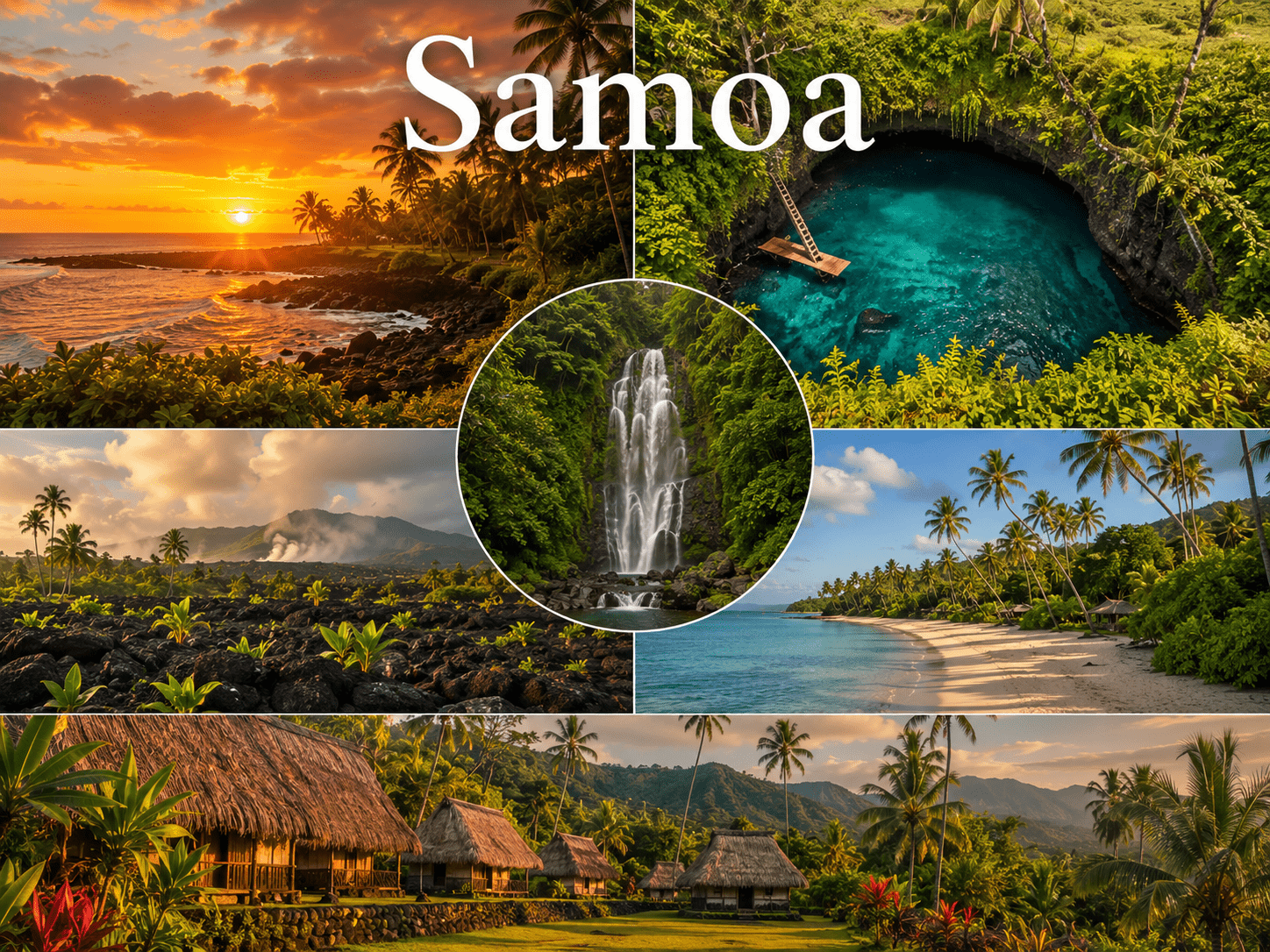
Introduction – The Heart of Polynesia
Samoa is a breathtaking Polynesian island nation located in the South Pacific Ocean. Known for its turquoise lagoons, volcanic landscapes, lush rainforests, and deeply rooted Polynesian traditions, it remains one of the most culturally authentic destinations in the Pacific.
Travelers visit Samoa for:
- Pristine tropical beaches
- Lava cliffs and volcanic terrain
- Waterfalls and jungle hikes
- Traditional Polynesian culture
- Coral reefs and snorkeling
- Peaceful island lifestyle
Unlike heavily commercialized destinations, this island nation preserves its traditional way of life, known as Fa’a Samoa (the Samoan way).
Historical Background of the Islands
Early Polynesian Settlement
The earliest people of Samoa were Polynesian navigators who:
- Traveled across the Pacific using canoes
- Settled islands thousands of years ago
- Developed strong clan-based societies
European Contact
In the 18th century, European explorers arrived, leading to:
- Trade relationships
- Missionary influence
- Cultural transformation
Colonial Period
The islands were influenced by:
- Germany
- New Zealand administration (later period)
Independence
Samoa became an independent nation in 1962, making it one of the first Pacific island countries to gain sovereignty.
Geography and Location
Where is Samoa Located?
Samoa lies in the central South Pacific Ocean, part of Polynesia.
Nearby regions include:
- American Samoa
- Tonga
- Fiji
Geographic Coordinates
Approximate location: 13°S, 172°W
Island Composition
The country consists mainly of:
- Upolu Island
- Savai’i Island
Climate of the Islands
Tropical Climate
Samoa experiences warm tropical weather throughout the year.
Seasonal Pattern
- Wet season: November to April
- Dry season: May to October
Best Time to Visit
Ideal months:
- June to September
Perfect for:
- Swimming
- Hiking
- Cultural festivals
Culture and Traditions
Fa’a Samoa (The Samoan Way)
Culture in Samoa is based on:
- Respect for elders
- Family-centered living
- Village leadership systems
Traditional Lifestyle
Life includes:
- Communal living
- Village councils (Matai system)
- Strong cultural identity
Music and Dance
Popular traditions include:
- Siva dance
- Drumming performances
- Choral singing
Religion and Society
Most people in Samoa follow Christianity, especially:
- Congregational Christian Church
- Catholic Church
- Methodist traditions
Religion plays a central role in:
- Daily life
- Festivals
- Community gatherings
Music, Arts, and Lifestyle
Traditional Music
Includes:
- Chanting
- Drum rhythms
- Storytelling songs
Modern Music Scene
Genres include:
- Pacific reggae
- Gospel music
- Island pop
Lifestyle
Life in Samoa is:
- Relaxed
- Community-driven
- Deeply cultural
Cuisine of Samoa
Traditional Foods
Food culture is based on:
- Coconut
- Root crops
- Fresh seafood
Popular Dishes
Palusami
Taro leaves cooked in coconut cream.
Oka
Raw fish marinated in citrus and coconut milk.
Roast Pork
Often prepared for celebrations.
Tropical Fruits
Bananas, papaya, and breadfruit are common.
Economy of Samoa
Mixed Economy
Samoa relies on:
- Tourism
- Agriculture
- Remittances from overseas communities
Currency
The official currency is the Samoan Tala (WST).
Key Industries
- Fishing
- Agriculture (coconut, taro)
- Tourism
- Handicrafts
Major Cities in Samoa
Apia – Capital City
Apia is the main urban center featuring:
- Government offices
- Markets
- Coastal harbor
Languages Spoken
The official languages in Samoa are:
- Samoan
- English
Tourist Attractions
To Sua Ocean Trench
A natural swimming hole surrounded by cliffs.
Lalomanu Beach
One of the most beautiful beaches in the Pacific.
Savai’i Lava Fields
Volcanic landscapes shaped by ancient eruptions.
Papapapaitai Falls
A dramatic rainforest waterfall.
International Memberships
Samoa is part of:
- United Nations (UN)
- Pacific Islands Forum
- Commonwealth of Nations
Official Sources
Volcanic Landscapes, Rainforests & Natural Wonders
Samoa is a land shaped by volcanic forces, lush rainforests, and powerful ocean ecosystems. The islands feel raw, green, and deeply connected to nature, making them one of the most scenic destinations in the South Pacific.
Visitors come for:
- Jungle trekking
- Volcano landscapes
- Hidden waterfalls
- Coral reef exploration
- Remote beaches and lagoons
Savai’i Volcanic Landscapes
The island of Savai’i in Samoa is dominated by ancient lava fields and volcanic terrain.
Highlights include:
- Black lava rock fields
- Ancient eruption sites
- Coastal lava cliffs
- Caves formed by molten rock
These landscapes show how powerful volcanic activity shaped the islands.
Rainforest Ecosystems
Upolu and Savai’i are covered with dense tropical rainforest featuring:
- Exotic birds
- Tropical plants
- Medicinal herbs
- Freshwater streams
Popular rainforest areas:
- O Le Pupu-Pu’e National Park
- Cross-island trekking routes
- Coastal jungle trails
Waterfalls of Samoa
Samoa is famous for dramatic waterfalls hidden in lush valleys.
Popular waterfalls include:
- Papapapaitai Falls
- Fuipisia Falls
- Afu Aau Waterfall
These offer:
- Swimming pools
- Cliff viewpoints
- Photography spots
Marine Life & Ocean Activities
Coral Reefs
The coastal waters of Samoa are rich in:
- Coral ecosystems
- Tropical fish
- Sea turtles
- Reef sharks (harmless species)
Snorkeling and Diving
Popular marine activities include:
- Lagoon snorkeling
- Coral reef diving
- Underwater photography
- Reef exploration tours
Ocean Swimming Spots
Famous natural swimming locations:
- Lalomanu Beach
- To Sua Ocean Trench
- Aganoa Black Sand Beach
Festivals and Cultural Celebrations
Independence Day Celebrations
A major event in Samoa featuring:
- Traditional dance performances
- Cultural parades
- Village celebrations
- Music festivals
Teuila Festival
One of the biggest cultural festivals including:
- Fire knife dancing
- Traditional tattoo displays
- Polynesian crafts
- Food fairs
Sunday Church Culture
Sunday in Samoa is highly sacred:
- Families attend church
- Communities gather
- Traditional clothing is worn
- Quiet atmosphere is observed
Adventure Tourism Activities
Hiking and Volcano Trails
Popular trekking experiences:
- Savai’i lava field hikes
- Rainforest mountain trails
- Coastal cliff walks
Water Adventures
Tourists enjoy:
- Kayaking in lagoons
- Paddleboarding
- Swimming in ocean trenches
- Boat tours between islands
Island Exploration
Travel in Samoa includes:
- Village visits
- Cultural tours
- Beach hopping
- Jungle exploration
Hidden Gems of Samoa
Saleaula Lava Fields
A dramatic volcanic site featuring:
- Frozen lava flows
- Ruined church remains
- Coastal black rock landscapes
Namua Island
A small island known for:
- Secluded beaches
- Turtle sightings
- Calm waters
Alofaaga Blowholes
Natural ocean blowholes where seawater shoots into the air through lava rock formations.
Falealupo Rainforest Canopy
A sacred forest area featuring:
- Suspension bridges
- Ancient trees
- Cultural legends
Transportation and Travel System
Air Travel
Faleolo International Airport connects Samoa to:
- New Zealand
- Australia
- Pacific island nations
Inter-Island Travel
Travel between Upolu and Savai’i is done via:
- Ferries
- Cargo boats
- Private charters
Local Transport
Common transport options include:
- Colorful buses
- Taxis
- Village transport vans
Road Travel
Roads in Samoa are scenic and coastal:
- Circle island routes
- Jungle highways
- Beachside drives
Cuisine and Food Culture
Traditional Pacific Diet
Food in Samoa includes:
- Coconut cream dishes
- Fresh fish
- Root vegetables
- Tropical fruits
Popular Foods
- Palusami
- Oka (raw fish salad)
- Roast pig
- Taro and breadfruit
Village Cooking Style
Meals are often:
- Cooked in earth ovens (umu)
- Shared communally
- Prepared for celebrations
Education and Development
Education System
Samoa focuses on:
- Primary education access
- Secondary schooling
- Overseas study opportunities
Economic Growth
Key development areas:
- Tourism expansion
- Fishing industry
- Renewable energy projects
Urban Development
Apia is growing with:
- Markets and shops
- Tourism infrastructure
- Government expansion
Daily Life and Culture
Village Life
Outside cities:
- Strong community systems
- Traditional leadership (matai system)
- Agriculture-based living
Urban Life in Apia
In Apia:
- Markets are lively
- Coastal roads are busy
- Cultural events are frequent
Cultural Values
Core values include:
- Respect for elders
- Family unity
- Hospitality
- Spiritual traditions
Government and Political Structure
Samoa is a parliamentary democracy with a unique blend of modern governance and traditional chiefly systems. It is one of the most culturally structured political systems in the Pacific.
Head of State
The Head of State is known as the O le Ao o le Malo, who serves a ceremonial role.
Head of Government
The Prime Minister leads national administration and policy-making.
Parliament
The legislative system includes:
- Legislative Assembly
- Elected representatives from constituencies
Traditional Governance
A key feature is the matai system, where chiefs play an important role in:
- Village leadership
- Decision-making
- Cultural governance
Famous Landmarks in Samoa
To Sua Ocean Trench
One of the most iconic attractions featuring:
- Natural swimming hole
- Cliff-side ladder access
- Turquoise lagoon water
Lalomanu Beach
Known for:
- White sandy coastline
- Crystal-clear water
- Beach fale accommodations
Saleaula Lava Fields
A volcanic landscape with:
- Ancient lava flows
- Church ruins buried in lava
- Coastal black rock formations
Papapapaitai Falls
A dramatic rainforest waterfall dropping into a deep gorge.
Alofaaga Blowholes
Natural ocean blowholes where seawater shoots through volcanic rock formations.
Unique and Interesting Facts About Samoa
Date Line Shift
The country famously shifted the International Date Line in 2011 to align better with trade partners.
Fa’a Samoa Lifestyle
Traditional culture strongly influences daily life and governance.
Tattoo Tradition
Traditional tattooing (tatau) is an important cultural practice.
Dual Island Nation
The country mainly consists of Upolu and Savai’i islands.
Strong Diaspora
Many citizens live in New Zealand and Australia, sending remittances home.
Economy and Business Growth
Mixed Economy Structure
Samoa relies on:
- Tourism
- Agriculture
- Remittances
- Fishing industry
Currency
The official currency is the Samoan Tala (WST).
Key Industries
- Coconut and taro farming
- Tourism and eco-tourism
- Fishing and marine trade
- Handicrafts and cultural goods
Foreign Investment
Growth areas include:
- Hotel development
- Renewable energy
- Tourism infrastructure
Major Cities in Samoa
Apia – Capital City
Apia is the main urban hub featuring:
- Government offices
- Harbor and port
- Markets and cultural centers
Salelologa
Main town on Savai’i island with ferry connections and local commerce.
Transportation and Infrastructure
Air Travel
Faleolo International Airport connects Samoa to:
- New Zealand
- Australia
- Pacific islands
Ferry System
Regular ferries connect:
- Upolu Island
- Savai’i Island
Local Transport
Includes:
- Colorful open buses
- Taxis
- Village transport vans
Road Network
Travel is scenic with:
- Coastal highways
- Jungle routes
- Island loop roads
Travel Itinerary (7 Days in Samoa)
Day 1–2: Apia
Markets, museums, and waterfront exploration.
Day 3: To Sua Ocean Trench
Swimming and cliff-side adventure.
Day 4: Lalomanu Beach
Relaxation and snorkeling.
Day 5: Savai’i Island
Lava fields and waterfalls.
Day 6: Alofaaga Blowholes
Natural volcanic ocean spectacle.
Day 7: Rainforest Trek
Explore national parks and cultural villages.
Best Time to Visit
Dry Season (Best Time)
May to October is ideal for:
- Beach travel
- Hiking
- Cultural festivals
Wet Season
November to April brings:
- Tropical greenery
- Waterfalls at full flow
- Occasional cyclones
Challenges and Future Development
Climate Vulnerability
Samoa faces:
- Cyclones
- Sea level rise
- Coastal erosion
Economic Diversification
Focus areas include:
- Tourism expansion
- Renewable energy
- Fisheries development
Infrastructure Development
Improvements include:
- Road upgrades
- Port modernization
- Tourism facilities
Final Summary
Samoa is a deeply cultural and naturally stunning Pacific island nation where volcanic landscapes, lush rainforests, and turquoise lagoons meet ancient Polynesian traditions. From the breathtaking To Sua Ocean Trench to the lava fields of Savai’i, every part of the country reflects raw natural beauty and cultural authenticity.
Its strong traditions, welcoming villages, and peaceful island lifestyle make it one of the most unique travel destinations in the Pacific Ocean.
Key Facts Table
| Category | Information |
|---|---|
| Official Name | Independent State of Samoa |
| Capital City | Apia |
| Region | Polynesia (Oceania) |
| Language | Samoan, English |
| Currency | Samoan Tala (WST) |
| Population | ~220,000 |
| Famous Landmark | To Sua Ocean Trench |
| Climate | Tropical |
| Major Industries | Tourism, Agriculture |
| Famous Cities | Apia, Salelologa |
| Tourism Type | Eco-tourism, culture, beaches |
| UN Membership | Yes |
| Special Feature | Strong traditional matai system |
FAQ Section
What is Samoa famous for?
Samoa is famous for beaches, volcanic landscapes, and Polynesian culture.
What is the capital of Samoa?
The capital is Apia.
Is Samoa good for tourism?
Yes, it is ideal for nature and cultural tourism.
What language is spoken in Samoa?
Samoan and English are official languages.
What is the best time to visit Samoa?
May to October is the best season.

