



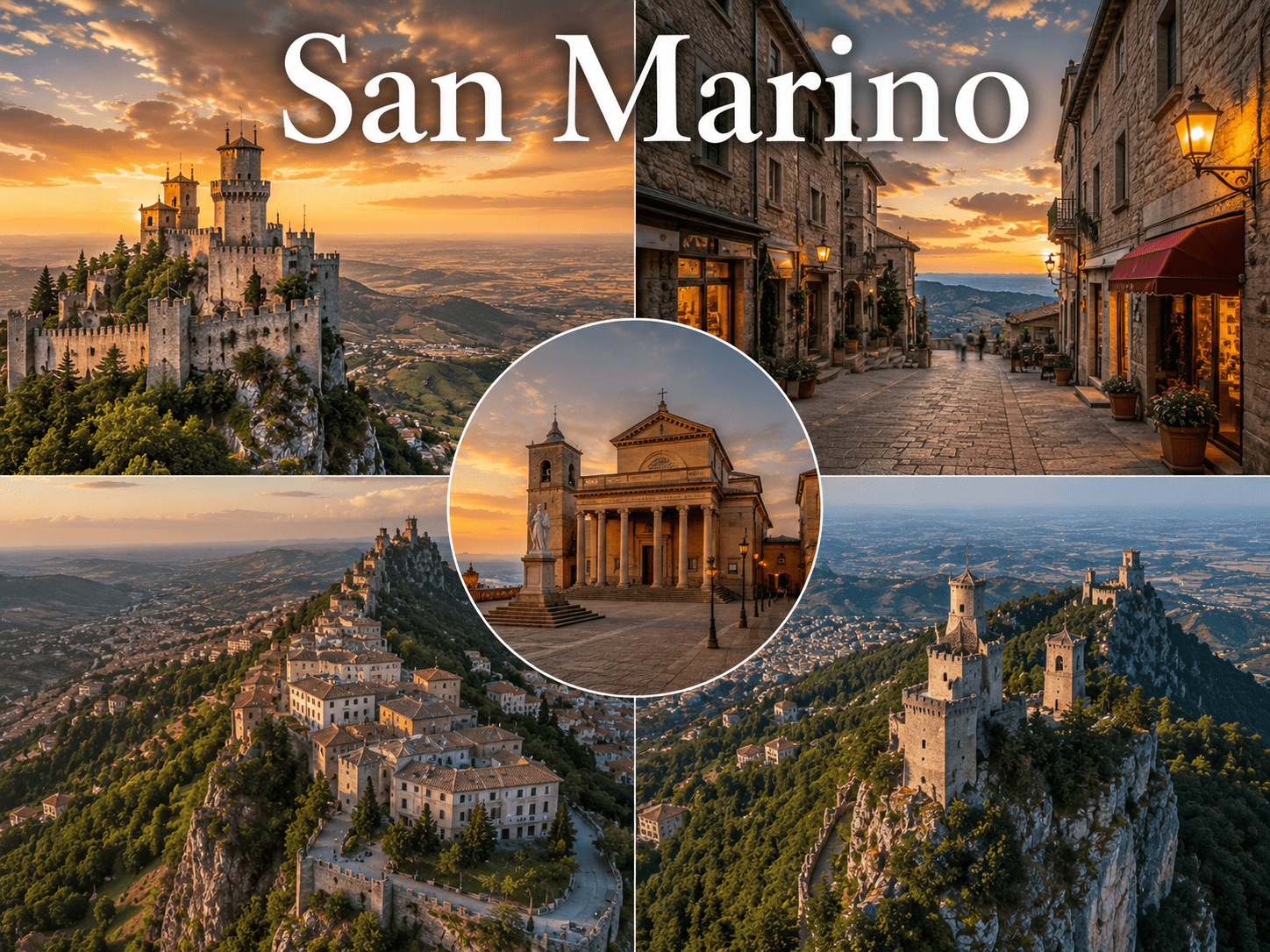
Introduction – The Ancient Mountain Republic
San Marino is one of the world’s oldest republics and smallest countries, located entirely within Italy. Perched on Mount Titano, it offers breathtaking views, medieval architecture, and a deeply preserved historical identity.
Despite its tiny size, San Marino attracts millions of visitors every year who come to explore:
- Ancient stone fortresses
- Mountain viewpoints
- Medieval streets
- Tax-free shopping
- UNESCO heritage sites
It is often called the “Oldest Republic in the World,” making it a unique destination in Europe.
Historical Background of the Republic
Origins of the State
The history of San Marino begins in the year 301 AD when Saint Marinus, a Christian stonemason, founded a small community on Mount Titano.
Key early developments:
- Formation of a monastic settlement
- Development of independent governance
- Resistance to external rulers
Medieval Independence
During the Middle Ages, the republic:
- Maintained independence from feudal states
- Established democratic councils
- Built defensive towers
Modern Era
Despite European conflicts, San Marino preserved sovereignty through:
- Diplomatic neutrality
- Strategic alliances
- Strong local governance
Geography and Location
Where is San Marino Located?
San Marino is a landlocked microstate surrounded entirely by Italy in Southern Europe.
Nearby regions include:
- Emilia-Romagna (Italy)
- Marche (Italy)
- Adriatic coastal region
Geographic Features
The country is built on:
- Mount Titano
- Rocky hills
- Limestone cliffs
- Elevated terrain
Climate of the Republic
Mediterranean Climate
San Marino experiences a mild Mediterranean climate.
Seasonal Overview
- Warm summers
- Cool winters
- Moderate rainfall
Best Time to Visit
Ideal months:
- April to October
Perfect for:
- Walking tours
- Castle exploration
- Scenic photography
Culture and Traditions
Italian Influence
Culture in San Marino is heavily influenced by Italian traditions:
- Language similarity
- Food culture
- Architecture style
National Identity
Despite influences, the republic maintains:
- Strong independence pride
- Historic governance traditions
- Unique civic identity
Festivals
Popular cultural events include:
- Medieval Days Festival
- Republic Day celebrations
- Historical reenactments
Religion and Society
Most people in San Marino follow Christianity, mainly Roman Catholicism.
Religion influences:
- Festivals
- Architecture
- Cultural traditions
Art, Music, and Lifestyle
Traditional Art
The country is known for:
- Medieval architecture
- Stone carvings
- Historical museums
Modern Lifestyle
Life in San Marino is:
- Peaceful
- Touristic
- Highly organized
Music and Events
Includes:
- Classical concerts
- Folk festivals
- National celebrations
Cuisine of San Marino
Italian-Inspired Food
Food culture is similar to Italian cuisine, including:
- Pasta dishes
- Meat-based recipes
- Cheese and wine culture
Popular Dishes
Torta Tre Monti
A famous layered chocolate wafer dessert.
Nidi di Rondine
Pasta baked with cheese and ham.
Faggioli con le Cotiche
Traditional bean and pork dish.
Economy of the Republic
Tourism and Services Economy
San Marino depends on:
- Tourism
- Banking services
- Small manufacturing
- Retail trade
Currency
Uses the Euro (EUR), despite not being part of the EU.
Key Industries
- Tourism shopping
- Stamp and coin production
- Banking services
- Craft industries
Major City in San Marino
City of San Marino
City of San Marino is the capital and historic center featuring:
- Ancient fortresses
- Government buildings
- Panoramic viewpoints
Languages Spoken
The official language in San Marino is Italian.
Tourist Attractions
Guaita Tower
The oldest fortress on Mount Titano.
Cesta Tower
A medieval tower housing a museum of weapons.
Montale Tower
The third defensive tower with panoramic views.
Basilica di San Marino
A neoclassical church dedicated to Saint Marinus.
International Memberships
San Marino is part of:
- United Nations (UN)
- Council of Europe
- World Heritage cultural listings
Official Sources
Medieval Landscapes, Castles & Mountain Views
San Marino is best known for its dramatic hilltop scenery, medieval fortifications, and sweeping views over the Italian countryside. Built on Mount Titano, the entire country feels like an open-air historical museum.
Visitors come for:
- Castle exploration
- Panoramic viewpoints
- Medieval walking streets
- Historic museums
- Scenic photography
The Three Towers of Mount Titano
The iconic defensive system of San Marino includes three medieval towers:
Guaita Tower
The oldest and most famous fortress:
- Built in the 11th century
- Served as a prison and defense tower
- Offers panoramic valley views
Cesta Tower
Located at the highest peak:
- Houses a historical weapons museum
- Medieval architecture preservation
- Scenic hiking paths
Montale Tower
The smallest tower:
- Less accessible
- Symbolic defensive structure
- Stunning cliff-side views
Historic Old Town Streets
The capital area of San Marino features:
- Narrow cobblestone alleys
- Stone houses and archways
- Traditional shops and cafes
- Medieval atmosphere
Walking through the old town feels like stepping back in time.
Museums and Cultural Heritage
State Museum
Showcases:
- Ancient artifacts
- Renaissance art
- Historical documents
Museum of Curiosities
A unique attraction featuring:
- Strange inventions
- Historical oddities
- Unusual cultural items
Torture Museum
A medieval history museum displaying:
- Historical instruments
- European justice systems
- Educational exhibits
Festivals and Cultural Events
Medieval Days Festival
One of the most popular events in San Marino featuring:
- Costumed reenactments
- Knight tournaments
- Traditional music
- Street performances
Republic Day Celebration
Celebrated with:
- Military parades
- Flag ceremonies
- Cultural exhibitions
Christmas in the Old Town
The winter season brings:
- Christmas markets
- Light decorations
- Festive concerts
Adventure & Tourism Activities
Walking Tours
Visitors explore:
- Fortress routes
- Mountain trails
- Historic districts
Photography Tourism
San Marino is a hotspot for:
- Sunrise views over Italy
- Sunset castle photography
- Drone landscape shots
Cable Car Experience
A scenic cable car connects:
- Lower town areas
- Mount Titano peak
It offers:
- Panoramic views
- Easy mountain access
Shopping & Tax-Free Economy
Duty-Free Shopping
One of the biggest attractions in San Marino is tax-free shopping:
- Electronics
- Perfumes
- Luxury goods
- Souvenirs
Local Markets
Visitors can explore:
- Handmade crafts
- Coins and stamps
- Traditional souvenirs
Transportation and Travel System
Access from Italy
San Marino is accessible only through Italy via:
- Road connections
- Bus services from Rimini
Internal Transport
Within the country:
- Walking is the main mode
- Cable cars connect elevations
- Shuttle services for tourists
Nearest Airport
The closest airport is in Rimini (Italy), connecting international travelers to the republic.
Cuisine and Dining Culture
Traditional Food Style
Cuisine in San Marino closely follows Italian culinary traditions with local variations.
Popular Foods
- Fresh pasta dishes
- Roasted meats
- Cheese platters
- Local wines
Sweet Specialties
- Torta Tre Monti (layered wafer cake)
- Honey-based desserts
- Almond pastries
Education and Modern Development
Education System
San Marino offers:
- Public schooling
- Vocational training
- Cultural education programs
Economic Stability
Key strengths include:
- Tourism revenue
- Banking services
- Retail economy
Urban Planning
The country focuses on:
- Historic preservation
- Sustainable tourism
- Controlled development
Daily Life and Culture
Lifestyle in the Capital
In City of San Marino:
- Tourism drives economy
- Shops and cafes dominate
- Quiet evenings outside peak season
Rural Mountain Life
Outside the historic center:
- Forested landscapes
- Small communities
- Agricultural traditions
Cultural Values
Core values include:
- Independence pride
- Historical preservation
- Strong community identity
Government and Political Structure
San Marino is one of the world’s oldest republics and operates a highly unique political system based on shared leadership and historical traditions.
Head of State
Instead of a single president, the country has two Captains Regent, who serve jointly for six-month terms.
Head of Government
Day-to-day administration is handled by the Congress of State.
Parliament
The legislative body is called the Grand and General Council, responsible for:
- Law-making
- National policies
- Budget approval
Political Stability
San Marino is known for:
- Peaceful governance
- Strong democratic traditions
- Long-standing independence
Famous Landmarks in San Marino
Guaita Tower
The most famous fortress:
- Built in the 11th century
- Defensive stronghold
- Iconic national symbol
Cesta Tower
Located at the highest point of Mount Titano:
- Medieval weapons museum
- Panoramic viewpoints
- Historic architecture
Montale Tower
A smaller but symbolic tower:
- Built for defense
- Cliff-edge location
- Limited access
Basilica di San Marino
A neoclassical church dedicated to Saint Marinus:
- Religious center
- Cultural heritage site
- Important national landmark
Unique and Interesting Facts About San Marino
Oldest Republic in the World
It claims continuous independence since 301 AD.
Entire Country on a Mountain
The nation is built entirely on Mount Titano.
No Airport or Train Station
Access is only via Italy.
Euro Usage Without EU Membership
It uses the Euro officially despite not being part of the European Union.
Tax-Free Shopping Destination
It is famous for duty-free shopping in Europe.
Economy and Business Growth
Tourism-Based Economy
San Marino relies heavily on:
- Tourism
- Retail trade
- Banking
- Stamp and coin production
Currency System
The Euro (EUR) is used officially.
Key Industries
- Tourism and hospitality
- Banking services
- Manufacturing (ceramics, textiles)
- Collectibles (coins, stamps)
Foreign Investment
The country attracts investment through:
- Tourism development
- Luxury retail
- Financial services
Major City in San Marino
City of San Marino
City of San Marino is the historic capital featuring:
- Ancient fortresses
- Government institutions
- Tourist viewpoints
- Museums and cultural sites
Transportation and Infrastructure
Access Routes
San Marino is accessible only through Italy, mainly via:
- Road from Rimini
- Bus services
Local Transport
Within the country:
- Walking is primary
- Cable cars connect hills
- Tourist shuttles operate seasonally
Nearest Airport
Rimini Airport (Italy) serves international travelers.
Travel Itinerary (3–5 Days in San Marino)
Day 1: Old Town Exploration
Walk cobblestone streets and visit museums.
Day 2: Three Towers Tour
Explore Guaita, Cesta, and Montale.
Day 3: Cable Car Ride & Views
Enjoy panoramic landscapes.
Day 4: Shopping & Markets
Duty-free shopping experience.
Day 5: Cultural Relaxation
Visit Basilica and local cafes.
Best Time to Visit
Spring and Summer (Best Time)
April to September offers:
- Warm weather
- Festivals
- Clear views
Winter Season
November to February brings:
- Quiet tourism
- Cooler temperatures
- Festive markets
Challenges and Future Development
Geographic Limitations
San Marino faces:
- Small land area
- Limited expansion space
Economic Diversification
Focus areas include:
- Digital services
- Tourism innovation
- Financial modernization
Sustainability Efforts
The country is improving:
- Eco-tourism
- Heritage preservation
- Energy efficiency
Final Summary
San Marino is a timeless European microstate where medieval towers, ancient governance, and breathtaking mountain views create a unique travel experience. From the legendary Guaita fortress to the charming cobblestone streets of the capital, it offers a rare combination of history, culture, and scenic beauty.
Despite its small size, it stands as one of the world’s most fascinating republics, preserving independence for over 1,700 years while welcoming millions of visitors each year.
Key Facts Table
| Category | Information |
|---|---|
| Official Name | Republic of San Marino |
| Capital City | City of San Marino |
| Region | Southern Europe |
| Language | Italian |
| Currency | Euro (EUR) |
| Population | ~34,000 |
| Famous Landmark | Guaita Tower |
| Climate | Mediterranean |
| Major Industries | Tourism, Banking |
| Tourism Type | Heritage, shopping, culture |
| UN Membership | Yes |
| Special Feature | Oldest republic in the world |
FAQ Section
What is San Marino famous for?
San Marino is famous for medieval towers, history, and tax-free shopping.
What is the capital city?
The capital is City of San Marino.
Is San Marino worth visiting?
Yes, it is one of Europe’s most unique microstates.
What language is spoken?
Italian is the official language.
How big is San Marino?
It is one of the smallest countries in the world.

