



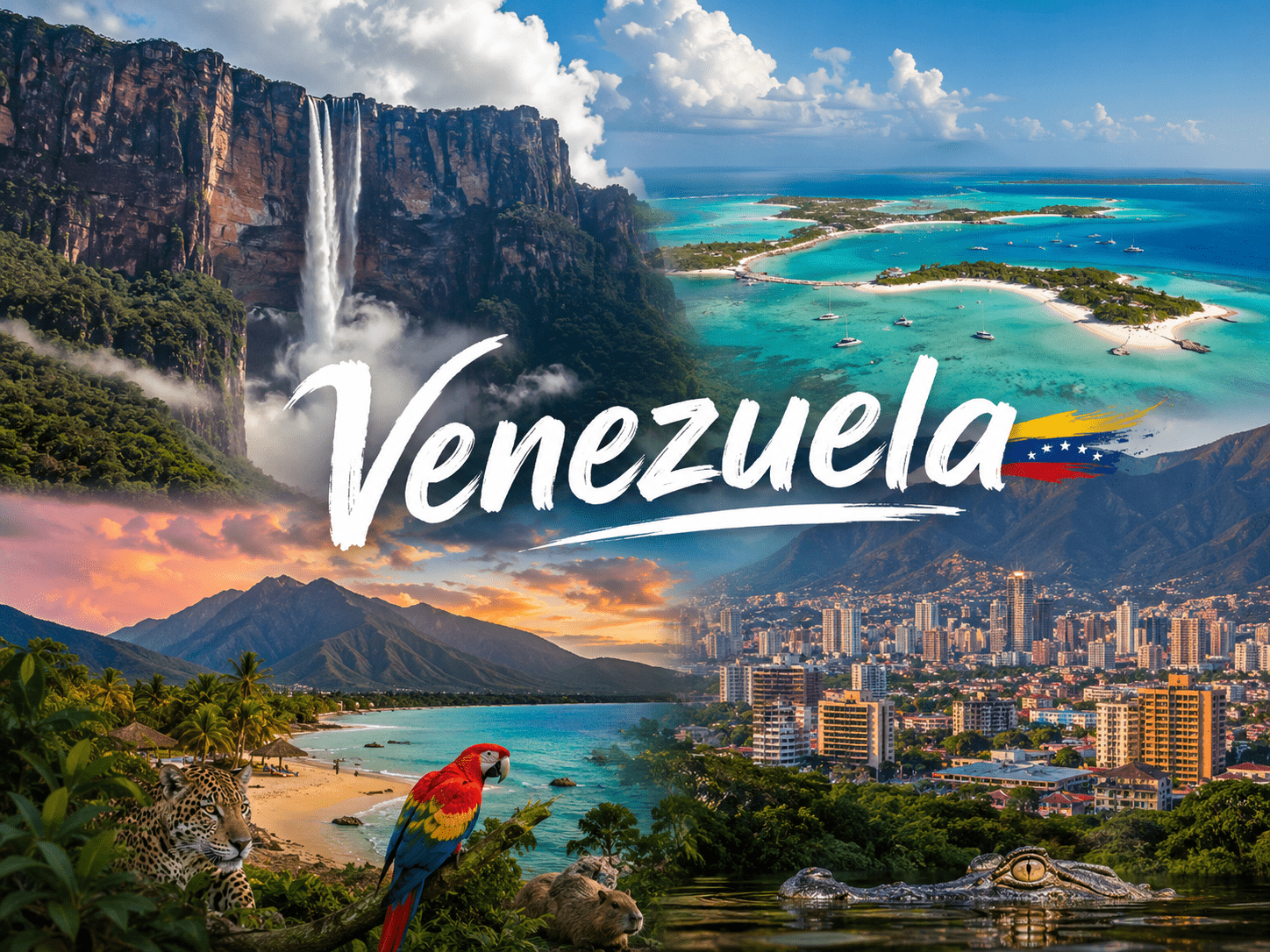
Introduction to Venezuela
Venezuela is a geographically diverse South American country located on the northern edge of the continent, bordered by the Caribbean Sea. Known for its dramatic landscapes, tropical beaches, mountains, rainforests, and savannas, Venezuela is one of the most naturally rich destinations in the world.
Travelers visit Venezuela for:
- Angel Falls and Canaima National Park
- Caribbean islands and beaches
- Andes mountain landscapes
- Amazon rainforest regions
- Cultural and historical cities
- Wildlife and eco-tourism
Despite challenges in recent years, Venezuela remains a country of extraordinary natural beauty and cultural depth.
History of Venezuela
Ancient Civilizations
Before European arrival, Venezuela was inhabited by Indigenous groups such as:
- Carib peoples
- Arawak communities
- Timoto-Cuica civilizations
These groups lived through:
- Agriculture and fishing
- Tribal governance systems
- Trade between regions
- Rich oral traditions
Colonial Period
During Spanish colonization, Venezuela became part of the Spanish Empire.
Key developments included:
- Introduction of European governance
- Catholic missions and churches
- Plantation economy
- Cultural blending
Independence Movement
Venezuela gained independence in 1821 under the leadership of Simón Bolívar, one of Latin America’s most important revolutionary figures.
Modern Era
Modern Venezuela experienced:
- Oil-driven economic growth in the 20th century
- Rapid urbanization
- Political and economic instability in recent decades
Geography of Venezuela
Location
Venezuela is located in northern South America and shares borders with:
- Colombia
- Brazil
- Guyana
- Caribbean Sea
Natural Regions
The geography of Venezuela includes:
1. Andes Mountains
High-altitude regions with cool climates and farming valleys.
2. Orinoco Plains (Llanos)
Vast grasslands used for cattle ranching.
3. Guiana Highlands
Ancient rock formations and table-top mountains (tepuis).
4. Caribbean Coast
Beautiful beaches and islands.
Climate
Venezuela has a tropical climate with:
- Hot coastal areas
- Cooler mountain regions
- Rainforest humidity
- Seasonal rainfall patterns
Culture of Venezuela
Cultural Identity
Culture in Venezuela is a mix of Indigenous, Spanish, and African influences.
Key cultural elements include:
- Music and dance traditions
- Carnival celebrations
- Strong family values
- Folk art and crafts
Music and Dance
Traditional music in Venezuela includes:
- Joropo (national dance)
- Salsa and merengue influences
- Afro-Caribbean rhythms
Languages
The official language of Venezuela is Spanish, with Indigenous languages also present.
Religion
Most people in Venezuela follow Christianity, mainly Roman Catholicism.
Cuisine of Venezuela
Food Culture
Food in Venezuela is diverse and influenced by Caribbean and Latin traditions.
Common ingredients:
- Corn
- Beans
- Rice
- Beef and chicken
- Plantains
Famous Foods
Arepas
A staple food in Venezuela, made from corn dough filled with meat, cheese, or vegetables.
Pabellón Criollo
A national dish featuring rice, beans, shredded beef, and plantains.
Empanadas
Popular fried snacks found across Venezuela.
Major Cities in Venezuela
Caracas
Caracas is the capital and largest city of Venezuela.
Maracaibo
Maracaibo is known for oil industry and Lake Maracaibo.
Valencia
Valencia is an industrial and commercial center.
Barquisimeto
Barquisimeto is known for culture and music.
Tourism Highlights
Why Visit Venezuela?
Tourism in Venezuela is centered around nature and adventure:
- Waterfalls and mountains
- Caribbean islands
- Rainforest exploration
- Wildlife watching
- Cultural experiences
Famous Attraction
Angel Falls
Angel Falls is the world’s highest waterfall and a major attraction in Venezuela.
Canaima National Park
Canaima National Park is a UNESCO-listed natural wonder in Venezuela.
Internal Links
- Read also: Colombia travel guide
- Explore more: Brazil tourism guide
External Sources
https://www.visitvenezuela.com
https://www.britannica.com/place/Venezuela
https://www.worldbank.org/en/country/venezuela
Economy of Venezuela
The economy of Venezuela is heavily influenced by natural resources, especially oil and gas. The country holds some of the largest proven oil reserves in the world, making petroleum the backbone of national income for Venezuela.
Key sectors include:
- Oil and petroleum exports
- Natural gas production
- Mining (gold, bauxite, iron ore)
- Agriculture and livestock
- Tourism (developing sector)
Despite resource wealth, Venezuela has faced economic challenges in recent years, including inflation and currency instability.
Agriculture in Venezuela
Agriculture remains important for rural areas of Venezuela, especially in plains and fertile valleys.
Main agricultural products:
- Coffee and cocoa
- Corn and rice
- Sugarcane
- Bananas and plantains
- Beef and dairy products
Cocoa from Venezuela is considered among the finest in the world.
Currency of Venezuela
The official currency of Venezuela is the Venezuelan Bolívar (VES).
Currency Details:
- Currency: Bolívar
- Code: VES
- Central Bank: Banco Central de Venezuela
In many parts of Venezuela, US dollars are also widely used in daily transactions.
Transportation in Venezuela
Transport System in Venezuela
Transportation in Venezuela includes a mix of public and private systems, though infrastructure varies by region.
Common transport options:
- Metro systems (Caracas Metro)
- Public buses (carros por puesto)
- Domestic flights
- Taxis and shared transport
- Intercity coaches
Airports in Venezuela
Simón Bolívar International Airport
Simón Bolívar International Airport is the main international gateway to Venezuela, serving Caracas and surrounding regions.
Caracas Metro
The Caracas Metro is one of the most important urban transport systems in Venezuela, connecting major districts of the capital.
Nature and Wildlife in Venezuela
Biodiversity of Venezuela
Venezuela is one of the most biodiverse countries in the world, with rainforests, savannas, mountains, and coastal ecosystems.
Wildlife includes:
- Jaguars and ocelots
- Capybaras
- Pink river dolphins
- Exotic bird species
- Monkeys and sloths
Canaima National Park
Canaima National Park is a UNESCO World Heritage Site and one of the most important natural areas in Venezuela.
Angel Falls
Angel Falls is the world’s highest uninterrupted waterfall and the most iconic natural attraction in Venezuela.
Los Roques Archipelago
Los Roques Archipelago is a Caribbean island paradise known for crystal-clear waters and coral reefs.
Beaches and Caribbean Islands
Caribbean Coastline
The Caribbean coast of Venezuela is famous for white sand beaches, turquoise waters, and tropical islands.
Popular beach activities:
- Snorkeling and diving
- Sailing and fishing
- Island hopping
- Beach relaxation
Famous Beach Destinations
Margarita Island
Margarita Island is one of the most visited beach destinations in Venezuela.
Morrocoy National Park
Morrocoy National Park offers coral reefs, mangroves, and scenic beaches.
Festivals and Culture
Cultural Traditions in Venezuela
Culture in Venezuela blends Indigenous, Spanish, and African influences.
Key traditions include:
- Carnival celebrations
- Religious festivals
- Folk dances
- Music performances
- Street parades
Carnival of Venezuela
Carnival is one of the most vibrant celebrations in Venezuela, featuring costumes, dancing, and music.
Music in Venezuela
Traditional music styles include:
- Joropo (national music style)
- Salsa and merengue
- Afro-Caribbean rhythms
Tourism Tips for Venezuela
Best Time to Visit Venezuela
The best time to visit Venezuela is during the dry season.
Recommended months:
- December to April (best weather)
Travel Tips
Travelers visiting Venezuela should:
- Check safety advisories before travel
- Use guided tours for remote areas
- Carry both cash and digital payment options
- Respect local customs and culture
Safety Awareness
Like many large countries, Venezuela has regions that are safer than others, so planning routes and using trusted guides is important.
Interesting Facts About Venezuela
- Venezuela has the world’s highest waterfall (Angel Falls)
- It has huge oil reserves
- The country has Caribbean and Amazon regions
- It is one of the most biodiverse countries on Earth
- “Arepa” is the national staple food
- Simon Bolívar is a national hero
Food and Culinary Culture in Venezuela
The cuisine of Venezuela is a flavorful mix of Indigenous, Spanish, and African influences. Food in Venezuela is deeply tied to family life, street culture, and regional traditions.
Daily meals in Venezuela often include:
- Corn-based dishes
- Beans and rice combinations
- Fresh tropical fruits
- Beef, chicken, and pork
- Fried and baked snacks
Food culture in Venezuela is simple, hearty, and designed for sharing.
Famous Foods in Venezuela
Arepas
Arepas are the most iconic food in Venezuela, made from ground corn dough and filled with cheese, meat, avocado, or beans.
Pabellón Criollo
Pabellón Criollo is the national dish of Venezuela, consisting of rice, black beans, shredded beef, and fried plantains.
Empanadas
Empanadas are popular street snacks in Venezuela, filled with meat, cheese, or chicken and deep-fried until crispy.
Hallacas
Hallacas are traditional festive foods in Venezuela, especially during Christmas celebrations.
Lifestyle and Daily Life in Venezuela
Urban and Rural Lifestyle
Life in Venezuela varies greatly between cities and rural regions.
Urban areas feature:
- Apartment living in cities like Caracas
- Busy markets and transportation systems
- Modern shopping centers in some regions
Rural areas of Venezuela include:
- Farming communities
- Small villages
- Traditional lifestyles close to nature
Culture and Social Life
Social life in Venezuela is centered around:
- Family gatherings
- Music and dance events
- Street festivals
- Community celebrations
- Religious traditions
Hospitality is an important value across Venezuela.
Cultural Institutions
Teresa Carreño Cultural Complex
Teresa Carreño Cultural Complex is one of the most important cultural centers in Venezuela, hosting concerts, ballet, and theater performances.
Museums and Heritage
National Art Gallery
National Art Gallery preserves important artworks and cultural history of Venezuela.
Sports and Recreation in Venezuela
Popular Sports
Sports play a major role in daily life in Venezuela.
Popular sports include:
- Baseball (most popular sport)
- Football (soccer)
- Boxing
- Basketball
- Cycling
Baseball Culture
Baseball is the most beloved sport in Venezuela, producing many international players who compete in Major League Baseball (MLB).
Outdoor Activities
Nature-based recreation in Venezuela includes:
- Hiking in the Andes
- Exploring rainforests
- Beach sports on Caribbean coast
- Wildlife watching in national parks
- River rafting and eco-adventures
Travel Safety in Venezuela
Safety Tips for Travelers
Travel safety in Venezuela requires careful planning and awareness.
Important tips:
- Travel with guided tours in remote areas
- Avoid unsafe neighborhoods in cities
- Use registered transport services
- Stay informed about local conditions
- Keep valuables secure
Health and Travel Advice
Visitors to Venezuela should:
- Drink bottled water in some regions
- Use mosquito protection in tropical areas
- Carry essential medicines
- Have travel insurance
Why Venezuela Is Unique
Natural and Cultural Identity
The uniqueness of Venezuela comes from its incredible diversity:
- Angel Falls, the world’s tallest waterfall
- Caribbean beaches and islands
- Amazon rainforest regions
- Andes mountain ranges
- Rich Indigenous heritage
- Vibrant music and dance culture
Few countries combine so many ecosystems and cultures in one destination like Venezuela.
Final Summary
Venezuela is a breathtaking South American destination filled with natural wonders, cultural richness, and dramatic landscapes. From the towering Angel Falls to the Caribbean islands of Los Roques and Margarita, Venezuela offers unmatched natural beauty.
Visitors to Venezuela can experience:
- World-famous waterfalls and national parks
- Caribbean beaches and island adventures
- Rich food culture including arepas and pabellón criollo
- Vibrant music, dance, and festivals
- Andes mountains and Amazon rainforest regions
- Deep cultural and historical heritage
Despite challenges, Venezuela remains one of the most naturally diverse and visually stunning countries in the world.
Key Facts About Venezuela
| Category | Information |
|---|---|
| Country Name | Venezuela |
| Capital | Caracas |
| Region | South America |
| Currency | Bolívar (VES) |
| Language | Spanish |
| Famous For | Angel Falls & Caribbean coast |
| Major Attraction | Canaima National Park |
| Popular Sport | Baseball |
| Geography | Rainforest, mountains, beaches |
| Best Time to Visit | December to April |

