



Introduction
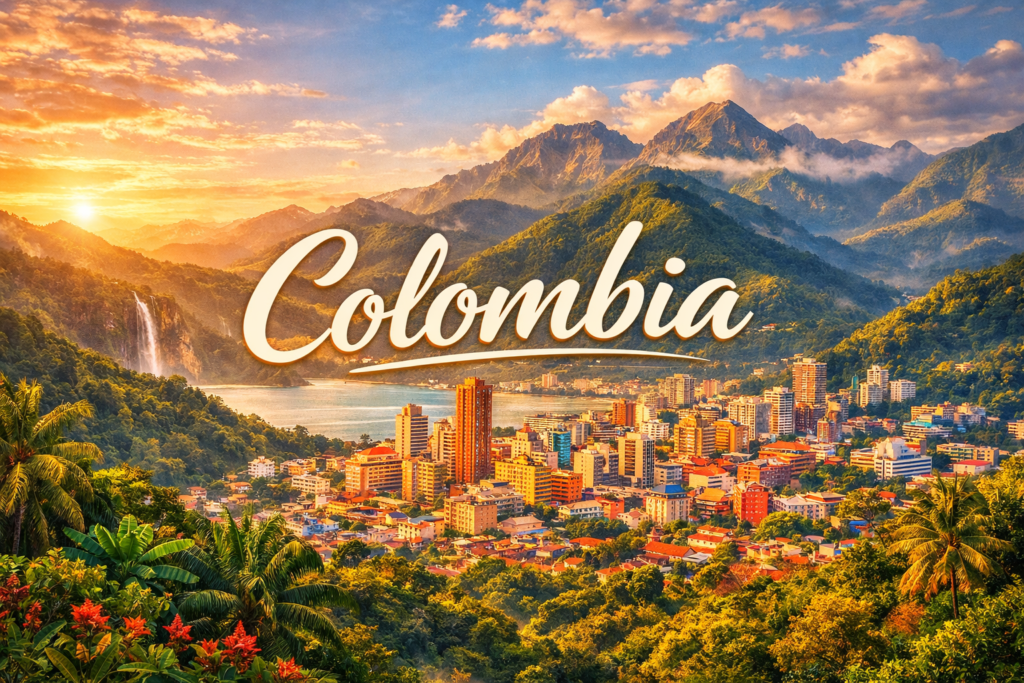
One of South America’s most intriguing and varied nations is Colombia. Colombia, which lies at the northernmost point of the continent, is renowned for its lively culture, stunning scenery, extensive history, and hospitable populace. Colombia offers an amazing range of natural environments, from the vast Amazon rainforest to the towering Andes Mountains and tropical beaches along the Caribbean Sea.
Colombia has emerged as one of Latin America’s most sought-after travel destinations in recent years. Explore colonial cities, vibrant festivals, historical sites, and stunning national parks when travelling to Colombia. The nation’s distinctive blend of African ancestry, Spanish colonial influence, and indigenous customs has produced a rich and vibrant culture.
Colombia is now well-known throughout the world for its coffee production, music, biodiversity, and developing tourism sector. Millions of tourists visit cities like Cartagena, Medellín, and Bogotá annually.
This comprehensive guide gives readers a thorough understanding of Colombia by examining its geography, history, culture, economy, and tourism.
Geography of Colombia
Location of Colombia in South America
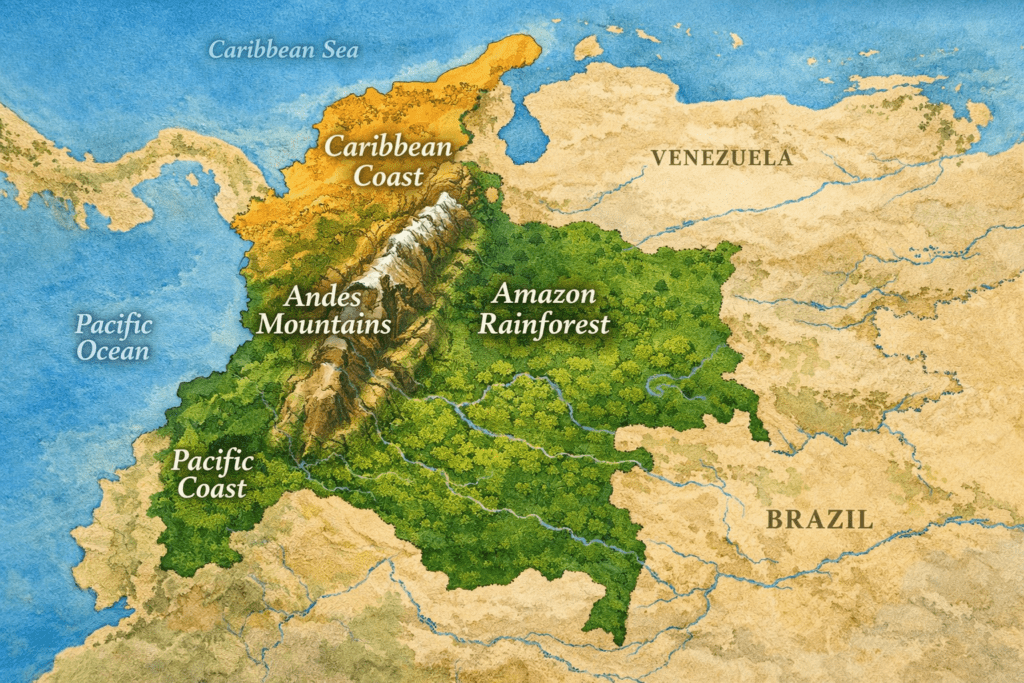
Colombia is situated in the northwest region of South America. It is the only nation in South America with coastlines on both the Pacific and Caribbean seas.
Colombia’s advantageous location has made it a vital cultural and economic link between South America and Central America.
Geographic Coordinates
Colombia’s approximate coordinates are:
Latitude: 4° North
Longitude: 72° West
Colombia has a year-round tropical climate due to its proximity to the equator.
Neighboring Countries of Colombia
Colombia shares international borders with five countries:
| Direction | Neighboring Country |
| East | Venezuela |
| Southeast | Brazil |
| South | Peru |
| Southwest | Ecuador |
| Northwest | Panama |
Colombia is a crucial entry point between various parts of Latin America because of these borders.
Major Geographic Regions of Colombia
Colombia’s geographical diversity is one factor contributing to its uniqueness. The nation can be separated into a number of natural areas.
The Andean Region
Colombia’s most populous region is the Andes. Here, the Andes Mountains split into three branches.
Among the major cities in this area are:
Bogotá
Medellín
Cali
Fertile valleys, big cities, and the majority of the nation’s economic activity are found in this area.
Caribbean Region
The Caribbean part of Colombia is known for its tropical beaches, old ports, and lively music scene.
Cartagena, a historic city, is one of the most popular places for tourists to visit in Colombia.
Pacific Region
Dense rainforests cover Colombia’s Pacific coast, which gets some of the most rain in the world. Afro-Colombian cultural traditions are also common in the area.
Amazon Region
Part of the Amazon rainforest, which is one of the most biodiverse ecosystems on Earth, is in southern Colombia.
Orinoquía Region
Los Llanos, the eastern plains of Colombia, are mostly used for farming and raising cattle.
History of Colombia
Indigenous Civilizations of Colombia
Before Europeans came, Colombia was home to several advanced native cultures.
Some important indigenous groups were the Muisca.
Tairona
Quimbaya
The Muisca civilisation was especially famous for its advanced farming and gold work.
These cultures had a big impact on the early history of Colombia.
Spanish Colonization
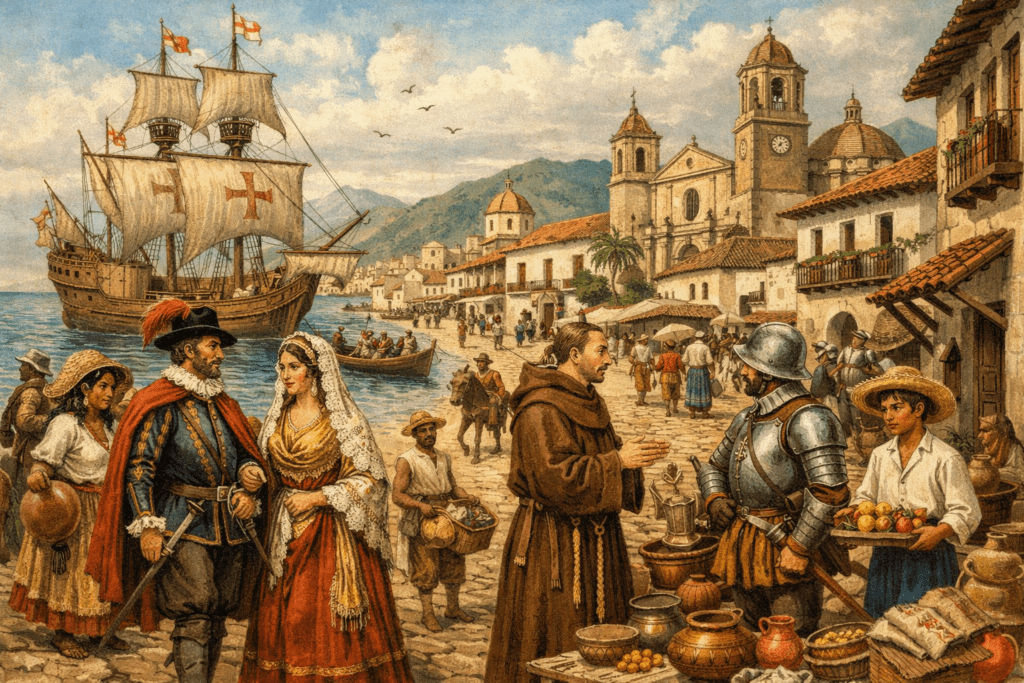
In 1499, Spanish explorers came to Colombia. Spain soon took control of the area as a colony.
Colombia was part of the Spanish administrative area called the Viceroyalty of New Granada during the time of colonisation.
Cartagena and other cities became important trade ports for the Spanish Empire.
Independence of Colombia
Independence movements spread across Latin America in the early 1800s.
Simón Bolívar, a well-known revolutionary leader, led the fight for Colombia’s independence.
Colombia won its independence from Spain in 1819 after a number of battles.
The Formation of Gran Colombia
Following its independence, Colombia joined Gran Colombia, a more expansive political state that included the following:
Venezuela and Colombia
Panama and Ecuador
But in 1831, political differences led to the union’s dissolution.
Culture of Colombia
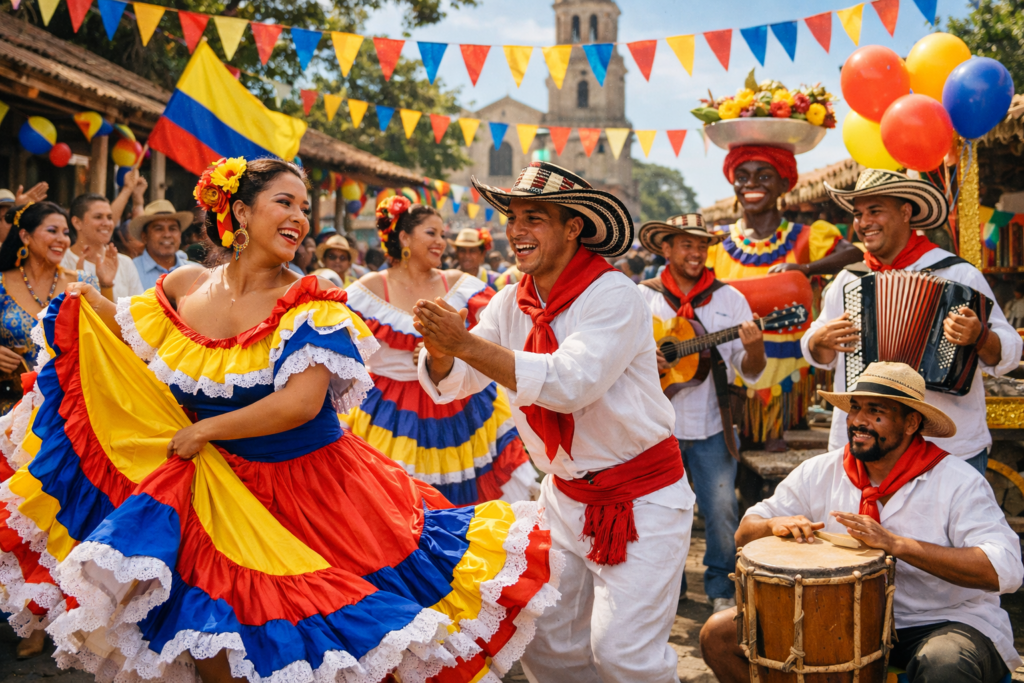
The culture of Colombia is a fascinating combination of indigenous, Spanish, and African traditions.
This cultural diversity is reflected in the country’s:
- Music
- Dance
- Festivals
- Cuisine
- Art
Music and Dance in Colombia
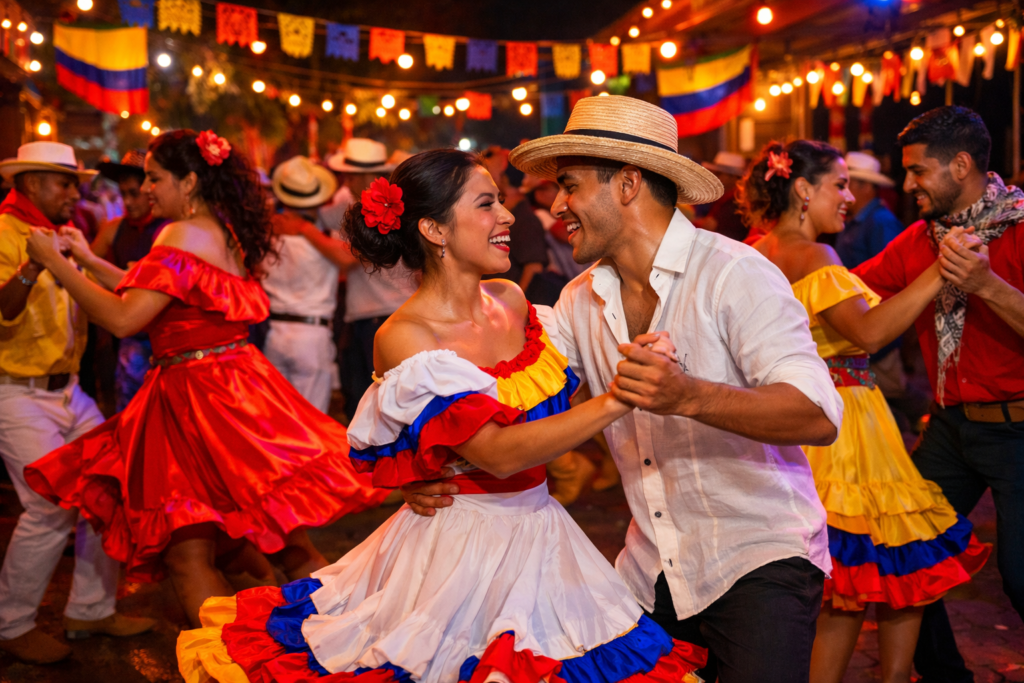
Music is a central part of everyday life in Colombia.
Popular music styles include:
- Cumbia
- Vallenato
- Salsa
- Reggaeton
International music stars from Colombia include:
- Shakira
- Carlos Vives
These artists have helped bring the culture of Colombia to audiences around the world.
Religion in Colombia
Christianity, particularly Roman Catholicism, is practiced by the majority of Colombians.
But today’s Colombia is a religiously diverse country with expanding evangelical and Protestant communities.
Festivals in Colombia
Colombian culture is heavily reliant on festivals.
Carnival in Barranquilla
One of Colombia’s biggest celebrations, the Barranquilla Carnival is acknowledged by UNESCO as a significant celebration of cultural heritage.
The festival includes music performances, traditional dances, and vibrant parades.
Food in Colombia
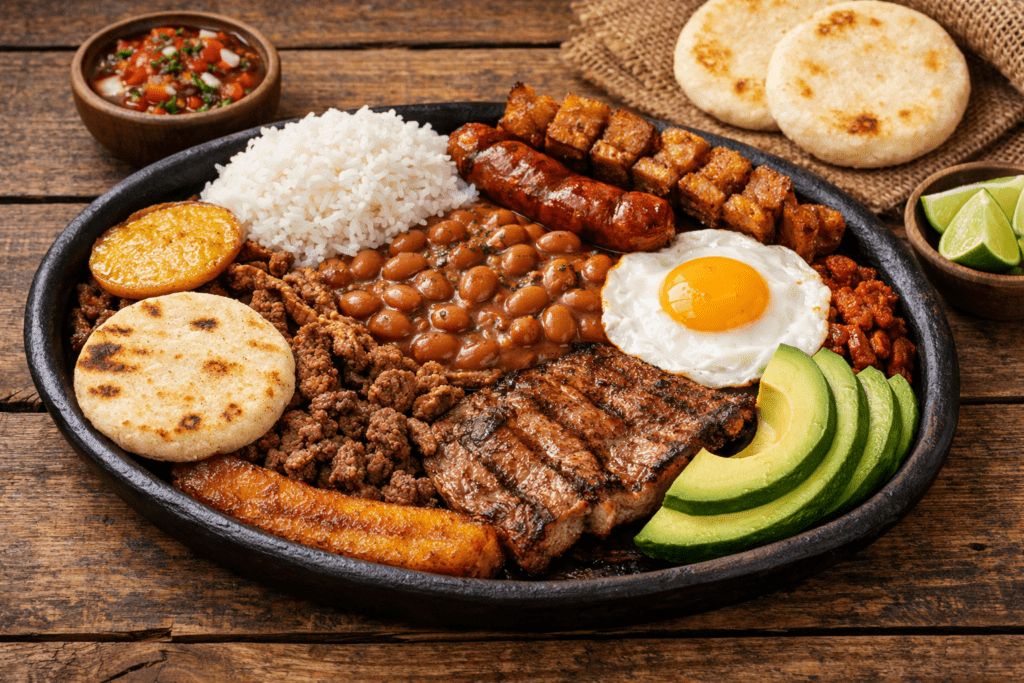
Colombia’s cuisine differs greatly by region.
Among the popular dishes are: Arepas
Corn cakes are consumed all over Colombia.
Paisa Bandeja
Beans, rice, meat, egg, avocado and sausage make up this substantial meal.
The Ajiaco
A classic Bogotá soup made with chicken and potatoes.
Languages of Colombia
The official language of Colombia is Spanish.
However, the country recognizes more than 60 indigenous languages, reflecting the cultural diversity of Colombia.
Examples include:
- Wayuu
- Embera
- Nasa Yuwe
Economy of Colombia
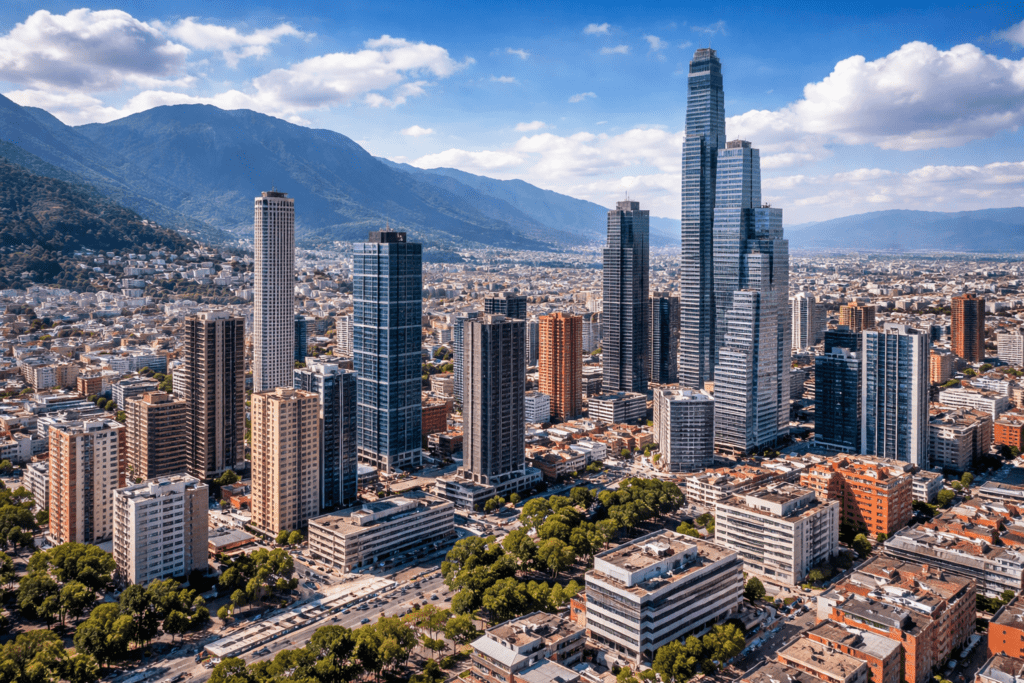
Colombia has one of Latin America’s strongest and most varied economies. Colombia’s economy has grown quickly over the last few decades, with robust sectors in manufacturing, tourism, energy, mining, and agriculture.
Colombia’s economy is currently regarded as one of the most stable in the area. Colombia has developed into a significant economic center in South America thanks to government reforms, international trade agreements, and rising foreign investment.
Colombia’s main economic sectors are as follows:
- Production of energy and oil
- Growing coffee
- Natural resources and mining
- Production
- Travel and services
- Innovation and technology
Colombia’s capital, Bogotá, is home to the nation’s biggest banks, businesses, and governmental organisations, making it the country’s economic and financial hub.
Currency of Colombia
The Colombian Peso (COP) is the country’s official currency.
The Colombian peso has been the country’s main currency for over a century.
Currency Details:
| Detail | Information |
| Currency Name | Colombian Peso |
| Currency Code | COP |
| Currency Symbol | $ |
| Central Bank | Banco de la República |
Travelers visiting Colombia can conveniently exchange foreign currencies at major cities’ airports, banks, and exchange offices.
Major Industries in Colombia
Several industries contribute significantly to the growth and development of Colombia.
Coffee Industry
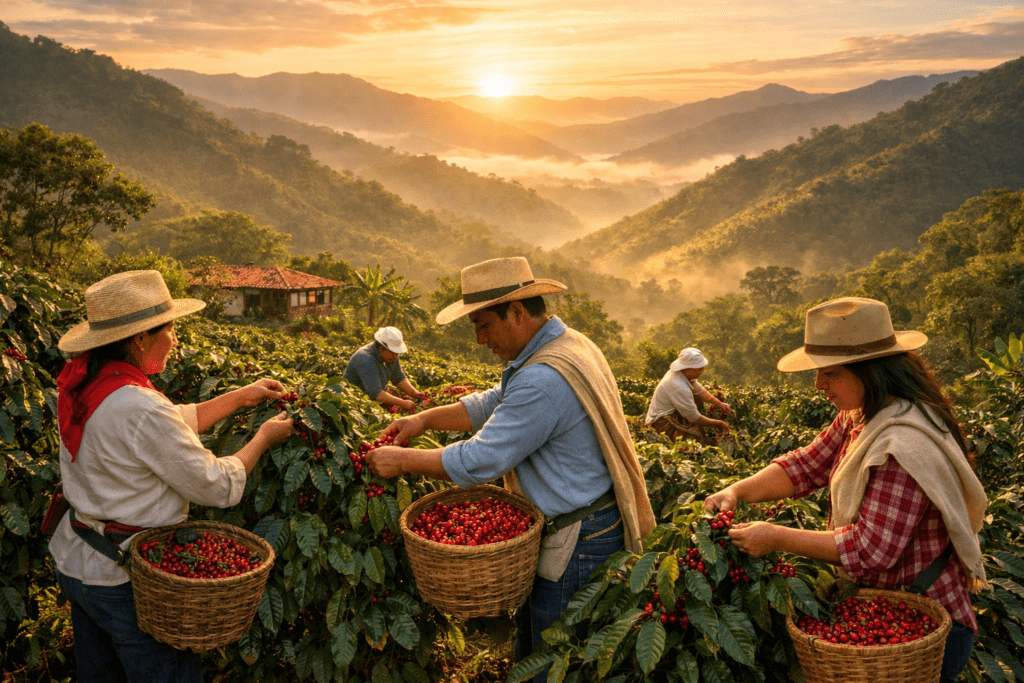
One of Colombia’s most well-known exports is coffee. Colombian coffee is renowned throughout the world for its superior quality, velvety flavor, and reliable production standards.
Colombia’s coffee industry sustains hundreds of thousands of farmers and continues to be a symbol of the country’s identity.
The National Federation of Coffee Growers of Colombia supports farmers throughout the nation and promotes Colombian coffee abroad.
Colombia’s mountainous areas offer perfect growing conditions for high-quality coffee.
Oil and Energy Sector
The production of oil is another significant industry in Colombia. A significant amount of the nation’s income comes from petroleum exports.
In many parts of Colombia, energy companies operate, contributing to economic growth and job creation.
Mining Industry
Colombia is rich in natural resources and minerals.
Important mining products include:
- Coal
- Gold
- Nickel
- Emeralds
In fact, Colombia is the world’s leading producer of high-quality emeralds.
Agriculture
Agriculture remains an essential part of the economy in Colombia, especially in rural areas.
Major agricultural exports include:
- Coffee
- Bananas
- Sugarcane
- Palm oil
- Flowers
The flower industry of Colombia is one of the largest in the world, supplying flowers to international markets.
Trade Partners of Colombia
International trade plays an important role in the economic growth of Colombia.
Major Export Partners
Key export destinations for Colombia include:
- United States
- China
- Panama
- India
- Brazil
The United States remains the largest trading partner of Colombia, importing petroleum, coffee, and agricultural products.
Major Imports
Important imports into Colombia include:
- Machinery and equipment
- Electronics
- Vehicles
- Chemicals
- Industrial materials
These imports support manufacturing and infrastructure development across Colombia.
Major Cities in Colombia
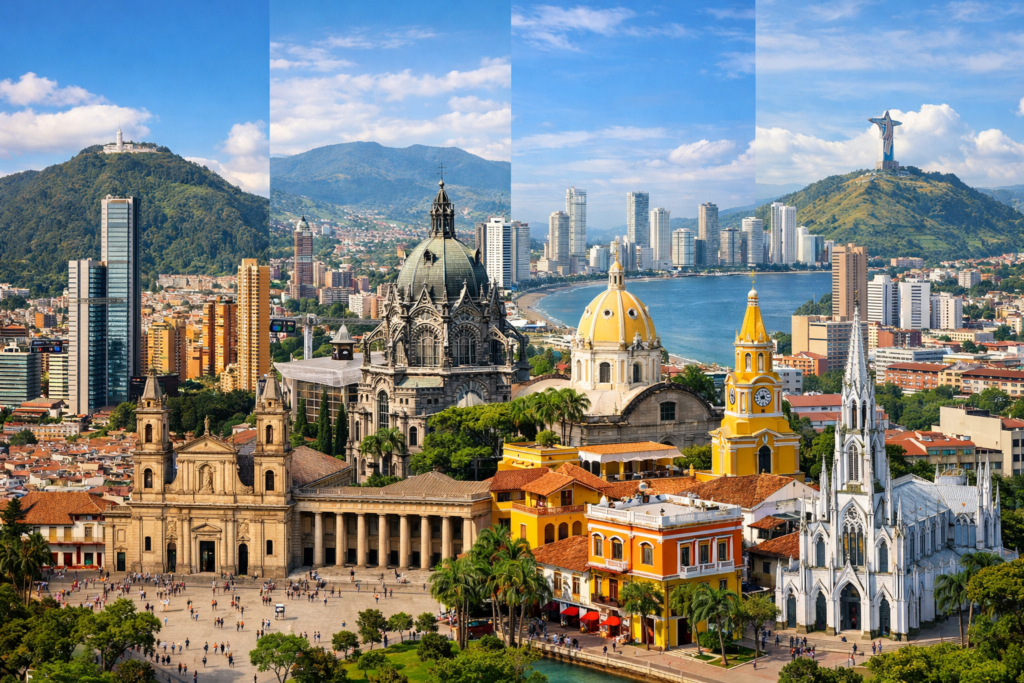
Bogotá – Capital of Colombia
Bogotá is the capital city of Colombia.
At a height of roughly 2,640 meters above sea level, Bogotá is situated in the Andes Mountains. Bogotá, Colombia’s largest city, is the political, economic, and cultural hub of the nation.
Important Attractions in Bogotá
La Candelaria, a historic district
The renowned Gold Museum
View of the monserrate mountains
Contemporary retail areas and dining establishments
Some of Colombia’s most significant universities and research facilities are located in Bogotá.
Medellín – The City of Eternal Spring
Colombia’s second-biggest city, Medellín, is renowned for its contemporary infrastructure and temperate climate.
Medellín, once renowned for its difficult past, has evolved into one of Latin America’s most inventive cities.
Medellín’s highlights
The current metro system
Cable cars that link communities in the mountains
Centers for innovation and technology
Every year, the Flower Festival
Medellín is frequently referred to as the “City of Eternal Spring” due to its pleasant climate.
Cali – The Salsa Capital
Cali’s vibrant dance culture is well-known throughout the world.
Because of its rich history of salsa music, the city is frequently referred to as the Salsa Capital of the World.
In order to witness real salsa dancing and music festivals, tourists visiting Colombia frequently go to Cali.
Cartagena – Historic Caribbean City
One of Colombia’s most stunning cities is Cartagena.
Cartagena was one of the Spanish Empire’s most significant ports when it was founded in the sixteenth century.
Cartagena is well-known today for:
- Colonial buildings
- Old city walls
- Beaches in the Caribbean
- Festivals of culture
UNESCO has designated Cartagena’s historic center as a World Heritage Site.
Tourist Attractions in Colombia
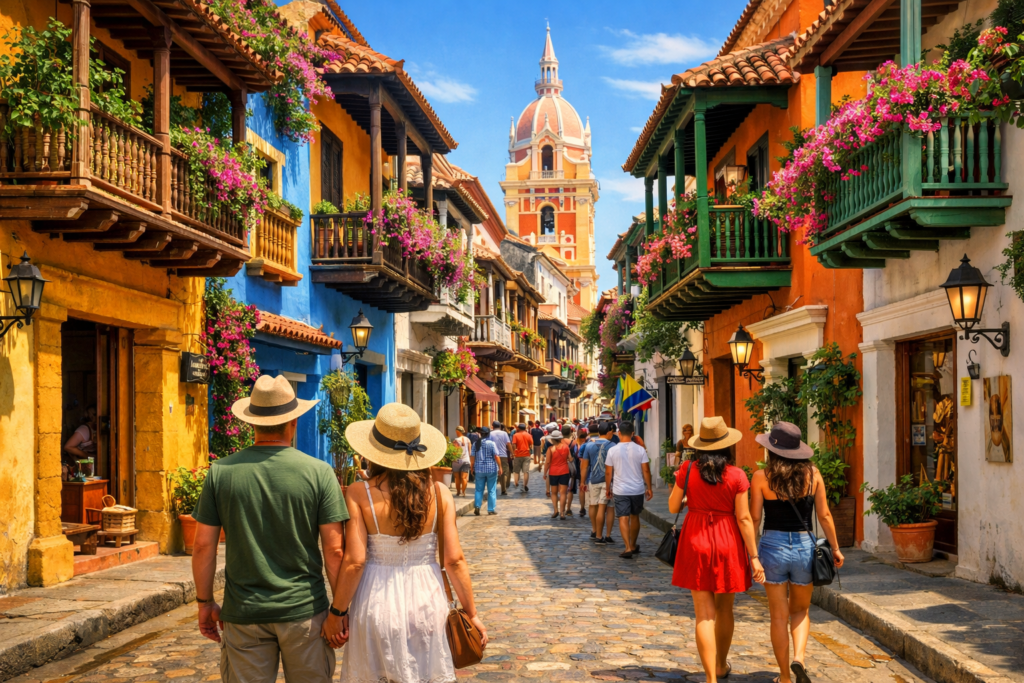
Tourism in Colombia has grown rapidly in recent years. Visitors are attracted by the country’s natural beauty, historical sites, and vibrant culture.
Tayrona National Natural Park
Tayrona National Natural Park is one of the most beautiful natural areas in Colombia.
Located near the city of Santa Marta, the park features:
- Tropical beaches
- Dense jungle
- Wildlife habitats
- Hiking trails
Caño Cristales
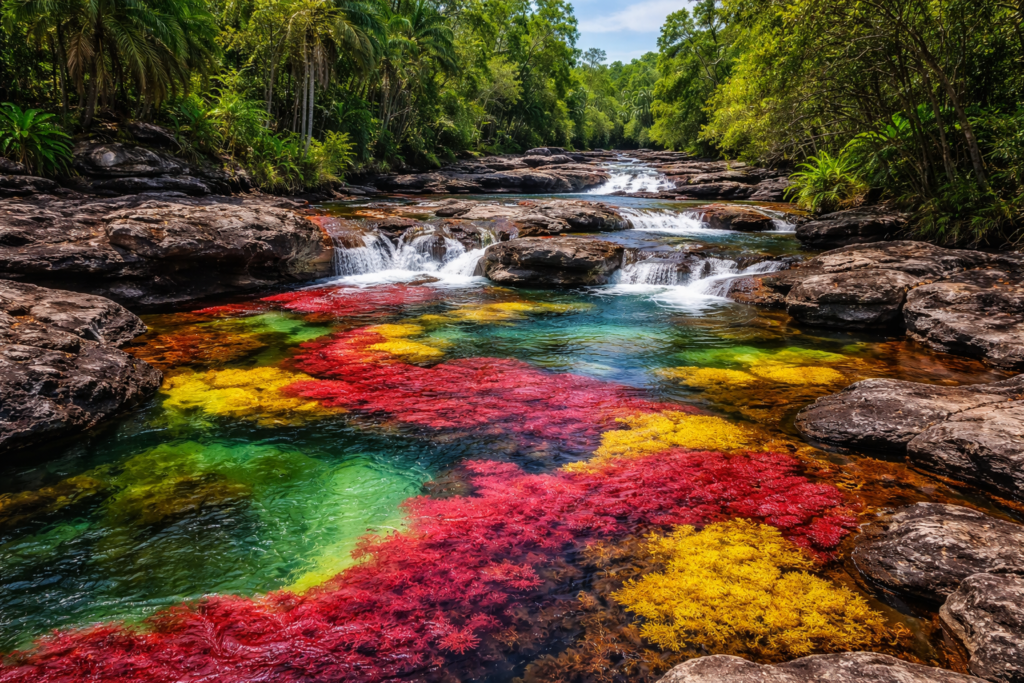
Many refer to Caño Cristales as the “River of Five Colors.”
Aquatic plants cause this unusual river to turn vivid red, yellow, green, and blue in specific months.
It is regarded as one of the world’s most exquisite rivers and one of Colombia’s most distinctive natural features.
Coffee Cultural Landscape
The Coffee Cultural Landscape of Colombia is a UNESCO World Heritage site that shows how people in Colombia have grown coffee for a long time.
In Colombia, visitors can see coffee farms, learn about how coffee is made, and experience life in the country.
Best Time to Visit Colombia
Colombia is close to the equator, which means that the weather stays pretty stable all year long.
But the amount of rain varies from place to place.
When to Go to Colombia
The best times to go to Colombia are usually:
December to March and July to August
During these months, many places have drier weather, which makes them great for tourists.
Transportation in Colombia
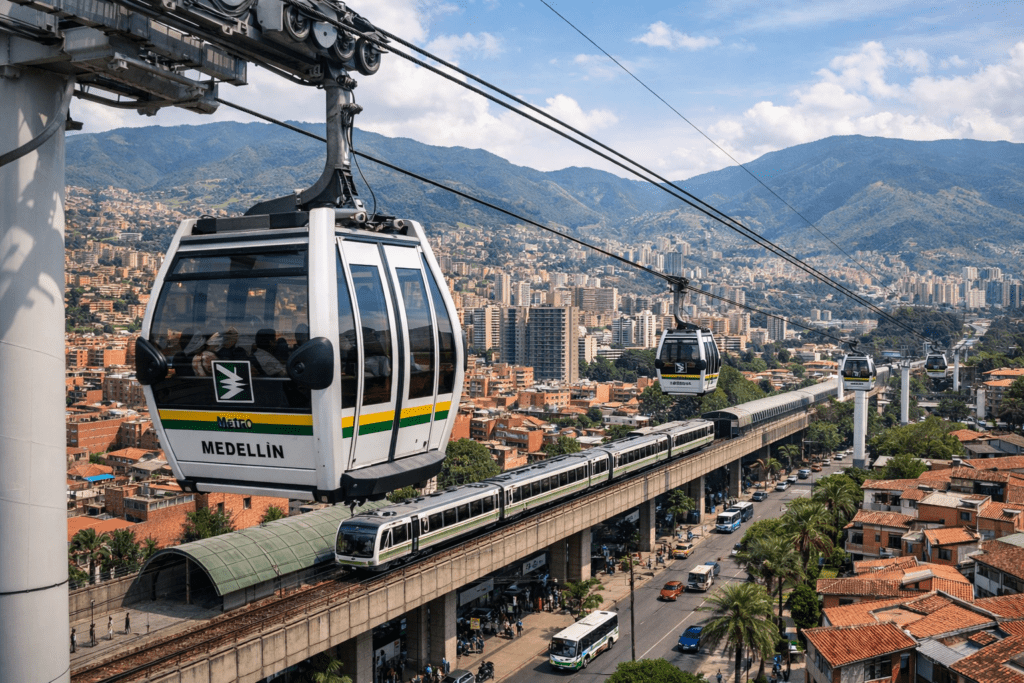
Traveling around Colombia is relatively easy thanks to a well-developed transportation network.
Domestic Flights
Because of the country’s mountainous geography, domestic flights are often the fastest way to travel between cities in Colombia.
Major airports connect cities such as:
- Bogotá
- Medellín
- Cali
- Cartagena
Bus Travel
Long-distance buses are widely used throughout Colombia. Bus networks connect nearly every town and city in the country.
Modern buses often include:
- Comfortable seats
- Air conditioning
- Overnight travel routes
Urban Transport
Cities in Colombia offer modern transportation systems.
For example, Bogotá operates the TransMilenio, a large bus rapid transit network used by millions of commuters.
Unique and Interesting Facts About Colombia
Colombia Has One of the Highest Biodiversity Levels in the World
Colombia’s biodiversity is one of the most amazing things about the country. Colombia is one of the most biologically diverse countries on Earth, according to scientists.
Colombia has these kinds of ecosystems:
- Tropical rainforests
- Ecosystems in the mountains
- Coral reefs along the coast
- Wetlands and grasslands
Colombia has a lot of different plants and animals, which is why it is one of the best places in the world for them.
Colombia, for instance, has the most bird species in the world.
Colombia Is the World’s Largest Emerald Producer
Colombia’s emerald industry is another intriguing fact.
Colombia is the world leader in emerald production, producing between 70 and 90 percent of the world’s emeralds.
The Boyacá region is home to Colombia’s most well-known emerald mines.
Colombian emeralds are renowned for their superb quality and deep green hue.
Colombia Has a UNESCO Coffee Cultural Landscape
Colombia’s economy and culture both heavily rely on coffee.
UNESCO has designated Colombia’s Coffee Cultural Landscape as a World Heritage Site.
This area exemplifies how coffee has been grown on Colombia’s steep mountain slopes for generations.
Visitors can now experience traditional coffee farms thanks to the growing popularity of coffee tourism.
Colombia Has a River of Five Colors
One of the most unique natural wonders in Colombia is the famous river Caño Cristales.
The river is often called the “River of Five Colors.”
During certain months of the year, aquatic plants turn the river into vibrant shades of:
- Red
- Yellow
- Green
- Blue
- Black
This natural phenomenon makes Colombia home to one of the most beautiful rivers on Earth.
Food Culture in Colombia
Food traditions in Colombia vary widely depending on the region. Each area of Colombia has its own ingredients, cooking styles, and cultural influences.
Popular Traditional Dishes in Colombia
Arepas
Arepas are cornmeal cakes that are eaten daily across Colombia. They may be served plain or filled with cheese, meat, or eggs.
Bandeja Paisa
Bandeja Paisa is one of the most famous meals in Colombia. This large dish includes:
- Rice
- Beans
- Ground beef
- Fried egg
- Sausage
- Avocado
The dish originated in the region around Medellín.
Ajiaco
Ajiaco is a traditional soup made with chicken, potatoes, corn, and herbs. It is especially popular in the capital city of Bogotá.
Drinks in Colombia
Several traditional beverages are popular in Colombia, including:
- Fresh fruit juices
- Sugarcane drinks
- Traditional Colombian coffee
Coffee produced in Colombia is exported worldwide and is famous for its high quality.
Education and Innovation in Colombia
Education and innovation are becoming increasingly important for the development of Colombia.
Major universities in Colombia are located in cities such as:
- Bogotá
- Medellín
- Cali
These institutions contribute to scientific research, technology development, and entrepreneurship.
In recent years, Medellín has become known as one of the most innovative cities in Latin America.
Colombia in International Organizations
United Nations Membership
Colombia is an active member of the United Nations and joined the organization in 1945.
Through its membership in the United Nations, Colombia participates in global initiatives related to:
- Peacekeeping
- Sustainable development
- Environmental protection
- Human rights
More information about UN programs can be found on the official United Nations website.
Other Global Organizations
Colombia also participates in several other international organizations, including:
- World Bank
- International Monetary Fund
- Organization of American States
These organizations help support economic growth, development programs, and international cooperation involving Colombia.
Travel Tips for Visiting Colombia
Traveling to Colombia can be a wonderful experience. Visitors should consider a few practical tips when planning their trip.
Visa Requirements
Many travelers can enter Colombia without a visa for short visits. However, travelers should always verify the latest visa requirements before traveling to Colombia.
Safety Tips
Modern Colombia is significantly safer than in previous decades, and tourism has increased rapidly.
However, visitors should still take common safety precautions:
- Avoid displaying expensive items in public
- Use licensed taxis or ride-sharing services
- Stay in well-known tourist areas
Most popular tourist destinations in Colombia are safe for visitors.
Language Tips
Spanish is the official language of Colombia, so learning basic Spanish phrases can be helpful.
In major tourist areas of Colombia, many people also speak some English.
Final Summary
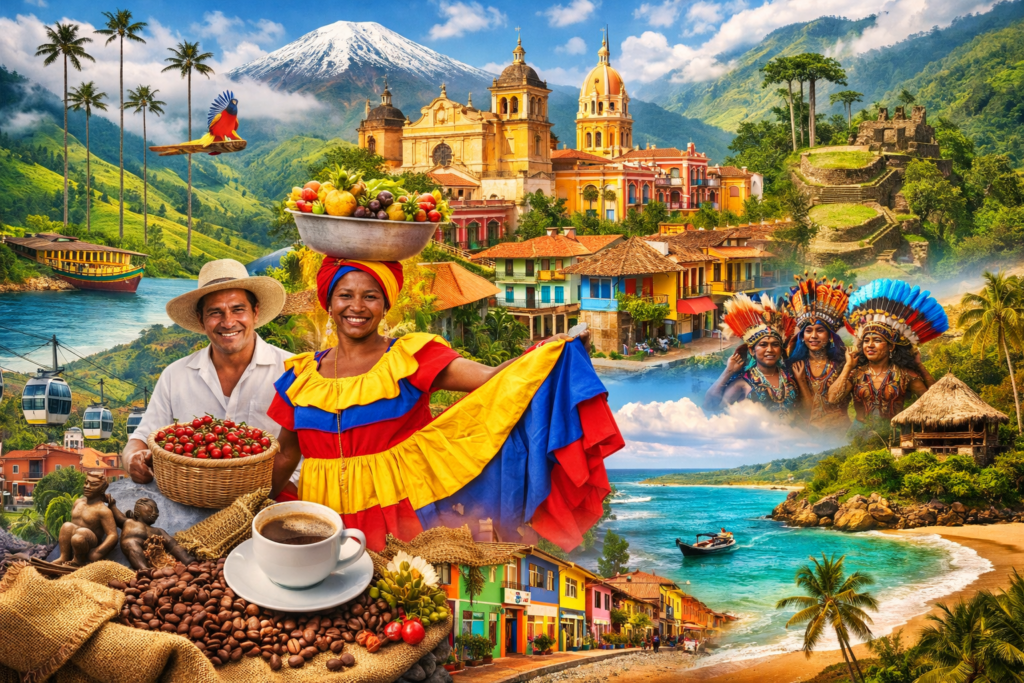
Colombia is a nation rich in natural beauty, cultural diversity, and diversity. Colombia has developed into one of the most dynamic countries in South America thanks to its history of Spanish colonization, ancient indigenous civilizations, and contemporary economic expansion.
Colombia’s topography consists of expansive plains, mountain ranges, rainforests, and tropical beaches. These varied landscapes draw nature enthusiasts from all over the world and sustain amazing biodiversity.
Colombia’s rich cultural and historical heritage is exemplified by cities like Bogotá, Medellín, and Cartagena.
The nation’s amazing ecosystems are on display at natural sites like Caño Cristales and Tayrona National Natural Park.
Colombia is becoming one of the world’s most exciting travel destinations thanks to its friendly culture, intriguing history, and breathtaking scenery.
Key Facts About Colombia
| Category | Information |
| Country Name | Colombia |
| Capital | Bogotá |
| Continent | South America |
| Population | ~52 million |
| Official Language | Spanish |
| Currency | Colombian Peso |
| Independence | 1819 |
| Major Cities | Medellín, Cali, Cartagena |
| Major Export | Coffee |
| Biodiversity Rank | Among the highest in the world |
| UN Membership | Member of United Nations since 1945 |
🌍 1. United Nations
👉 https://www.un.org/en/member-states/colombia
📌 Use like this in your blog:
Colombia is an active member of the United Nations, contributing to global peace and development initiatives.
🌎 2. World Bank (Economic Data)
👉 https://www.worldbank.org/en/country/colombia
📌 Use:
According to the World Bank, Colombia has shown steady economic growth driven by industries like oil, agriculture, and services.
🏛 3. UNESCO (Cultural Heritage)
👉 https://whc.unesco.org/en/statesparties/co
📌 Use:
Colombia is home to several UNESCO World Heritage Sites, showcasing its rich cultural and natural heritage.
✈ 4. Tourism Official Website
📌 Use:
For official travel information, visitors can explore Colombia’s tourism website for updated guides and itineraries.
💰 5. IMF (Optional – Extra Authority)
👉 https://www.imf.org/en/Countries/COL
📌 Use:
Reports from the IMF highlight Colombia’s growing role in the global economy.
List of All 195 Countries
A
- Afghanistan
- Albania
- Algeria
- Andorra
- Angola
- Antigua and Barbuda
- Argentina
- Armenia
- Australia
- Austria
- Azerbaijan
B
12. Bahamas
13. Bahrain
14. Bangladesh
15. Barbados
16. Belarus
17. Belgium
18. Belize
19. Benin
20. Bhutan
21. Bolivia
22. Bosnia and Herzegovina
23. Botswana
24. Brazil
25. Brunei
26. Bulgaria
27. Burkina Faso
28. Burundi
C
29. Cabo Verde
30. Cambodia
31. Cameroon
32. Canada
33. Central African Republic
34. Chad
35. Chile
36. China

