



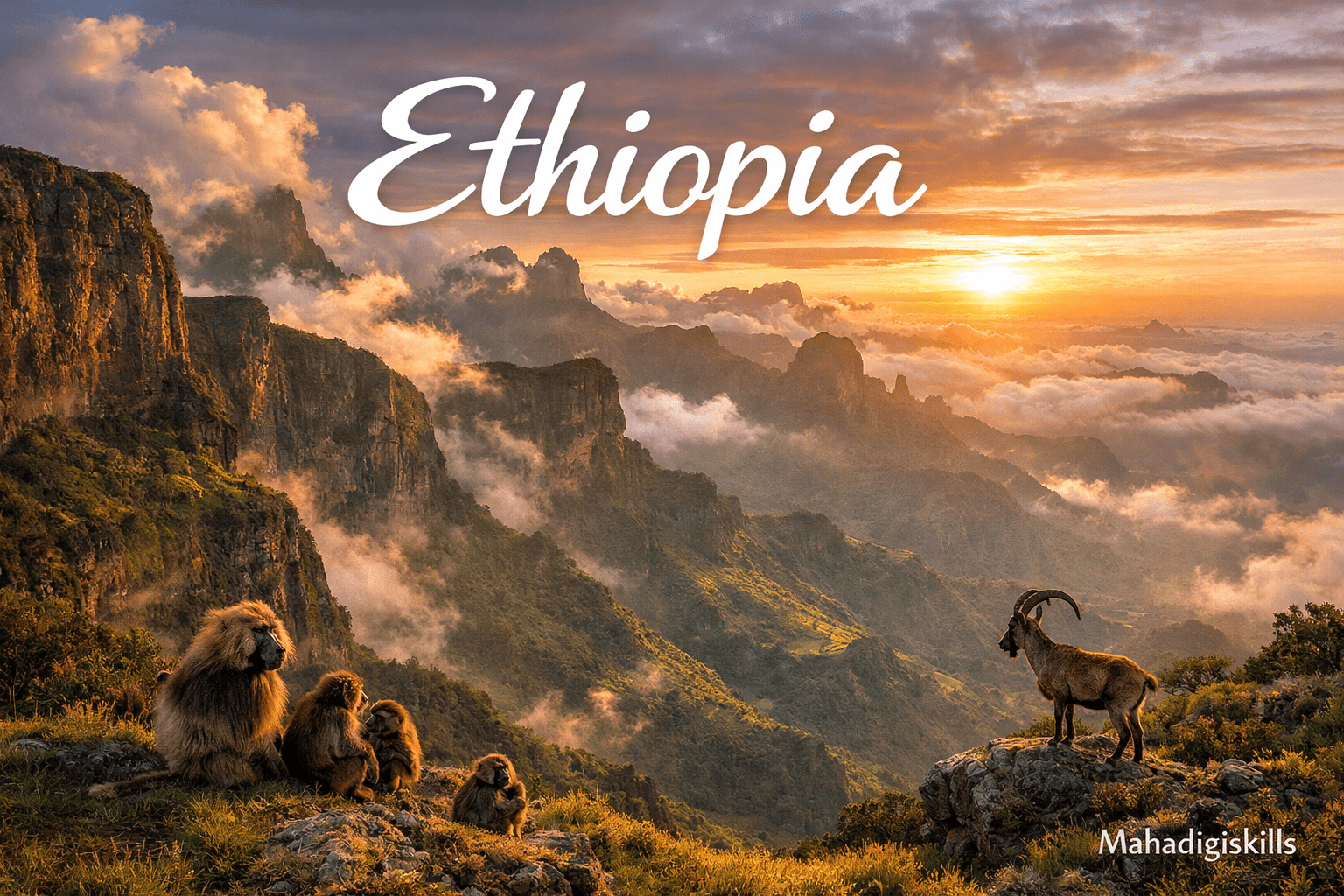
Ethiopia Travel Guide: History, Culture, Geography & Tourism
Introduction to Ethiopia
Ethiopia is one of the most historically significant countries in Africa, known for its ancient civilizations, diverse cultures, dramatic landscapes, and unique traditions. Located in the Horn of Africa, Ethiopia stands out as one of the few African nations that maintained its independence during the colonial era.
Ethiopia offers travelers an extraordinary combination of historic landmarks, UNESCO World Heritage sites, mountain ranges, and vibrant cultural festivals. From the rock-hewn churches of Lalibela to the dramatic cliffs of the Simien Mountains, Ethiopia provides unforgettable experiences for visitors interested in history, adventure, and culture.
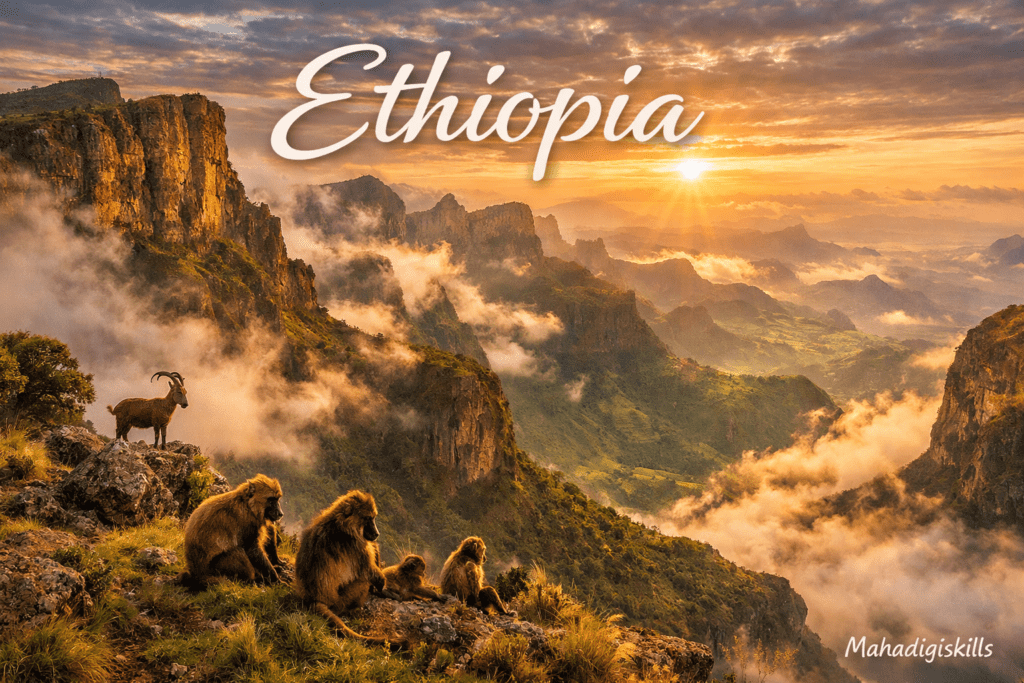
The country’s heritage dates back thousands of years and includes connections to the ancient Kingdom of Aksum, early Christian traditions, and important trade routes linking Africa, the Middle East, and Asia.
History of Ethiopia
Ethiopia has one of the longest continuous histories of any country in the world. Archaeological discoveries and historical records reveal that the region has been inhabited for millions of years.
Early Human Origins
Ethiopia is considered one of the cradles of human civilization. The famous fossil known as Lucy, discovered in the Afar region in 1974, provided important evidence about early human ancestors.
These discoveries make Ethiopia a key location for understanding human evolution.
Kingdom of Aksum
The Kingdom of Aksum, which flourished between the 1st and 7th centuries CE, was one of the most powerful civilizations of the ancient world.
Important achievements included:
- Trade with Rome, India, and Arabia
- Development of the Ge’ez script
- Early adoption of Christianity in the 4th century
The city of Aksum remains an important archaeological site with ancient obelisks and monuments.
Medieval Christian Kingdoms
During the medieval period, Ethiopia developed a strong Christian kingdom that produced remarkable architectural achievements such as the rock-hewn churches of Lalibela.
These churches were carved directly into solid rock and remain active religious sites today.
Modern History
In the late 19th century, Ethiopia successfully defended its sovereignty during the Battle of Adwa in 1896, defeating Italian forces and becoming a symbol of African independence.
Although briefly occupied by Italy during World War II, Ethiopia regained independence in 1941 and later became a founding member of several international organizations.
External Source
https://www.britannica.com/place/Ethiopia
Geography and Location of Ethiopia
Ethiopia is located in East Africa, within the Horn of Africa region. It shares borders with several countries including:
- Eritrea (north)
- Sudan (west)
- South Sudan (west)
- Kenya (south)
- Somalia (east)
- Djibouti (northeast)
Geographic Coordinates
Approximately 9°N latitude and 40°E longitude
Total Area
About 1,104,300 square kilometers
The geography of Ethiopia is extremely diverse and includes highlands, mountains, valleys, and deserts.
Major Geographic Features
Ethiopian Highlands
The Ethiopian Highlands are among the most extensive mountain ranges in Africa. These highlands divide the country into northern and southern regions.
Many major rivers originate from these mountains.
Simien Mountains
The Simien Mountains National Park is a UNESCO World Heritage Site known for dramatic cliffs, deep valleys, and rare wildlife species such as:
- Ethiopian wolf
- Gelada baboon
- Walia ibex
Great Rift Valley
The Great Rift Valley runs through Ethiopia and contains lakes, volcanoes, and geothermal landscapes.
These lakes support rich biodiversity and birdlife.
Blue Nile River
The Blue Nile originates from Lake Tana in Ethiopia before flowing into Sudan and eventually joining the Nile River in Egypt.
Lake Tana is the largest lake in Ethiopia and a major source of water and hydroelectric power.
Culture and Traditions of Ethiopia
Ethiopia is famous for its cultural diversity, with more than 80 ethnic groups and numerous languages spoken across the country.
Each group contributes unique traditions, clothing styles, music, and cuisine.
Languages
The official working language is Amharic.
Other widely spoken languages include:
- Oromo
- Tigrinya
- Somali
- Afar
The ancient Ge’ez language is still used in religious ceremonies.
Religion
Religion plays a major role in Ethiopian society.
Major religions include:
- Ethiopian Orthodox Christianity
- Islam
- Protestant Christianity
- Traditional beliefs
Ethiopia is one of the earliest countries to adopt Christianity.
Festivals in Ethiopia
Cultural and religious festivals are vibrant celebrations across the country.
Timkat
Timkat celebrates the Epiphany and is one of the most colorful religious festivals.
Ceremonies include:
- Processions
- Traditional music
- Water blessings
Meskel
Meskel commemorates the discovery of the True Cross and includes large bonfires and community celebrations.
Ethiopian Music and Arts
Traditional Ethiopian music uses unique instruments such as:
- Krar (lyre)
- Masenqo (single-string violin)
- Kebero (drum)
Dance styles often involve rhythmic shoulder movements and energetic performances.
Ethiopian art includes ancient manuscripts, religious paintings, and traditional crafts.
Ethiopian Cuisine
Ethiopian cuisine is known for its rich flavors and communal dining traditions.
The staple food is injera, a sourdough flatbread made from teff flour.
Popular dishes include:
- Doro Wat (spicy chicken stew)
- Tibs (fried meat dishes)
- Shiro (chickpea stew)
- Kitfo (minced beef dish)
Meals are traditionally shared from a large platter.
DoFollow Links
United Nations – Ethiopia
https://www.un.org/en/about-us/member-states/ethiopia
UNESCO World Heritage Sites
https://whc.unesco.org/en/statesparties/et
Economy of Ethiopia
Ethiopia has one of the fastest-growing economies in Africa, supported by agriculture, manufacturing, infrastructure development, and expanding trade partnerships. The country is also one of the largest economies in the Horn of Africa region.
Currency and Financial System
- Currency: Ethiopian Birr (ETB)
- Central Bank: National Bank of Ethiopia
- Major Trade Partners: China, United States, Saudi Arabia, United Arab Emirates, European Union
Ethiopia’s economy is gradually transitioning from an agriculture-based economy to a more diversified system including industry, energy, and services.
External Source
https://www.worldbank.org/en/country/ethiopia
Major Economic Sectors
Agriculture
Agriculture remains the backbone of Ethiopia’s economy and employs a large portion of the population.
Key agricultural products include:
- Coffee
- Maize
- Wheat
- Barley
- Sorghum
- Pulses
Ethiopia is widely known as the birthplace of coffee, and coffee exports are a major source of foreign income.
Manufacturing and Industry
Industrial development has increased significantly in recent years.
Important industries include:
- Textile and garment manufacturing
- Food processing
- Cement production
- Leather goods
Industrial parks have been developed to attract foreign investment and support economic growth.
Energy and Infrastructure
Ethiopia is investing heavily in renewable energy, particularly hydroelectric power.
One of the largest projects is the Grand Ethiopian Renaissance Dam (GERD) on the Blue Nile River, which is expected to become the largest hydroelectric power plant in Africa.
Major Cities in Ethiopia
Ethiopia has several vibrant cities that reflect the country’s history, culture, and economic development.
Addis Ababa – Capital City
Addis Ababa is the capital and largest city of Ethiopia. It is the political, economic, and diplomatic center of the country.
Major attractions include:
- National Museum of Ethiopia (home of the Lucy fossil)
- Holy Trinity Cathedral
- African Union Headquarters
- Merkato Market (one of the largest open-air markets in Africa)
Addis Ababa is often referred to as the “political capital of Africa” because it hosts the headquarters of the African Union.
Gondar – Historic Royal City
Gondar is famous for its medieval castles and churches, which date back to the 17th century.
Important landmarks include:
- Fasil Ghebbi (Royal Enclosure)
- Debre Berhan Selassie Church
The city is also a major center for Timkat celebrations, one of Ethiopia’s most important festivals.
Lalibela – Religious Heritage Center
Lalibela is globally famous for its rock-hewn churches carved from solid stone.
These churches were built in the 12th century and remain active places of worship.
The site is considered one of the most remarkable architectural achievements in the world.
Bahir Dar
Bahir Dar is located near Lake Tana, the largest lake in Ethiopia.
Tourists visit the city to see:
- Lake Tana monasteries
- Blue Nile Falls
- Scenic lakeside landscapes
Mekelle
Mekelle is the capital of the Tigray region and serves as an important commercial and administrative center.
The city provides access to historical sites such as:
- Rock churches of Tigray
- Ancient archaeological locations
Tourism Attractions in Ethiopia
Ethiopia is a country rich in natural beauty, historical monuments, and cultural heritage.
UNESCO World Heritage Sites
Ethiopia has several UNESCO-recognized heritage locations.
Rock-Hewn Churches of Lalibela
These churches were carved from volcanic rock and represent a masterpiece of medieval architecture.
Aksum Obelisks
Ancient stone obelisks in the city of Aksum reflect the power and achievements of the Aksumite civilization.
Simien Mountains National Park
The park features dramatic landscapes, cliffs, and rare wildlife species.
External Source
https://whc.unesco.org/en/statesparties/et
Natural Wonders
Ethiopia’s landscapes are incredibly diverse and include mountains, lakes, and deserts.
Blue Nile Falls
Located near Bahir Dar, the Blue Nile Falls is one of the most impressive waterfalls in East Africa.
Danakil Depression
The Danakil Depression is one of the hottest places on Earth.
The region features:
- Salt flats
- Active volcanoes
- Colorful geothermal formations
Bale Mountains National Park
The Bale Mountains are home to unique wildlife including the Ethiopian wolf, one of the rarest animals in the world.
The area is ideal for hiking and wildlife observation.
Best Time to Visit Ethiopia
The best time to travel to Ethiopia depends on climate and regional activities.
October – March (Best Season)
This period offers the most comfortable weather for tourism.
Many major festivals also occur during this time.
June – September (Rainy Season)
Rainfall increases in many parts of the country, which may affect travel in rural areas.
However, landscapes become greener and scenic.
January (Festival Season)
January is a particularly exciting month due to Timkat celebrations, attracting many international visitors.
Transportation and Travel Tips
Traveling within Ethiopia can be an exciting adventure.
Domestic Flights
Ethiopian Airlines operates an extensive network connecting major cities and tourist destinations.
Road Travel
Road transportation connects most regions of the country.
Major highways link cities such as:
- Addis Ababa
- Bahir Dar
- Gondar
- Mekelle
Cultural Etiquette Tips
Visitors should respect local customs and traditions.
Important travel tips include:
- Dress modestly when visiting religious sites
- Ask permission before photographing people
- Participate respectfully in cultural events
Unique and Interesting Facts about Ethiopia
Ethiopia has many fascinating characteristics that make it unique.
- Ethiopia uses its own calendar, which is about 7–8 years behind the Gregorian calendar
- The country has 13 months in a year
- Ethiopia is one of the few African countries never fully colonized
- Coffee culture is deeply rooted in Ethiopian society
- The country hosts the African Union headquarters
These facts make Ethiopia a culturally rich and historically significant destination.
DoFollow Links
United Nations – Ethiopia
https://www.un.org/en/about-us/member-states/ethiopia
World Bank Ethiopia Overview
https://www.worldbank.org/en/country/ethiopia
Ethiopia in Global Organizations
Ethiopia plays an important role in international diplomacy and regional cooperation in Africa. Because of its political importance and historical independence, Ethiopia hosts several global institutions.
United Nations Membership
Ethiopia became a member of the United Nations in 1945 shortly after the organization was founded.
The country participates actively in UN peacekeeping missions and international development initiatives.
External DoFollow Link
https://www.un.org/en/about-us/member-states/ethiopia
African Union Headquarters
Addis Ababa is home to the African Union (AU) headquarters. This organization promotes cooperation, peace, and development across African nations.
Because of this, Ethiopia is often called the diplomatic capital of Africa.
Other International Organizations
Ethiopia is also a member of many international groups including:
- World Bank
- International Monetary Fund (IMF)
- Intergovernmental Authority on Development (IGAD)
- United Nations Economic Commission for Africa (UNECA)
These memberships strengthen Ethiopia’s role in regional economic and political cooperation.
Travel Itinerary for Ethiopia
Visitors interested in exploring Ethiopia can follow a well-planned travel itinerary to experience the country’s history, culture, and landscapes.
7-Day Travel Itinerary
Day 1 – Addis Ababa
Explore the capital city and visit:
- National Museum of Ethiopia
- Holy Trinity Cathedral
- Addis Mercato Market
- Ethiopian cultural restaurants
Day 2 – Bahir Dar
Travel to Bahir Dar and explore:
- Lake Tana monasteries
- Blue Nile Falls
- Lakeside cultural villages
Day 3 – Gondar
Visit the historic city of Gondar known for:
- Fasil Ghebbi Royal Enclosure
- Debre Berhan Selassie Church
- Traditional Ethiopian architecture
Day 4 – Lalibela
Discover the famous rock-hewn churches carved from volcanic rock.
These churches remain one of the most extraordinary religious sites in the world.
Day 5 – Simien Mountains
Travel to the Simien Mountains National Park for hiking and wildlife observation.
Visitors can see:
- Gelada monkeys
- Ethiopian wolves
- Dramatic mountain landscapes
Day 6 – Axum
Explore the ancient city of Axum and see:
- Historic obelisks
- Archaeological ruins
- Religious monuments
Day 7 – Cultural Experience
Return to Addis Ababa and experience:
- Ethiopian coffee ceremony
- Traditional dance performances
- Local handicraft markets
Best Experiences in Ethiopia
Travelers visiting Ethiopia often enjoy the following activities:
- Trekking in the Simien Mountains
- Visiting Lalibela’s rock-hewn churches
- Exploring ancient Axumite monuments
- Discovering Lake Tana monasteries
- Experiencing Ethiopian coffee culture
- Attending Timkat religious celebrations
These experiences provide a deep insight into the culture and heritage of Ethiopia.
Transportation in Ethiopia
Getting around Ethiopia is relatively easy thanks to expanding infrastructure.
Domestic Flights
Ethiopian Airlines offers flights between major cities including:
- Addis Ababa
- Bahir Dar
- Lalibela
- Gondar
- Mekelle
This makes travel faster across long distances.
Buses and Road Transport
Long-distance buses connect many towns and cities across Ethiopia.
Road travel is affordable but may take longer compared to flights.
Guided Tours
Many visitors choose organized tours that include transportation, accommodation, and guides.
These tours help travelers explore Ethiopia safely and efficiently.
Safety and Travel Advice
When traveling to Ethiopia, visitors should follow basic travel precautions.
Recommended tips include:
- Carry travel insurance
- Respect cultural traditions
- Stay updated on travel advisories
- Use licensed tour guides when visiting remote areas
These precautions help ensure a smooth and enjoyable travel experience.
Final Summary
Ethiopia is a fascinating country known for its ancient civilizations, cultural diversity, historic landmarks, and breathtaking landscapes. From the ancient city of Axum to the spectacular cliffs of the Simien Mountains, Ethiopia offers travelers a unique combination of history, culture, and adventure.
The country’s long history, unique traditions, and welcoming communities make Ethiopia one of the most intriguing destinations in Africa. Whether exploring rock-hewn churches, attending traditional festivals, or enjoying Ethiopian cuisine, visitors will find countless opportunities to experience the rich heritage of Ethiopia.
For travelers seeking a destination filled with history, culture, and natural beauty, Ethiopia remains one of the most remarkable places to visit in the world.
Key Facts About Ethiopia
| Category | Information |
|---|---|
| Official Name | Federal Democratic Republic of Ethiopia |
| Capital | Addis Ababa |
| Continent | Africa |
| Population | Over 120 million |
| Area | 1,104,300 km² |
| Official Language | Amharic |
| Major Religions | Christianity, Islam |
| Currency | Ethiopian Birr |
| Independence Tradition | Never fully colonized |
| UN Membership | Joined in 1945 |
List of All 195 Countries
A
- Afghanistan
- Albania
- Algeria
- Andorra
- Angola
- Antigua and Barbuda
- Argentina
- Armenia
- Australia
- Austria
- Azerbaijan
- Bahamas
- Bahrain
- Bangladesh
- Barbados
- Belarus
- Belgium
- Belize
- Benin
- Bhutan
- Bolivia
- Bosnia and Herzegovina
- Botswana
- Brazil
- Brunei
- Bulgaria
- Burkina Faso
- Burundi
- Cabo Verde
- Cambodia
- Cameroon
- Canada
- Central African Republic
- Chad
- Chile
- China
- Colombia
- Comoros
- Congo (Congo-Brazzaville)
- Costa Rica

