



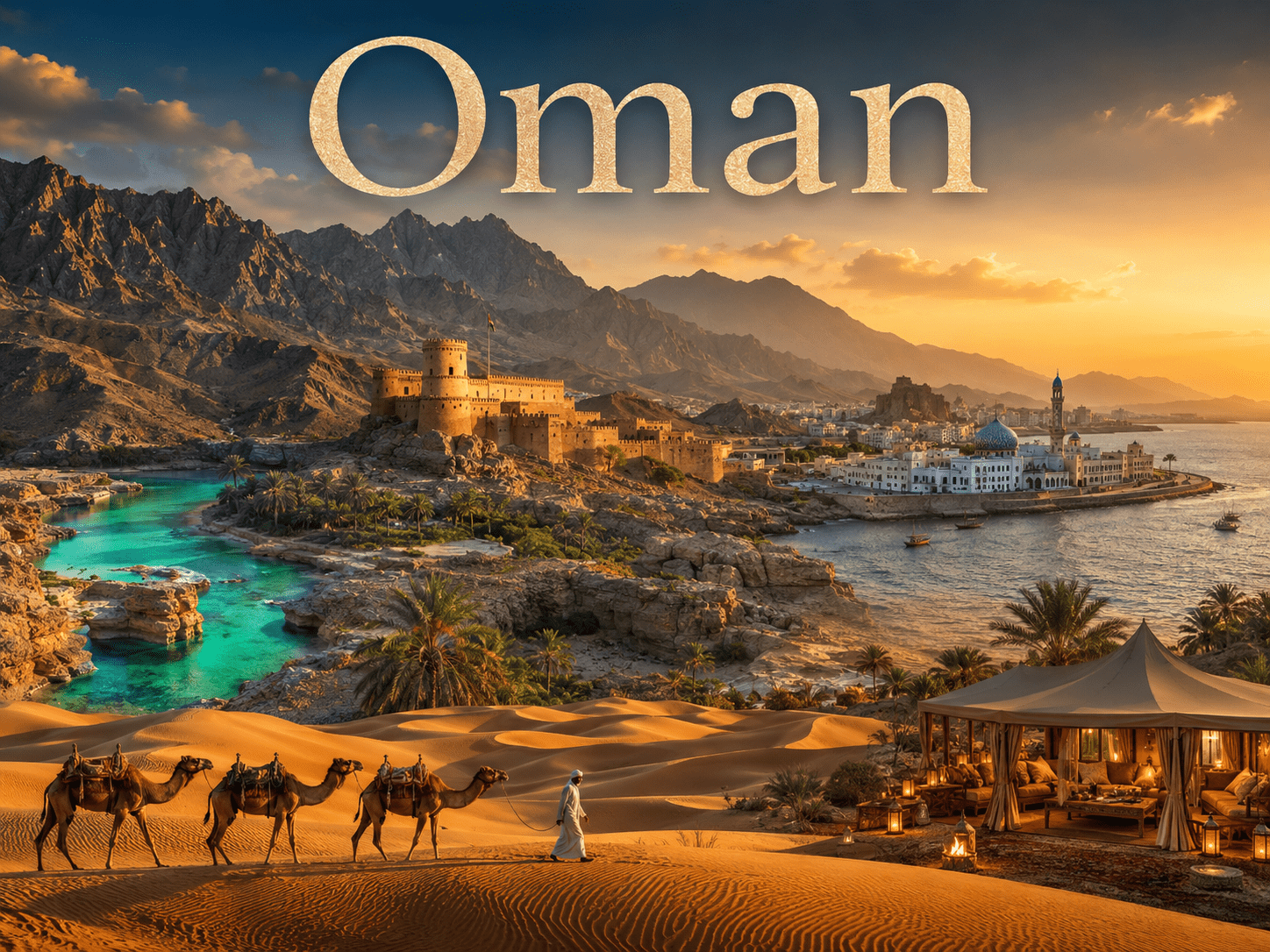
Oman – The Jewel of the Arabian Peninsula
Oman is one of the Middle East’s most captivating destinations, famous for its golden deserts, rugged mountains, ancient forts, pristine beaches, traditional souks, and rich Arabian heritage. Located on the southeastern coast of the Arabian Peninsula, the country combines timeless traditions with modern development while preserving a peaceful and authentic atmosphere.
From the elegant capital city of Muscat to the dramatic dunes of Wahiba Sands and the green mountains of Jebel Akhdar, travelers can experience incredible natural diversity and centuries of history. Coastal villages, desert landscapes, turquoise wadis, and historic forts create unforgettable scenery throughout the nation.
The country is widely respected for:
- Traditional Arabian hospitality
- Maritime heritage
- Desert culture
- Historic trade routes
- Natural beauty
Its strategic location helped shape centuries of trade connections between Asia, Africa, and the Middle East. Ancient ports and seafaring traditions remain important parts of national identity today.
Unlike many rapidly modernized Gulf destinations, Oman has carefully balanced modernization with cultural preservation, making it one of the most authentic travel experiences in the region.
Historical Background of Oman
Ancient Civilization and Trade
The territory of Oman has been inhabited for thousands of years and played a vital role in ancient maritime trade.
Historical trade connections linked the region with:
- India
- Persia
- East Africa
- Mesopotamia
Ancient traders exported:
- Frankincense
- Copper
- Spices
- Pearls
Maritime Heritage
For centuries, sailors from Oman traveled across the Indian Ocean using advanced navigation and shipbuilding skills.
Traditional wooden ships called dhows became symbols of Arabian seafaring culture.
Islamic Influence
Islam spread throughout the region during the 7th century and deeply shaped:
- Society
- Architecture
- Traditions
- Governance
Portuguese and Regional Conflicts
Portuguese forces occupied parts of the coastline during the 16th century before local rulers regained control.
Modern Development
Modern transformation accelerated during the late 20th century with investments in:
- Infrastructure
- Education
- Healthcare
- Tourism
- Economic diversification
Geographical Location and Natural Features
Where Is Oman Located?
Oman is located on the southeastern edge of the Arabian Peninsula.
It shares borders with:
- United Arab Emirates
- Saudi Arabia
- Yemen
The country also borders:
- Arabian Sea
- Gulf of Oman
Geographic Coordinates
- Approximate Coordinates: 21°N latitude and 57°E longitude
Diverse Landscapes
The nation is famous for diverse natural environments including:
- Deserts
- Mountains
- Beaches
- Wadis
- Coastal cliffs
Desert Landscapes
Golden sand dunes stretch across large parts of the interior.
Popular desert regions include:
- Wahiba Sands
- Rub’ al Khali nearby desert areas
Mountain Ranges
The Hajar Mountains dominate northern regions and provide cooler climates and scenic valleys.
Climate in Oman
Desert Climate
Oman experiences a primarily hot desert climate.
Summer
- Very hot temperatures
- Dry conditions
- Strong sunshine
Winter
- Mild and comfortable weather
- Ideal for tourism
Coastal Weather
Coastal areas experience:
- Humidity
- Sea breezes
- Warm winters
Best Time to Visit
The best period for tourism is generally from:
- October to April
During this season, temperatures are more comfortable for outdoor exploration.
Culture and Traditions of Oman
Arabian Hospitality
Hospitality is deeply important in Oman.
Visitors are often welcomed with:
- Arabic coffee
- Dates
- Traditional meals
- Friendly greetings
Traditional Values
The culture emphasizes:
- Respect
- Family connections
- Community
- Religious traditions
Traditional Clothing
Men
Men commonly wear:
- Dishdasha robes
- Kumma caps
- Turbans
Women
Traditional clothing often includes:
- Colorful dresses
- Embroidered fabrics
- Elegant jewelry
Religion in Oman
Islam is the dominant religion and strongly influences daily life and cultural traditions.
Religious Heritage
Mosques play important roles in:
- Community life
- Education
- Architecture
- Spiritual traditions
Religious Celebrations
Important celebrations include:
- Eid festivals
- Ramadan traditions
- Community gatherings
Music and Arts in Oman
Traditional Music
Traditional music reflects:
- Bedouin heritage
- Maritime traditions
- Desert culture
Popular instruments include:
- Drums
- Flutes
- String instruments
Dance Traditions
Traditional dances are performed during:
- Weddings
- National celebrations
- Festivals
Handicrafts
Local artisans create:
- Silver jewelry
- Pottery
- Carpets
- Wooden crafts
Cuisine of Oman
Cuisine combines Arabian, Indian, African, and Persian influences.
Popular Dishes
Shuwa
Slow-cooked spiced lamb traditionally prepared during celebrations.
Majboos
Rice dish with meat, spices, and vegetables.
Mashuai
Grilled fish served with rice and lemon sauces.
Halwa
Traditional sweet dessert flavored with spices and nuts.
Coffee Culture
Arabic coffee is an important symbol of hospitality in Oman.
Economy of Oman
Economic Overview
Oman has a developing economy based on:
- Oil and gas
- Tourism
- Logistics
- Fisheries
- Trade
Currency
The official currency is the Omani Rial (OMR).
Oil and Gas Industry
Petroleum exports remain an important source of national revenue.
Economic Diversification
The government increasingly invests in:
- Tourism
- Renewable energy
- Ports
- Manufacturing
- Technology
Maritime Trade
Strategic coastal location supports international shipping and logistics industries.
Major Cities in Oman
Muscat – The Capital City
Muscat is the capital and largest city.
The city is known for:
- Elegant mosques
- Coastal scenery
- Museums
- Traditional souks
- Modern infrastructure
Salalah
Salalah is famous for:
- Green landscapes
- Monsoon season
- Coconut groves
- Beaches
Nizwa
Nizwa is one of the country’s historic cultural centers known for:
- Ancient forts
- Traditional markets
- Islamic heritage
Sohar
Sohar has historical importance as a trading and maritime center.
Languages Spoken in Oman
Official Language
Arabic is the official language used in:
- Government
- Education
- Media
Other Languages
Widely spoken languages include:
- English
- Hindi
- Urdu
- Swahili in some communities
English is commonly used in tourism and business sectors.
Tourist Attractions in Oman
Sultan Qaboos Grand Mosque
One of the most beautiful mosques in the Middle East featuring:
- Islamic architecture
- Chandeliers
- Marble interiors
- Large prayer halls
Wahiba Sands
Visitors enjoy:
- Desert camping
- Camel rides
- Sand dune adventures
- Stargazing
Wadi Shab
A stunning canyon destination with:
- Turquoise pools
- Hiking trails
- Waterfalls
Jebel Akhdar
Mountain landscapes offer:
- Cooler temperatures
- Scenic villages
- Agricultural terraces
Oman and International Organizations
Oman is a member of several international organizations including:
- United Nations (UN)
- Gulf Cooperation Council (GCC)
- Arab League
- World Trade Organization (WTO)
Official Resources
Biodiversity and Natural Environment in Oman
Oman is known for its remarkable environmental diversity, featuring deserts, mountains, coastlines, islands, wadis, and marine ecosystems. Despite its arid climate, the country supports a wide range of wildlife and natural habitats that attract eco-tourists and adventure travelers.
Desert Landscapes
Vast desert regions dominate much of the interior territory.
Popular desert environments include:
- Wahiba Sands
- Gravel deserts
- Rocky plateaus
The desert scenery offers:
- Golden sand dunes
- Camel trekking
- Stargazing experiences
- Bedouin cultural encounters
Mountain Ecosystems
The Hajar Mountains create cooler climates and fertile valleys.
Mountain areas support:
- Traditional farming
- Fruit orchards
- Wildlife habitats
- Scenic villages
Coastal and Marine Life
The coastline of Oman stretches for thousands of kilometers and supports rich marine biodiversity.
Marine life includes:
- Dolphins
- Sea turtles
- Coral reefs
- Whale species
- Tropical fish
National Parks and Protected Areas
Ras Al Jinz Turtle Reserve
One of the country’s most famous eco-tourism destinations.
Visitors come to observe:
- Green sea turtles
- Nesting beaches
- Marine conservation programs
Al Hajar Mountain Regions
Protected mountain environments provide:
- Hiking trails
- Wildlife habitats
- Scenic viewpoints
Daymaniyat Islands
These islands are known for:
- Diving sites
- Coral reefs
- Marine biodiversity
- Crystal-clear water
Wildlife in Oman
Desert Wildlife
Wildlife adapted to desert conditions includes:
- Arabian oryx
- Desert foxes
- Gazelles
- Reptiles
Marine Wildlife
The waters surrounding Oman are ideal for:
- Dolphin watching
- Whale observation
- Snorkeling
- Diving tourism
Birdwatching
Migratory birds travel through the region during seasonal migrations.
Festivals and Cultural Celebrations
National Day Celebrations
National celebrations feature:
- Fireworks
- Traditional music
- Cultural performances
- Public ceremonies
Eid Festivals
Religious holidays remain deeply important across society.
Celebrations include:
- Family gatherings
- Community meals
- Traditional clothing
- Charity activities
Muscat Festival
The Muscat Festival showcases:
- Arts and crafts
- Music performances
- Food culture
- Traditional entertainment
Traditional Clothing and Heritage
Men’s Traditional Clothing
Men commonly wear:
- White dishdashas
- Embroidered caps
- Turbans
Women’s Traditional Fashion
Women’s attire often features:
- Colorful fabrics
- Embroidery
- Jewelry
- Decorative patterns
Bedouin Heritage
Bedouin traditions continue influencing:
- Hospitality
- Storytelling
- Desert culture
- Music
Arts, Architecture, and Handicrafts
Islamic Architecture
Architecture in Oman reflects:
- Islamic design
- Arabian heritage
- Coastal influences
Historic Forts
Ancient forts remain among the country’s most important landmarks.
Popular forts include:
- Nizwa Fort
- Bahla Fort
- Nakhal Fort
Traditional Crafts
Local artisans produce:
- Silver jewelry
- Pottery
- Carpets
- Wooden dhow models
Adventure Tourism in Oman
Desert Adventures
Travelers enjoy:
- Sandboarding
- Camel rides
- Desert camping
- Off-road driving
Mountain Hiking
Mountain regions provide:
- Scenic trekking routes
- Cliff viewpoints
- Traditional villages
Wadi Exploration
Wadis are natural valleys with freshwater pools and dramatic rock formations.
Popular activities include:
- Swimming
- Hiking
- Photography
Diving and Snorkeling
Marine tourism is growing rapidly due to:
- Coral reefs
- Warm waters
- Rich sea life
Transportation and Travel Around Oman
Modern Infrastructure
Oman has modern highways and transportation systems connecting major cities and tourism regions.
Airports
Major airports operate in:
- Muscat
- Salalah
These airports connect the country with international destinations across:
- Asia
- Europe
- Middle East
- Africa
Road Travel
Road trips are popular due to:
- Scenic mountain routes
- Desert highways
- Coastal roads
Rental cars are widely used by travelers.
Best Time to Visit Oman
Winter Tourism Season
The best time to visit is from:
- October to April
During this season:
- Temperatures are comfortable
- Outdoor activities are easier
- Desert tourism is popular
Khareef Season in Salalah
During the monsoon season, Salalah transforms into a green landscape with:
- Waterfalls
- Misty mountains
- Cooler temperatures
Food Culture and Culinary Traditions
Arabian Cuisine
Cuisine in Oman reflects centuries of trade and cultural exchange.
Popular Foods
Shuwa
Slow-cooked marinated lamb prepared underground during celebrations.
Majboos
Spiced rice dish with meat or seafood.
Mashuai
Grilled kingfish served with rice.
Omani Halwa
Sweet dessert flavored with:
- Rosewater
- Saffron
- Nuts
Coffee and Dates
Arabic coffee and dates symbolize hospitality and are commonly served to guests.
Maritime Heritage and Coastal Culture
Historical Seafaring Traditions
For centuries, sailors from Oman traded across the Indian Ocean.
Traditional maritime activities included:
- Fishing
- Shipbuilding
- Navigation
- Pearl trading
Dhows
Wooden dhow boats remain iconic cultural symbols and are still seen in coastal regions.
Education and Modern Development
Education Expansion
Modern development has improved:
- Universities
- Schools
- Research institutions
Technology and Innovation
Economic diversification encourages growth in:
- Technology
- Renewable energy
- Logistics
- Tourism infrastructure
Urban Development
Cities continue expanding with:
- Modern shopping centers
- Hotels
- Business districts
- Transportation networks
Daily Life and Modern Lifestyle
Family and Community
Family values remain central to society.
Hospitality Culture
Visitors frequently describe the hospitality of Oman as respectful, peaceful, and welcoming.
Modern Urban Life
Modern urban lifestyles blend with traditional customs in cities like Muscat.
Hidden Gems in Oman
Misfat Al Abriyeen
A traditional mountain village known for:
- Stone houses
- Palm plantations
- Irrigation channels
Wadi Bani Khalid
One of the country’s most beautiful wadis featuring:
- Emerald pools
- Palm trees
- Scenic canyon views
Jebel Shams
Known as the “Mountain of the Sun,” this area offers:
- Dramatic canyon landscapes
- Hiking routes
- Panoramic viewpoints
Environmental Sustainability
Conservation Efforts
Protected areas focus on:
- Marine conservation
- Wildlife protection
- Desert ecosystems
- Sustainable tourism
Renewable Energy Projects
The country increasingly invests in:
- Solar energy
- Wind power
- Sustainable infrastructure
Tourism Growth and International Appeal
Tourism continues expanding because Oman offers:
- Authentic Arabian culture
- Safe travel experiences
- Diverse landscapes
- Luxury resorts
- Adventure tourism
The nation attracts:
- Nature lovers
- Cultural travelers
- Luxury tourists
- Desert adventure seekers
Government and Political Structure
Oman operates as a hereditary monarchy with a modern administrative system and long-standing traditions of governance. The country has experienced significant modernization while maintaining strong cultural and historical identity.
Leadership and Administration
The government oversees:
- National development
- Infrastructure projects
- Economic diversification
- Education systems
- Tourism expansion
Legal and Administrative Framework
National laws and governance are influenced by:
- Islamic traditions
- Civil administration
- Modern economic policies
Stability and Diplomacy
Oman is internationally recognized for:
- Political stability
- Neutral diplomacy
- Regional cooperation
- Peaceful foreign relations
Famous Landmarks in Oman
Sultan Qaboos Grand Mosque
Located in Muscat, this mosque is one of the country’s most iconic landmarks.
Visitors admire:
- Islamic architecture
- Massive chandeliers
- Marble interiors
- Decorative artistry
Nizwa Fort
One of the most important historic forts in Oman.
The fort reflects:
- Military history
- Traditional architecture
- Cultural heritage
Bahla Fort
A UNESCO-recognized fortress surrounded by ancient desert landscapes.
Wadi Shab
A scenic canyon destination famous for:
- Turquoise pools
- Hiking trails
- Natural caves
- Waterfalls
Wahiba Sands
This desert region offers:
- Camel rides
- Luxury desert camps
- Sand dune adventures
- Traditional Bedouin experiences
Unique and Interesting Facts About Oman
Ancient Frankincense Trade
The country historically exported frankincense across ancient trade routes linking Arabia, Africa, and Asia.
Strong Maritime Heritage
Sailors from Oman traveled throughout the Indian Ocean centuries before modern navigation systems.
Diverse Landscapes
The nation contains:
- Deserts
- Mountains
- Beaches
- Green valleys
- Coastal cliffs
Sea Turtle Nesting Sites
Protected beaches support important sea turtle nesting habitats.
Traditional Architecture Preservation
Unlike many rapidly modernized cities in the Gulf region, urban planning preserves traditional Arabian character and low-rise architecture.
Business and Economic Opportunities
Oil and Gas Industry
Petroleum exports remain important to the economy of Oman.
Tourism Development
Tourism sectors continue expanding through investments in:
- Luxury resorts
- Eco-tourism
- Desert tourism
- Coastal tourism
- Cultural heritage projects
Logistics and Trade
Strategic location near international shipping routes supports:
- Port development
- Maritime trade
- Regional logistics industries
Renewable Energy
The nation increasingly focuses on:
- Solar energy
- Wind projects
- Sustainable development
Detailed Guide to Major Cities
Muscat
Muscat combines modern infrastructure with traditional Arabian architecture.
Popular attractions include:
- Sultan Qaboos Grand Mosque
- Mutrah Souq
- Coastal promenades
- Museums
- Luxury hotels
Salalah
Salalah is famous for:
- Monsoon greenery
- Coconut plantations
- Waterfalls
- Beaches
The Khareef season transforms the region into one of the greenest landscapes in Arabia.
Nizwa
Nizwa is known for:
- Historic forts
- Traditional markets
- Islamic heritage
- Mountain access
Sohar
Sohar remains important for:
- Maritime history
- Industrial development
- Port infrastructure
Festivals and Cultural Celebrations
National Day
National celebrations include:
- Fireworks
- Traditional dances
- Cultural events
- Public festivities
Eid Celebrations
Religious festivals emphasize:
- Family gatherings
- Hospitality
- Traditional foods
- Charity
Cultural Festivals
Art and heritage festivals showcase:
- Traditional music
- Handicrafts
- Food culture
- Folklore performances
Transportation and Infrastructure
Modern Road Networks
High-quality highways connect:
- Desert regions
- Coastal cities
- Mountain destinations
Airports
International airports support tourism and trade connections with:
- Asia
- Europe
- Africa
- Middle East
Ports and Maritime Infrastructure
Port cities play essential roles in:
- Shipping
- Fishing
- Trade
- Logistics
Education and Scientific Development
Educational Progress
Modern education systems have expanded rapidly across Oman.
Research and Innovation
Investments continue in:
- Technology
- Renewable energy
- Marine sciences
- Sustainable development
Universities
Higher education institutions attract students from across the region.
Cuisine and Culinary Experiences
Traditional Arabian Meals
Cuisine combines Arabian traditions with Indian Ocean influences.
Popular dishes include:
- Shuwa
- Majboos
- Mashuai
- Harees
Seafood Specialties
Fresh seafood is especially popular in coastal cities.
Traditional Desserts
Favorite sweets include:
- Halwa
- Date-based desserts
- Honey pastries
Coffee Culture
Arabic coffee and dates remain central to hospitality traditions.
Suggested 7-Day Travel Itinerary
Day 1–2: Muscat
Explore mosques, souks, museums, and coastal districts.
Day 3: Wadi Shab
Enjoy hiking, swimming, and canyon scenery.
Day 4: Wahiba Sands
Experience desert camping and camel rides.
Day 5: Nizwa and Mountain Villages
Visit forts, markets, and traditional villages.
Day 6: Jebel Akhdar
Explore scenic mountain landscapes and agricultural terraces.
Day 7: Salalah or Coastal Relaxation
Relax on beaches or experience monsoon greenery in southern regions.
Why Travelers Love Oman
Travelers admire Oman because it offers:
- Authentic Arabian culture
- Safe travel experiences
- Desert adventures
- Stunning coastlines
- Historic forts
- Traditional hospitality
The country combines luxury tourism with genuine cultural preservation and natural beauty.
UNESCO and International Recognition
Several heritage sites connected to Oman receive international recognition through:
- UNESCO
- United Nations
- Gulf regional organizations
Official Resources
Challenges and Future Outlook
Economic Diversification
Development priorities include:
- Tourism expansion
- Renewable energy
- Technology investment
- Sustainable industries
Environmental Conservation
Conservation programs focus on:
- Marine ecosystems
- Desert wildlife
- Coastal protection
- Sustainable tourism
Infrastructure Growth
Continued modernization improves:
- Transportation
- Healthcare
- Education
- Urban development
Final Summary
Oman is one of the Arabian Peninsula’s most fascinating travel destinations, offering a rare blend of desert beauty, mountain scenery, ancient history, coastal charm, and traditional hospitality. From the elegant streets of Muscat to the golden dunes of Wahiba Sands and the lush landscapes of Salalah, the country provides unforgettable experiences for cultural travelers, adventurers, and nature lovers alike.
Its balance between modernization and heritage preservation creates an atmosphere that feels both luxurious and authentic. Visitors can explore historic forts, turquoise wadis, mountain villages, traditional souks, and pristine beaches while experiencing centuries-old Arabian customs and warm hospitality.
As tourism and sustainable development continue expanding, Oman is becoming one of the Middle East’s most respected and rewarding travel destinations.
Oman Key Facts Table
| Category | Information |
|---|---|
| Official Name | Sultanate of Oman |
| Capital City | Muscat |
| Region | Middle East |
| Official Language | Arabic |
| Currency | Omani Rial (OMR) |
| Population | Over 4 million |
| Major Religion | Islam |
| Climate | Desert Climate |
| Famous Natural Feature | Wahiba Sands |
| Main Industries | Oil, Gas, Tourism, Logistics |
| Major Exports | Petroleum, Fish, Minerals |
| UN Membership | Yes |
| Famous Landmark | Sultan Qaboos Grand Mosque |
| Major Mountain Range | Hajar Mountains |
| Coastline | Arabian Sea and Gulf of Oman |
FAQ Section
What is Oman famous for?
The country is famous for deserts, Arabian culture, mountain landscapes, historic forts, wadis, and coastal beauty.
What language is spoken in Oman?
Arabic is the official language, while English is widely spoken in tourism and business sectors.
What is the capital of Oman?
Muscat is the capital city.
What currency is used in Oman?
The official currency is the Omani Rial (OMR).
What are the best tourist attractions in Oman?
Popular attractions include Wahiba Sands, Wadi Shab, Sultan Qaboos Grand Mosque, Nizwa Fort, and Jebel Akhdar.

