



Introduction – The Heart of Central Europe
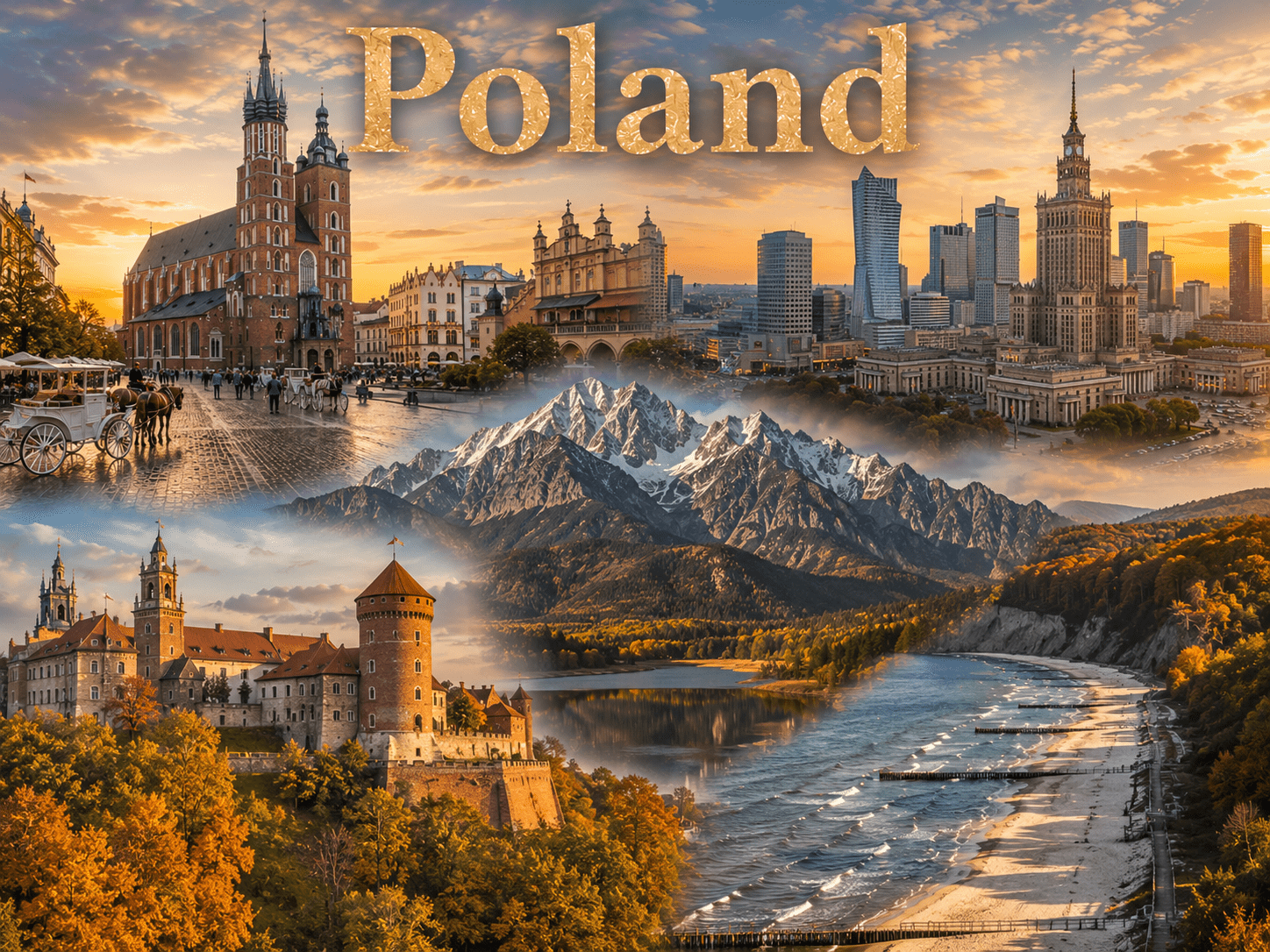
Poland is one of Europe’s most historically rich and culturally vibrant destinations, located in the heart of Central Europe. Known for its medieval cities, resilient history, scenic mountains, Baltic coastline, and deep cultural traditions, the country offers travelers a unique blend of old-world charm and modern development.
Visitors are drawn to Poland for its:
- Historic castles and old towns
- World War II heritage sites
- Beautiful mountains and lakes
- Rich Slavic culture
- Affordable European travel experience
- Vibrant cities and nightlife
From the cobbled streets of Kraków to the modern skyline of Warsaw, this destination tells a powerful story of survival, rebirth, and cultural pride.
Historical Background of Poland
Early Slavic Origins
The early history of Poland begins with West Slavic tribes who settled in the region over a thousand years ago. These tribes formed early settlements based on agriculture, hunting, and local trade.
Formation of the Kingdom
In 966 AD, the ruler Mieszko I adopted Christianity, marking the beginning of a unified state. This moment is considered the birth of the nation.
Golden Age of the Commonwealth
During the 16th and 17th centuries, the region became part of one of Europe’s largest political entities, known for:
- Religious tolerance
- Strong parliamentary system
- Cultural development
- Trade expansion
Partition Period
Later, the territory was divided among neighboring empires, disappearing from the map for over a century.
Rebirth and Independence
Poland regained independence in 1918 after World War I, marking a major turning point in its modern history.
World War II Impact
The country suffered immense destruction during World War II, including:
- Occupation
- Resistance movements
- Massive urban destruction
Warsaw, in particular, was rebuilt from ruins after the war.
Modern Era
Today, Poland is a stable European Union member with a strong economy and growing tourism industry.
Geography and Location
Where is Poland Located?
Poland is located in Central Europe, bordered by:
- Germany
- Czech Republic
- Slovakia
- Ukraine
- Belarus
- Lithuania
- Baltic Sea
Geographic Coordinates
Approximate location: 52°N, 19°E
Natural Landscape
The country includes:
- Northern coastal plains
- Central lowlands
- Southern mountain ranges (Carpathians & Tatras)
- Lakes and forests
Climate of Poland
Temperate Climate
Poland experiences a temperate seasonal climate.
Seasonal Breakdown
- Spring: Mild and green landscapes
- Summer: Warm and tourist-friendly
- Autumn: Colorful forests
- Winter: Cold with snow in many regions
Best Time to Visit
Ideal months:
- May to September (warm travel season)
- December to February (winter tourism)
Culture and Traditions
Slavic Heritage
The culture of Poland is deeply rooted in Slavic traditions, reflected in music, art, folklore, and festivals.
Family and Values
Key cultural values include:
- Strong family ties
- Respect for tradition
- Hospitality
- Religious influence
Traditional Clothing
Folk costumes vary by region and are worn during festivals, featuring:
- Embroidery
- Bright colors
- Floral patterns
Religion in Poland
Catholicism is the dominant religion in Poland, influencing:
- Holidays
- Architecture
- Cultural traditions
- Community life
Churches and cathedrals are central landmarks in most cities.
Music, Arts, and Folklore
Classical Music Legacy
The country is known worldwide for composers like Chopin, who influenced classical music globally.
Folk Music
Traditional music includes:
- Violins
- Accordions
- Regional folk singing
Dance Traditions
Popular dances include:
- Polonaise
- Mazurka
- Krakowiak
Art and Crafts
Handmade crafts include:
- Wood carving
- Pottery
- Textile weaving
Cuisine of Poland
Poland is famous for hearty and flavorful cuisine.
Popular Dishes
Pierogi
Dumplings filled with cheese, meat, or vegetables.
Bigos
Traditional hunter’s stew made with cabbage and meat.
Żurek
Sour rye soup served with sausage and egg.
Kielbasa
Traditional Polish sausage.
Food Culture
Meals are often:
- Family-centered
- Rich in meat and potatoes
- Seasonally influenced
Economy of Poland
Strong European Economy
Poland has one of the fastest-growing economies in Europe.
Key Industries
- Manufacturing
- Automotive production
- Technology
- Agriculture
- Tourism
Currency
The official currency is the Polish Złoty (PLN).
Major Cities in Poland
Warsaw – Capital City
Warsaw is the political and economic center.
Kraków
Kraków is famous for medieval architecture.
Gdańsk
Gdańsk is a historic Baltic port city.
Wrocław
Wrocław is known for bridges and islands.
Languages Spoken
The official language is Polish, widely spoken across Poland.
Regional dialects and English are also common in urban areas.
Tourist Attractions
Kraków Old Town
A UNESCO World Heritage Site with medieval charm.
Auschwitz-Birkenau
A major historical memorial site.
Tatra Mountains
Popular for hiking and skiing.
Wieliczka Salt Mine
An underground salt cathedral.
International Memberships
Poland is a member of:
- European Union (EU)
- NATO
- United Nations (UN)
Official Links
Nature, Landscapes & Biodiversity
Poland is home to some of Central Europe’s most diverse natural landscapes, ranging from Baltic coastlines to alpine-style mountains and vast forests. This variety makes it a strong destination for eco-tourism and outdoor travel.
Travelers enjoy:
- Forest hiking and wildlife spotting
- Lake tourism and kayaking
- Mountain trekking and skiing
- Coastal beach walks
- National park exploration
Białowieża Forest
One of the oldest forests in Europe, located in Poland, known for:
- European bison (wisent)
- Ancient woodland ecosystems
- UNESCO protection status
Masurian Lake District
A region filled with:
- Over 2,000 lakes
- Sailing routes
- Fishing villages
- Summer tourism resorts
Tatra Mountains
The highest mountain range in the country, offering:
- Hiking trails
- Ski resorts
- Alpine scenery
- Mountain villages
National Parks and Protected Areas
Tatra National Park
Famous for:
- Dramatic peaks
- Mountain wildlife
- Glacier lakes
- Hiking routes
Białowieża National Park
Protects ancient forest ecosystems and rare wildlife.
Slowinski National Park
Known for:
- Moving sand dunes
- Baltic Sea coastline
- Unique desert-like landscapes
Biebrza National Park
One of Europe’s largest wetlands, home to:
- Rare birds
- Marsh ecosystems
- Wildlife photography opportunities
Festivals and Cultural Events
Kraków Festival Culture
Poland hosts many cultural festivals in historic cities like Kraków, including:
- Music festivals
- Film events
- Street performances
Wianki Festival
A traditional midsummer celebration featuring:
- River lanterns
- Music concerts
- Folk traditions
All Saints’ Day Traditions
A deeply cultural event where families:
- Light candles in cemeteries
- Honor ancestors
- Gather in remembrance
Wildlife in Poland
Forest Wildlife
In forests of Poland you can find:
- European bison
- Deer
- Wild boar
- Wolves
Bird Species
Important bird habitats include:
- Eagles
- Storks
- Cranes
- Waterfowl
Wetland Ecosystems
Wetlands support:
- Rare migratory birds
- Amphibians
- Aquatic ecosystems
Adventure Tourism in Poland
Mountain Hiking
The Tatra region offers:
- Beginner and advanced hiking routes
- Scenic viewpoints
- High-altitude lakes
Ski Tourism
Winter sports include:
- Skiing
- Snowboarding
- Ice climbing
Kayaking and Water Sports
Masurian Lakes are popular for:
- Kayaking routes
- Sailing trips
- Water sports festivals
Cycling Routes
Poland offers scenic cycling trails through:
- Countryside villages
- Forest paths
- Historic towns
Transportation and Travel System
Air Travel
International airports connect major cities like Warsaw and Kraków to Europe and beyond.
Rail Network
The country has:
- Fast intercity trains
- Scenic routes through countryside
- Affordable public transport
Road Travel
Highways connect:
- Major cities
- Border regions
- Tourist destinations
Public Transport
Cities use:
- Trams
- Buses
- Metro systems (Warsaw)
Hidden Gems of Poland
Zakopane
A mountain town known for:
- Wooden architecture
- Ski resorts
- Tatra access point
Toruń
A medieval city famous for:
- Gothic architecture
- Copernicus heritage
- Old town charm
Malbork Castle
One of the largest medieval castles in Europe.
Wrocław Islands
A unique city built on multiple islands and bridges.
Food Culture and Culinary Traditions
Street Food Culture
Popular street foods include:
- Zapiekanka (open sandwich)
- Sausage grills
- Sweet pastries
Regional Cuisine
Different regions of Poland offer:
- Mountain cheese dishes
- Coastal seafood
- Forest mushroom recipes
Seasonal Eating
Food changes with seasons:
- Winter: soups and stews
- Summer: fresh salads and berries
Education and Modern Development
Education System
Poland has a strong education system focusing on:
- Engineering
- Medicine
- IT and technology
- Humanities
Technology Growth
The country is growing in:
- Software development
- Startups
- Digital services
Urban Development
Cities are modernizing with:
- Smart infrastructure
- Business districts
- Modern housing
Daily Life and Culture
Urban Lifestyle
In cities like Warsaw and Kraków:
- Cafés and nightlife are popular
- Public transport is widely used
- Cultural events are frequent
Rural Lifestyle
Countryside life includes:
- Farming
- Traditional crafts
- Close-knit communities
Cultural Values
Key values include:
- Family importance
- Respect for history
- Strong national identity
Government and Political Structure
Poland is a democratic republic with a multi-party parliamentary system. The government is divided into executive, legislative, and judicial branches, ensuring a balanced governance structure.
Executive Branch
The President acts as the head of state, while the Prime Minister leads the government and handles day-to-day administration.
Legislative Branch
The parliament consists of two houses:
- Sejm (lower house)
- Senate (upper house)
Local Administration
The country is divided into regions called voivodeships, which manage:
- Local infrastructure
- Education systems
- Regional development
Famous Landmarks in Poland
Old Town of Kraków
A UNESCO World Heritage Site featuring:
- Medieval squares
- Historic churches
- Royal Castle
Warsaw Old Town
Warsaw rebuilt after WWII, now a symbol of resilience.
Auschwitz-Birkenau Memorial
A major historical site honoring victims of World War II.
Wieliczka Salt Mine
An underground world of:
- Salt chambers
- Sculptures
- Chapels carved in salt
Malbork Castle
One of Europe’s largest brick castles built by the Teutonic Knights.
Unique and Interesting Facts About Poland
Resilience in History
The country has rebuilt itself multiple times after wars and partitions.
Rich Castle Heritage
It has hundreds of castles and palaces across the country.
Nature Diversity
From Baltic beaches to alpine mountains, landscapes are extremely diverse.
Famous Scientists and Artists
Poland is home to figures like:
- Marie Curie (scientist)
- Frédéric Chopin (composer)
Strong Cultural Identity
Despite historical challenges, national identity remains strong.
Economy and Business Growth
Modern European Economy
Poland has one of the fastest-growing economies in the EU.
Key Industries
- Automotive manufacturing
- IT and software development
- Mining and energy
- Agriculture
- Tourism
Foreign Investment
The country attracts global companies due to:
- Skilled workforce
- Strategic location
- EU membership
Currency
The official currency is the Polish Złoty (PLN).
Major Cities in Poland
Warsaw – Capital City
Warsaw is the political, financial, and business hub.
Kraków – Cultural Capital
Kraków is known for medieval charm and tourism.
Gdańsk – Baltic Port City
Gdańsk is a historic trade center.
Wrocław – City of Bridges
Wrocław is known for its islands and architecture.
Transportation and Infrastructure
Air Transport
Major airports connect Poland with Europe, Asia, and America.
Rail System
Efficient trains connect:
- Cities
- Tourist regions
- Neighboring countries
Road Network
Modern highways support:
- Domestic travel
- Trade routes
- Tourism
Public Transport
Urban areas use:
- Trams
- Buses
- Metro systems in Warsaw
Travel Itinerary (7 Days in Poland)
Day 1–2: Warsaw
Explore museums, royal castles, and modern districts.
Day 3: Kraków
Visit Old Town, Wawel Castle, and cultural sites.
Day 4: Auschwitz & Wieliczka
Historical and underground salt mine experience.
Day 5: Zakopane
Mountain scenery and Tatra exploration.
Day 6: Gdańsk
Baltic coast, ports, and historic architecture.
Day 7: Wrocław
Bridges, islands, and colorful old town.
Best Time to Visit Poland
Spring (April–June)
Ideal for:
- Mild weather
- Flowering landscapes
- City exploration
Summer (July–September)
Best for:
- Festivals
- Outdoor travel
- Lakes and mountains
Winter (December–February)
Great for:
- Skiing
- Christmas markets
- Snow scenery
Challenges and Future Development
Environmental Concerns
Poland faces:
- Air pollution in cities
- Forest conservation needs
- Climate change impacts
Economic Development
Focus areas include:
- Green energy transition
- Digital economy growth
- Infrastructure modernization
EU Integration
Continued alignment with European Union standards supports growth and stability.
Final Summary
Poland is a country where history, culture, and modern development come together beautifully. From medieval castles and World War II memorials to modern cities, mountain landscapes, and Baltic beaches, it offers a deeply diverse travel experience.
Its resilience through centuries of change, combined with its strong cultural identity, makes it one of Europe’s most fascinating destinations. Whether exploring Kraków’s old town, Warsaw’s skyline, or the Tatra Mountains, visitors find a rich blend of heritage and modern life.
Key Facts Table
| Category | Information |
|---|---|
| Official Name | Republic of Poland |
| Capital City | Warsaw |
| Region | Central Europe |
| Language | Polish |
| Currency | Polish Złoty (PLN) |
| Population | ~38 million |
| Famous Landmark | Auschwitz-Birkenau |
| Climate | Temperate seasonal |
| Major Industries | Automotive, IT, Manufacturing |
| Famous Cities | Warsaw, Kraków, Gdańsk, Wrocław |
| Tourism Type | Cultural, historical, nature |
| UN Membership | Yes |
| EU Membership | Yes |
FAQ Section
What is Poland famous for?
Poland is famous for castles, history, medieval cities, and culture.
What is the capital of Poland?
The capital is Warsaw.
Is Poland in the EU?
Yes, it is a member of the European Union.
What language is spoken in Poland?
Polish is the official language.
What is the best time to visit Poland?
Spring and summer are the most popular seasons.

