



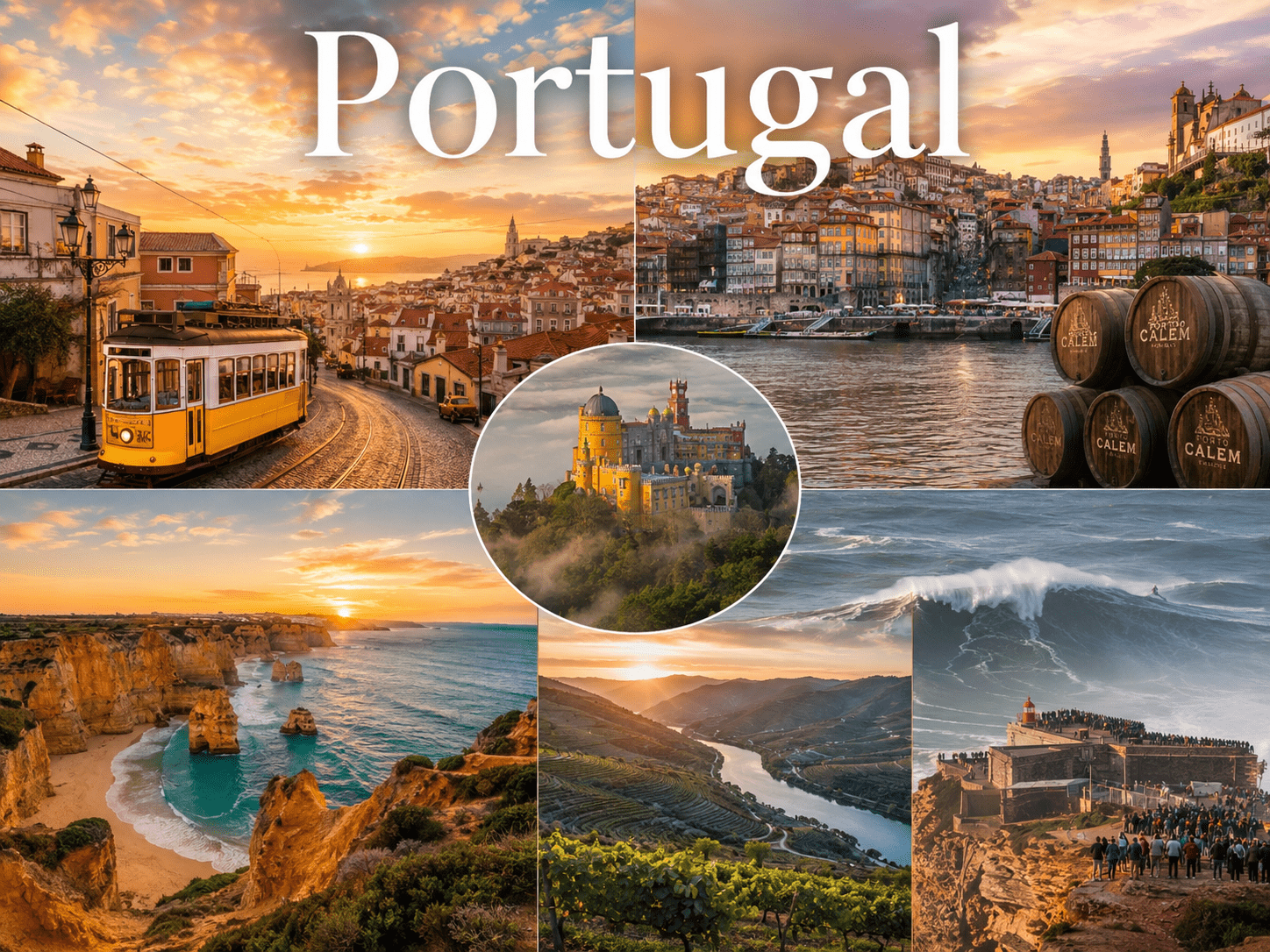
Introduction – Europe’s Atlantic Jewel
Portugal is one of Europe’s most charming and historically rich countries, located on the western edge of the continent along the Atlantic Ocean. Known for its golden beaches, historic cities, soulful Fado music, and world-famous cuisine, it offers travelers a perfect blend of culture, nature, and relaxation.
Visitors are attracted to Portugal for:
- Stunning Atlantic coastline
- Historic cities and UNESCO sites
- Warm Mediterranean climate
- Affordable European travel
- Rich maritime history
- Vibrant cultural festivals
From the colorful streets of Lisbon to the riverfront beauty of Porto and the sunny Algarve beaches, this destination is one of Europe’s most complete travel experiences.
Historical Background of Portugal
Early Civilizations
The early history of Portugal began with Celtic tribes, Roman settlements, and later Visigothic rule. The Roman influence shaped:
- Roads and infrastructure
- Language roots
- Urban development
Moorish Influence
During the Middle Ages, parts of the region were ruled by Moors, introducing:
- Architecture
- Agriculture systems
- Scientific knowledge
Formation of the Kingdom
In 1139, Portugal became an independent kingdom under Afonso I.
Age of Discoveries
Between the 15th and 16th centuries, Portugal became a global maritime power, leading exploration voyages to:
- Africa
- India
- Brazil
- Southeast Asia
Famous explorers include Vasco da Gama and Ferdinand Magellan.
Modern Era
Today, Portugal is a modern European Union member with a strong tourism-driven economy.
Geography and Location
Where is Portugal Located?
Portugal is located in Southwestern Europe on the Iberian Peninsula, sharing a border only with Spain.
It is surrounded by:
- Atlantic Ocean (west and south)
- Spain (east and north)
Geographic Coordinates
Approximate location: 39°N, 8°W
Natural Landscape
The country features:
- Coastal cliffs
- River valleys
- Mountain regions
- Vineyards and farmland
Climate of Portugal
Mediterranean Climate
Portugal enjoys a Mediterranean climate with Atlantic influence.
Seasonal Overview
- Spring: Mild and floral
- Summer: Hot and sunny
- Autumn: Warm and harvest season
- Winter: Cool and rainy
Best Time to Visit
Ideal months:
- March to October (tourism season)
- June to September (beach season)
Culture and Traditions
Maritime Heritage
The culture of Portugal is deeply connected to the sea due to its exploration history.
Fado Music
A traditional music style known for:
- Emotional storytelling
- Melancholic tones
- Guitar accompaniment
Festivals
Popular events include:
- Festa de São João
- Carnival celebrations
- Local saint festivals
Cultural Values
Key values include:
- Hospitality
- Family importance
- Strong national pride
Religion in Portugal
The majority of people in Portugal follow Roman Catholicism, which influences:
- Holidays
- Architecture
- Traditions
- Festivals
Churches and cathedrals are key landmarks across the country.
Music, Dance, and Arts
Traditional Music
Fado is the most iconic musical style, often performed in Lisbon and Coimbra.
Modern Music Scene
Modern genres include:
- Pop
- Rock
- Electronic music
Dance and Folklore
Regional folk dances are performed during festivals and cultural events.
Cuisine of Portugal
Portugal is famous for seafood-based cuisine and Mediterranean flavors.
Popular Dishes
Bacalhau
Salted cod prepared in many variations.
Pastéis de Nata
Custard tarts with crispy pastry.
Sardines
Grilled during summer festivals.
Caldo Verde
Traditional green soup.
Food Culture
Meals are:
- Seafood-heavy
- Olive oil-based
- Fresh and simple
Economy of Portugal
Tourism-Driven Economy
Portugal has a strong economy supported by:
- Tourism
- Agriculture
- Renewable energy
- Manufacturing
Currency
The official currency is the Euro (€).
Key Industries
- Wine production
- Textile manufacturing
- Tourism services
- Technology startups
Major Cities in Portugal
Lisbon – Capital City
Lisbon is the political and cultural center.
Porto
Porto is famous for wine and river views.
Faro
Faro is the gateway to southern beaches.
Coimbra
Coimbra is known for its historic university.
Languages Spoken
The official language is Portuguese, widely spoken across Portugal.
English is also commonly spoken in tourist areas.
Tourist Attractions
Belém Tower
A UNESCO World Heritage maritime landmark.
Jerónimos Monastery
A masterpiece of Portuguese architecture.
Algarve Beaches
Famous for cliffs and golden sands.
Douro Valley
Known for vineyards and wine tourism.
International Memberships
Portugal is part of:
- European Union (EU)
- NATO
- United Nations (UN)
Official Sources
Coastal Beauty, Nature & Landscapes
Portugal is world-famous for its dramatic Atlantic coastline, golden beaches, rugged cliffs, and scenic river valleys. Despite its relatively small size, it offers an incredible diversity of natural landscapes.
Travelers come here for:
- Beach holidays and surfing
- Cliffside hiking trails
- River cruises and vineyards
- Nature parks and wildlife
- Photography and road trips
Algarve Coastline
The southern region of Portugal is known as the Algarve, featuring:
- Golden sandy beaches
- Limestone cliffs
- Sea caves and grottos
- Crystal-clear waters
Douro River Valley
A UNESCO-listed wine region with:
- Terraced vineyards
- River cruises
- Historic wine estates
- Scenic viewpoints
Sintra Mountains
Near Lisbon, this magical region includes:
- Forested hills
- Palaces and castles
- Misty landscapes
- Romantic architecture
National Parks and Protected Areas
Peneda-Gerês National Park
The only national park in Portugal, known for:
- Mountain scenery
- Waterfalls
- Wildlife like wolves and horses
- Traditional villages
Arrábida Natural Park
Famous for:
- Coastal cliffs
- Blue waters
- Hiking trails
- Mediterranean vegetation
Ria Formosa Lagoon
A protected coastal lagoon with:
- Birdwatching
- Salt marshes
- Island beaches
Festivals and Cultural Celebrations
São João Festival (Porto)
One of the biggest festivals in Portugal featuring:
- Fireworks
- Street parties
- Traditional music
- River celebrations
Carnival
A colorful celebration with:
- Parades
- Costumes
- Dancing
- Music events
Fado Nights
Traditional Fado performances in Lisbon include:
- Emotional singing
- Guitar music
- Intimate venues
Adventure Tourism in Portugal
Surfing Capital
Portugal is one of the world’s top surfing destinations, especially in:
- Nazaré (giant waves)
- Ericeira (surf reserve)
- Peniche
Hiking & Walking Trails
Popular routes include:
- Rota Vicentina coastal trail
- Douro Valley hiking paths
- Sintra forest trails
Water Activities
Tourists enjoy:
- Kayaking
- Sailing
- Cave exploration in Algarve
Cycling Tourism
Portugal offers scenic cycling routes through:
- Vineyards
- Coastal roads
- Countryside villages
Transportation and Travel System
Air Travel
Major airports connect Portugal globally via:
- Lisbon Airport
- Porto Airport
- Faro Airport
Train Network
Portugal has efficient rail connections between:
- Major cities
- Coastal regions
- Tourist destinations
Road Travel
Well-maintained highways support:
- Road trips
- Cross-country travel
- Scenic driving routes
Public Transport
Cities use:
- Metro systems (Lisbon, Porto)
- Buses
- Trams
Hidden Gems of Portugal
Óbidos
A medieval walled town known for:
- Cobblestone streets
- White houses
- Cherry liqueur traditions
Aveiro
Called the “Venice of Portugal” due to its canals and colorful boats.
Madeira Island
A volcanic island with:
- Cliffside hikes
- Botanical gardens
- Year-round spring climate
Azores Islands
A remote archipelago known for:
- Volcano lakes
- Whale watching
- Hot springs
Food Culture and Culinary Experiences
Seafood Tradition
Portugal cuisine is heavily based on:
- Fresh fish
- Grilled sardines
- Octopus dishes
Street Food Culture
Popular street foods include:
- Bifana (pork sandwich)
- Pastéis de nata
- Grilled seafood snacks
Wine Culture
Portugal is famous for:
- Port wine (Douro Valley)
- Vinho Verde (green wine)
- Madeira wine
Education and Modern Development
Education System
Portugal has strong institutions in:
- Tourism management
- Engineering
- Marine sciences
- Arts and humanities
Technology Growth
The country is growing in:
- Startups
- Digital nomad hubs
- Remote work tourism
Urban Development
Cities are modernizing with:
- Smart transport systems
- Renovated historic districts
- Waterfront developments
Daily Life and Culture
Urban Lifestyle
In cities like Lisbon and Porto:
- Cafés and coworking spaces are popular
- Nightlife is active
- Cultural events are frequent
Rural Lifestyle
Countryside life includes:
- Farming and vineyards
- Fishing villages
- Traditional crafts
Cultural Values
Key values include:
- Relaxed lifestyle
- Strong hospitality
- Family-centered culture
Government and Political Structure
Portugal is a democratic republic with a semi-presidential system. The government is divided into three main branches: executive, legislative, and judicial, ensuring balance and stability.
Executive Branch
The President acts as head of state, while the Prime Minister leads the government and manages daily administration.
Legislative Branch
The parliament is called the Assembly of the Republic, responsible for making laws and national policies.
Local Administration
The country is divided into districts and municipalities that handle:
- Local infrastructure
- Public services
- Regional development
Famous Landmarks in Portugal
Belém Tower
A UNESCO World Heritage Site symbolizing maritime exploration history.
Jerónimos Monastery
A masterpiece of Manueline architecture in Lisbon.
Pena Palace
Located in Sintra, known for:
- Colorful architecture
- Romantic design
- Hilltop views
Douro Valley
A UNESCO-listed wine region famous for vineyards and river landscapes.
Nazaré Cliffs
Home to some of the world’s biggest surfing waves.
Unique and Interesting Facts About Portugal
Oldest Nation-State in Europe
Portugal has one of the oldest established borders in Europe.
Maritime Exploration Legacy
It played a key role in global exploration during the Age of Discovery.
Tile Art Tradition
Azulejos (decorative tiles) are a national art form used in buildings and streets.
World-Class Surfing Waves
Nazaré produces some of the largest waves ever surfed.
Cork Production Leader
Portugal is the world’s largest exporter of cork products.
Economy and Business Growth
Tourism Powerhouse
Portugal relies heavily on tourism, attracting millions annually.
Key Industries
- Tourism and hospitality
- Wine production
- Renewable energy
- Manufacturing
- Technology startups
Currency
The official currency is the Euro (€).
Foreign Investment
The country attracts global investors due to:
- Stable EU membership
- Skilled workforce
- Growing tech ecosystem
Major Cities in Portugal
Lisbon – Capital City
Lisbon is the cultural, political, and economic center.
Porto
Porto is famous for wine cellars and riverfront beauty.
Faro
Faro is the gateway to southern beaches.
Coimbra
Coimbra is home to one of Europe’s oldest universities.
Transportation and Infrastructure
Air Transport
Major airports connect Portugal to Europe, Africa, and the Americas.
Rail Network
Efficient trains connect:
- Major cities
- Coastal regions
- Tourist destinations
Road System
Highways support:
- Road trips
- Tourism travel
- Trade logistics
Public Transport
Cities use:
- Metro systems
- Trams
- Buses
Travel Itinerary (7 Days in Portugal)
Day 1–2: Lisbon
Explore historic districts, trams, and riverfront views.
Day 3: Sintra
Visit palaces, forests, and castles.
Day 4: Porto
Discover wine cellars and riverside charm.
Day 5: Douro Valley
Enjoy vineyard landscapes and river cruises.
Day 6: Algarve
Relax on beaches and explore cliffs.
Day 7: Nazaré & Óbidos
Experience surfing waves and medieval towns.
Best Time to Visit Portugal
Spring (March–May)
Perfect for:
- Sightseeing
- Flowers and mild weather
Summer (June–September)
Best for:
- Beaches
- Festivals
- Coastal travel
Autumn (October–November)
Great for:
- Wine tourism
- Fewer crowds
Challenges and Future Development
Environmental Concerns
Portugal faces:
- Coastal erosion
- Wildfire risks
- Climate change impacts
Economic Growth
Focus areas include:
- Renewable energy expansion
- Digital transformation
- Sustainable tourism
Urban Development
Cities are modernizing with:
- Smart infrastructure
- Tourism upgrades
- Housing expansion
Final Summary
Portugal is a stunning European destination where history, ocean landscapes, culture, and modern life come together beautifully. From Lisbon’s colorful streets and Porto’s riverside charm to Algarve’s golden beaches and Sintra’s magical palaces, the country offers a complete travel experience.
Its maritime heritage, world-class cuisine, friendly culture, and scenic diversity make it one of Europe’s most attractive destinations for travelers, digital nomads, and history lovers alike.
Key Facts Table
| Category | Information |
|---|---|
| Official Name | Portuguese Republic |
| Capital City | Lisbon |
| Region | Southern Europe |
| Language | Portuguese |
| Currency | Euro (€) |
| Population | ~10 million |
| Famous Landmark | Belém Tower |
| Climate | Mediterranean |
| Major Industries | Tourism, Wine, Tech |
| Famous Cities | Lisbon, Porto, Faro, Coimbra |
| Tourism Type | Beach, cultural, historical |
| UN Membership | Yes |
| EU Membership | Yes |
FAQ Section
What is Portugal famous for?
Portugal is famous for beaches, seafood, wine, and historic cities.
What is the capital of Portugal?
The capital is Lisbon.
Is Portugal expensive to travel?
It is considered one of the more affordable Western European countries.
What language is spoken in Portugal?
Portuguese is the official language.
What is the best time to visit?
Spring and summer are the most popular seasons.

