



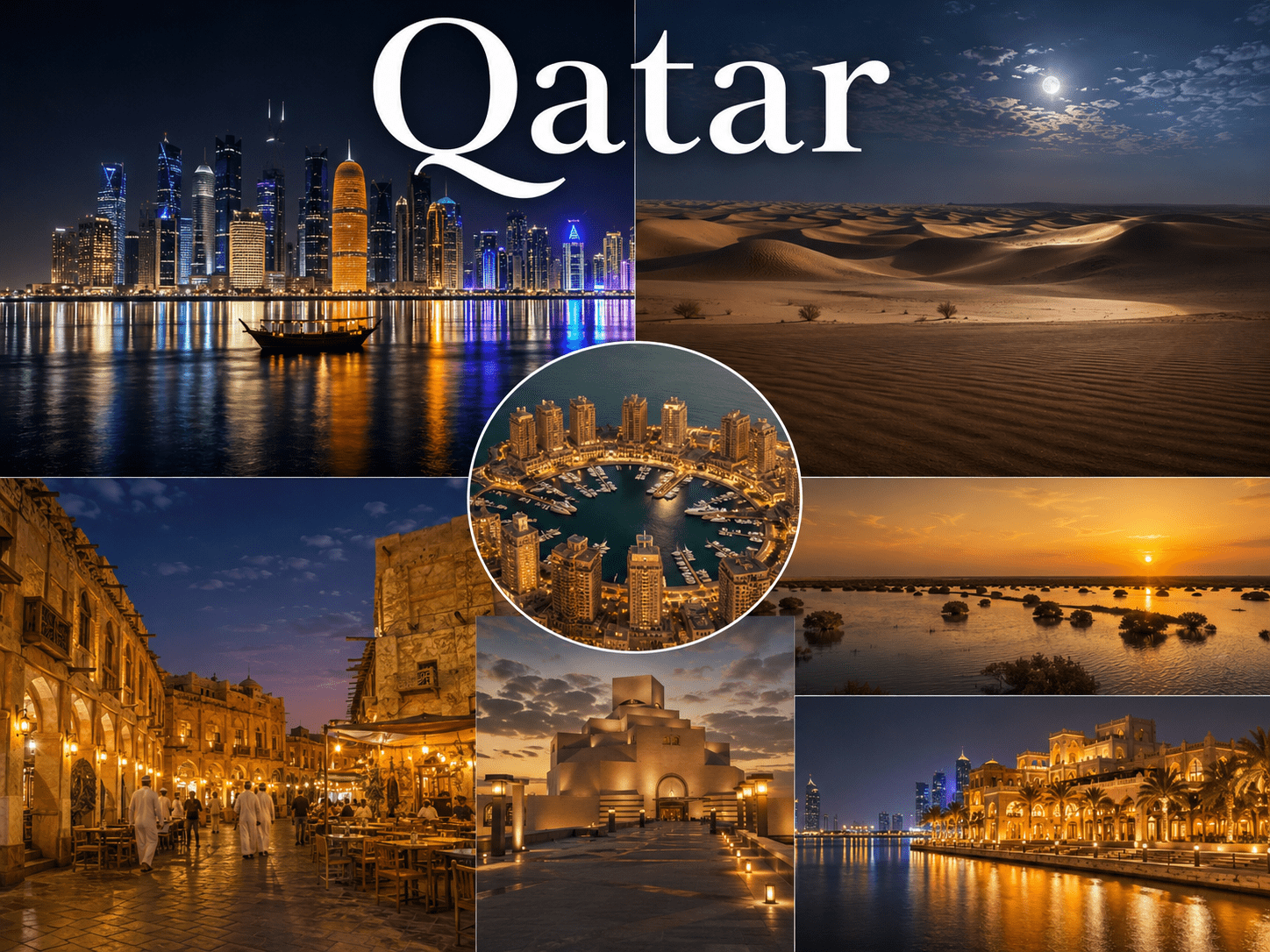
Introduction – The Rising Desert Nation
Qatar is one of the most modern and rapidly developing nations in the Middle East, known for its futuristic skyline, desert landscapes, cultural heritage, and global economic influence. Located on the Arabian Peninsula, it has transformed from a pearl-diving economy into a global hub of energy, finance, and tourism.
Travelers are drawn to Qatar for:
- Ultra-modern architecture
- Luxury tourism and shopping
- Desert safaris and dunes
- Cultural heritage sites
- World-class sports events
- Rich Islamic traditions
From the glittering skyline of Doha to the golden sands of the inland sea, this country blends tradition and innovation in a unique way.
Historical Background of Qatar
Early Settlements
The history of Qatar dates back thousands of years, with early inhabitants relying on:
- Fishing
- Pearl diving
- Trade across the Arabian Gulf
Ottoman Influence
In the 19th century, the region experienced Ottoman influence, shaping early administration and trade routes.
British Protectorate Era
Later, it became a British protectorate, which helped establish:
- Modern governance systems
- Maritime trade regulation
- Infrastructure development
Independence
Qatar gained independence in 1971, marking the beginning of rapid modernization.
Modern Transformation
After independence, it transformed into a global energy powerhouse due to vast natural gas reserves.
Geography and Location
Where is Qatar Located?
Qatar is located in Western Asia, on the northeastern coast of the Arabian Peninsula.
It is bordered by:
- Saudi Arabia (south)
- Persian Gulf (surrounding waters)
Geographic Coordinates
Approximate location: 25°N, 51°E
Landscape Features
The country consists mainly of:
- Flat desert terrain
- Coastal plains
- Inland sea (Khor Al Adaid)
- Sand dunes
Climate of Qatar
Desert Climate
Qatar has a hot desert climate.
Seasonal Overview
- Summer: Extremely hot (very high temperatures)
- Winter: Mild and pleasant
- Rainfall: Minimal
Best Time to Visit
Ideal months:
- November to March (cool season)
Perfect for:
- Outdoor activities
- Desert safaris
- City exploration
Culture and Traditions
Islamic Heritage
Culture in Qatar is deeply rooted in Islamic traditions.
Bedouin Influence
Traditional Bedouin culture influences:
- Hospitality
- Desert lifestyle
- Poetry and storytelling
Cultural Values
Key values include:
- Respect for tradition
- Strong family bonds
- Community hospitality
Religion in Qatar
Islam is the official religion and plays a central role in daily life in Qatar.
It influences:
- Laws
- Holidays
- Architecture
- Social customs
Music, Arts, and Heritage
Traditional Music
Includes:
- Bedouin folk music
- Drumming rhythms
- Sea shanties from pearl diving era
Modern Arts Scene
Qatar invests heavily in:
- Museums
- Art galleries
- Cultural institutions
Architecture
The country is known for:
- Futuristic skyscrapers
- Islamic architectural design
- Cultural fusion buildings
Cuisine of Qatar
Qatar offers a rich Middle Eastern culinary experience.
Popular Dishes
Machboos
Spiced rice with meat or seafood.
Harees
Wheat and meat-based traditional dish.
Saloona
Vegetable and meat stew.
Balaleet
Sweet and savory breakfast dish.
Food Culture
Meals are:
- Shared socially
- Influenced by Arabian cuisine
- Rich in spices
Economy of Qatar
Energy Powerhouse
Qatar is one of the world’s richest countries due to:
- Natural gas exports
- Oil production
Currency
The official currency is the Qatari Riyal (QAR).
Key Industries
- Energy (oil & gas)
- Construction
- Finance
- Tourism
- Aviation
Major Cities in Qatar
Doha – Capital City
Doha is the economic and cultural hub.
Al Wakrah
A coastal city known for:
- Traditional markets
- Fishing heritage
Al Khor
Known for:
- Natural beauty
- Mangroves
- Coastal lifestyle
Languages Spoken
Arabic is the official language in Qatar.
English is widely used in business and tourism.
Tourist Attractions
The Pearl-Qatar
Luxury artificial island with marinas and shopping.
Souq Waqif
Traditional marketplace in Doha.
Museum of Islamic Art
One of the most important cultural museums in the region.
Inland Sea (Khor Al Adaid)
A UNESCO-recognized natural wonder.
International Memberships
Qatar is part of:
- United Nations (UN)
- Gulf Cooperation Council (GCC)
- World Trade Organization (WTO)
Official Sources
Desert Landscapes, Nature & Coastal Beauty
Qatar is a land where golden deserts meet calm Gulf waters. Despite being a small country, it offers striking natural contrasts between modern urban life and untouched desert scenery.
Visitors come here for:
- Desert safari adventures
- Dune bashing experiences
- Coastal relaxation
- Inland sea exploration
- Photography in dramatic landscapes
Khor Al Adaid (Inland Sea)
One of the most unique natural wonders in Qatar, where:
- Sand dunes meet seawater
- Rare ecosystem exists
- UNESCO-recognized natural importance
- Off-road desert tours are popular
Desert Dunes of the South
The southern region features:
- High sand dunes
- Camel trekking routes
- Sunset viewpoints
- Bedouin-style camps
Coastal Areas
The coastline offers:
- Mangroves
- Calm beaches
- Fishing villages
- Luxury waterfront developments
Desert Safari & Adventure Tourism
Dune Bashing
One of the most popular activities in Qatar includes:
- 4×4 desert driving
- High dune climbs
- Sand sliding experiences
Camel Riding
Traditional desert transport experience includes:
- Short rides for tourists
- Cultural Bedouin connection
- Sunset tours
Sandboarding
Adventurers enjoy:
- Sliding down dunes
- Beginner-friendly activity
- Scenic desert views
Desert Camping
Overnight camps offer:
- Traditional Arabic tents
- BBQ dinners
- Stargazing experiences
Festivals and Cultural Events
National Day Celebrations
Qatar celebrates National Day with:
- Parades
- Fireworks
- Cultural performances
- Military displays
Cultural Festivals
Events include:
- Traditional dance shows
- Poetry recitals
- Heritage exhibitions
Sports Events
The country hosts global events such as:
- International football tournaments
- Motorsport events
- Tennis and athletics competitions
Wildlife and Natural Life
Desert Wildlife
Despite harsh conditions, Qatar is home to:
- Arabian oryx
- Desert foxes
- Reptiles
- Migratory birds
Coastal Ecosystems
Marine life includes:
- Dugongs
- Sea turtles
- Fish species in coral areas
Bird Migration Routes
The country lies on major migratory routes attracting:
- Flamingos
- Herons
- Falcons
Adventure and Luxury Tourism
Luxury Tourism
Qatar is known for:
- 5-star resorts
- Luxury shopping malls
- Private desert experiences
Shopping Experiences
Popular destinations include:
- Modern malls
- Traditional souqs
- Designer boutiques
Water Activities
Along the coast:
- Jet skiing
- Sailing
- Diving tours
Transportation and Travel System
Air Connectivity
Hamad International Airport connects Qatar globally with:
- Europe
- Asia
- Africa
- Americas
Road Network
The country has:
- Modern highways
- Desert access roads
- Well-maintained city routes
Public Transport
Includes:
- Metro system in Doha
- Air-conditioned buses
- Taxi services
Hidden Gems of Qatar
Zekreet Peninsula
Known for:
- Rock formations
- Desert landscapes
- Film shooting locations
Purple Island
A natural site featuring:
- Mangrove forests
- Kayaking routes
- Birdwatching spots
Al Zubarah Fort
A UNESCO World Heritage site with:
- Archaeological ruins
- Historical importance
Food Culture and Culinary Experience
Traditional Dining
Qatar cuisine is rich in:
- Rice-based dishes
- Lamb and chicken meals
- Spiced flavors
Street Food
Popular items include:
- Shawarma
- Falafel
- Grilled meats
Hospitality Culture
Food is often:
- Shared in large gatherings
- Served with Arabic coffee
- Accompanied by dates
Education and Modern Development
Education System
Qatar invests heavily in:
- International universities
- Research centers
- STEM education
Technology Growth
The country is developing:
- Smart cities
- Digital services
- Innovation hubs
Urban Expansion
Doha is rapidly growing with:
- Skyscrapers
- Waterfront projects
- Modern infrastructure
Daily Life and Culture
Urban Lifestyle
In cities like Doha:
- High-end shopping is common
- Cafés and restaurants are popular
- Modern lifestyle blends with tradition
Traditional Lifestyle
Still preserved in:
- Desert communities
- Bedouin culture
- Cultural villages
Cultural Values
Key values include:
- Hospitality
- Respect for elders
- Strong national identity
Government and Political Structure
Qatar is an absolute monarchy led by the Emir, who serves as both head of state and head of government. The political system is highly centralized and focuses on long-term national development and stability.
Executive Authority
The Emir holds the highest authority and appoints key government officials who manage national policies.
Advisory Council
A consultative council assists in:
- Drafting legislation
- Reviewing national laws
- Advising on public policies
Local Administration
Municipal bodies manage:
- Urban planning
- Public services
- Infrastructure development
Famous Landmarks in Qatar
Museum of Islamic Art
One of the most iconic cultural institutions in Qatar featuring:
- Islamic artifacts
- Global art collections
- Waterfront architecture
Souq Waqif
A traditional marketplace offering:
- Spices
- Textiles
- Handicrafts
- Local food
The Pearl-Qatar
A luxury island development known for:
- Marina lifestyle
- Shopping districts
- High-end residences
Katara Cultural Village
A cultural hub hosting:
- Art exhibitions
- Theatres
- Festivals
National Museum of Qatar
A modern architectural landmark showcasing national history.
Unique and Interesting Facts About Qatar
One of the Richest Nations
The country has one of the highest GDP per capita in the world due to energy exports.
Artificial Luxury Islands
The Pearl-Qatar is a man-made island designed for luxury living.
Desert Meets Ocean Geography
Few countries in the world combine vast deserts and coastal waters so closely.
World-Class Event Host
It has hosted major international events including global sports tournaments.
Rapid Urban Transformation
Doha has transformed into a futuristic skyline within a few decades.
Economy and Business Growth
Energy Dominance
Qatar is a global leader in:
- Natural gas exports
- Oil production
- LNG (liquefied natural gas)
Currency
The official currency is the Qatari Riyal (QAR).
Key Industries
- Energy sector
- Construction and infrastructure
- Aviation and logistics
- Tourism and hospitality
- Finance and banking
Foreign Investment
The country attracts global investors due to:
- Stable economy
- Strategic location
- Strong infrastructure
Major Cities in Qatar
Doha – Capital City
Doha is the economic, cultural, and political heart of the country.
Al Rayyan
A rapidly growing urban area with residential communities and sports facilities.
Al Wakrah
Known for:
- Coastal charm
- Traditional fishing heritage
- Family-friendly beaches
Lusail City
A modern smart city featuring:
- Stadiums
- Marina districts
- Futuristic infrastructure
Transportation and Infrastructure
Air Travel
Hamad International Airport connects Qatar to global destinations across all continents.
Metro System
Doha Metro is modern, fast, and connects:
- City center
- Stadiums
- Residential areas
Road Network
Highly developed highways support:
- City commuting
- Desert travel
- Logistics
Public Transport
Includes:
- Air-conditioned buses
- Ride-hailing services
- Taxis
Travel Itinerary (7 Days in Qatar)
Day 1–2: Doha City
Explore museums, Souq Waqif, and Corniche waterfront.
Day 3: Desert Safari
Experience dune bashing and inland sea adventure.
Day 4: Katara & Pearl Island
Luxury lifestyle and cultural experiences.
Day 5: Al Zubarah Fort
UNESCO heritage exploration.
Day 6: Zekreet Peninsula
Rock formations and desert photography.
Day 7: Relaxation Day
Shopping malls, beaches, and spa resorts.
Best Time to Visit Qatar
Winter Season (Best)
November to March is ideal for:
- Outdoor activities
- Desert safaris
- City sightseeing
Summer Season
April to October is extremely hot but good for:
- Indoor attractions
- Luxury resorts
- Shopping malls
Challenges and Future Development
Climate Challenges
Qatar faces:
- Extreme heat conditions
- Water resource management issues
Economic Diversification
Efforts are focused on:
- Reducing oil dependency
- Expanding tourism
- Growing technology sectors
Urban Sustainability
Projects include:
- Smart city planning
- Green energy initiatives
- Sustainable transport systems
Final Summary
Qatar is a unique blend of futuristic innovation and deep-rooted tradition. From dazzling skylines and luxury islands to vast desert landscapes and rich cultural heritage, it offers one of the most distinctive travel experiences in the Middle East.
Its rapid transformation, strong economy, and commitment to global development make it a rising global destination for tourism, business, and culture. Whether exploring Doha’s modern skyline or the silence of the desert dunes, visitors experience a powerful contrast between tradition and progress.
Key Facts Table
| Category | Information |
|---|---|
| Official Name | State of Qatar |
| Capital City | Doha |
| Region | Middle East / Western Asia |
| Language | Arabic |
| Currency | Qatari Riyal (QAR) |
| Population | ~2.7 million |
| Famous Landmark | Museum of Islamic Art |
| Climate | Hot desert climate |
| Major Industries | Energy, Gas, Tourism |
| Famous Cities | Doha, Al Wakrah, Lusail |
| Tourism Type | Luxury, desert, cultural |
| UN Membership | Yes |
| Governance | Absolute monarchy |
FAQ Section
What is Qatar famous for?
Qatar is famous for skyscrapers, desert safaris, and natural gas wealth.
What is the capital of Qatar?
The capital is Doha.
Is Qatar safe for tourists?
Yes, it is considered one of the safest countries in the world.
What language is spoken in Qatar?
Arabic is official, English is widely used.
What is the best time to visit Qatar?
Winter months from November to March are ideal.

