



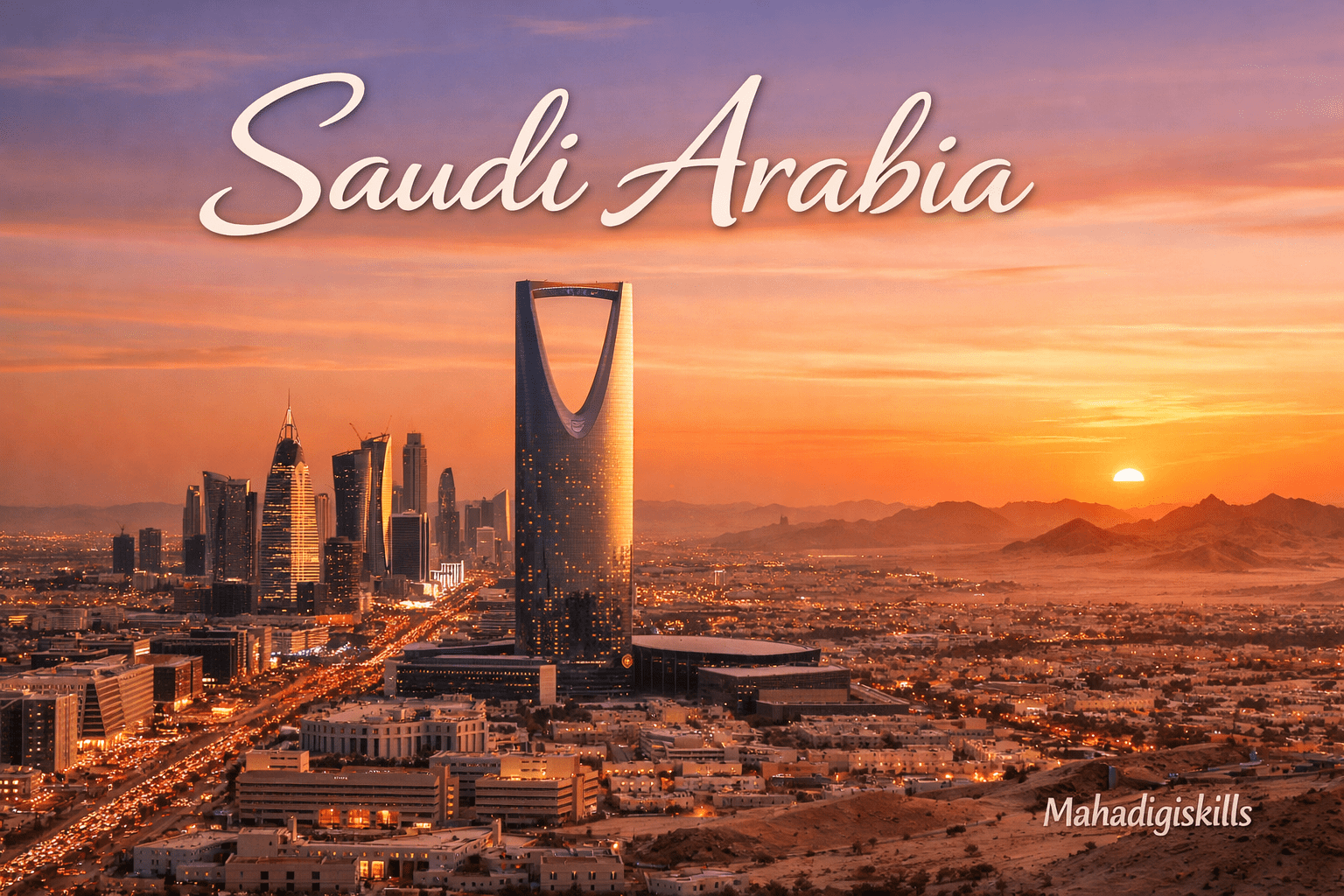
Introduction to Saudi Arabia
Saudi Arabia is a country of profound historical and cultural significance, located on the Arabian Peninsula in the heart of the Middle East. Known as the birthplace of Islam, it hosts the sacred cities of Mecca and Medina, drawing millions of visitors and pilgrims each year.
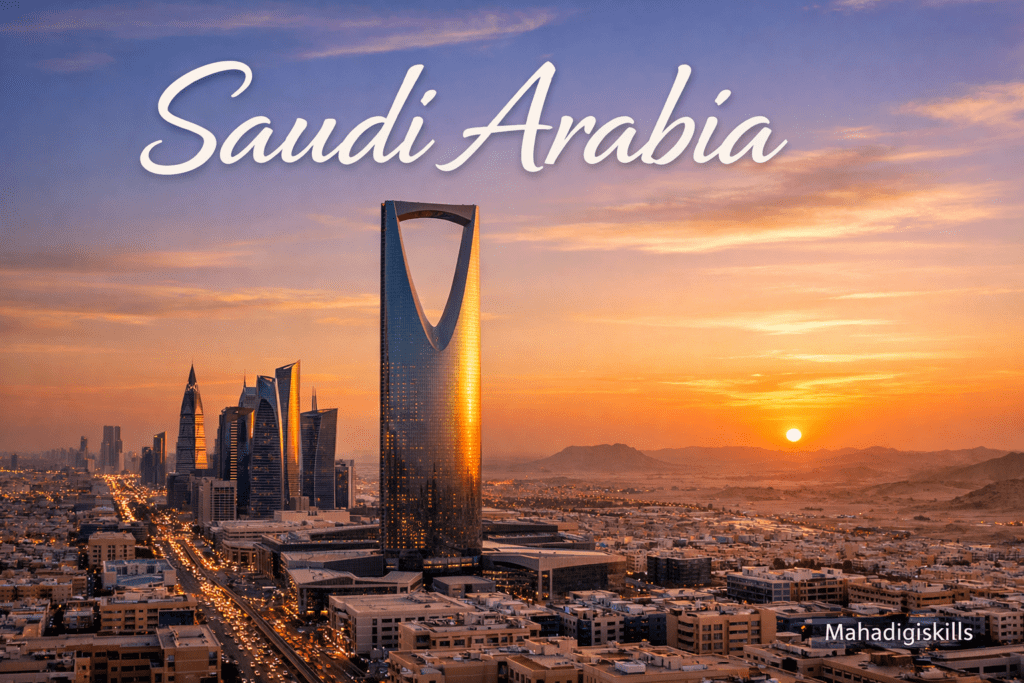
Beyond its religious prominence, Saudi Arabia features striking desert landscapes, rugged mountains, and modern urban centers such as Riyadh and Jeddah. The nation combines a rich heritage rooted in centuries of Arab culture with contemporary developments in infrastructure, tourism, and international business.
This comprehensive guide to Saudi Arabia will cover its history, geography, culture, economy, languages, cities, attractions, and travel essentials, providing readers with an in-depth understanding of the country.
History of Saudi Arabia
Early Civilization
The territory that is now Saudi Arabia has been inhabited for thousands of years. Archaeological discoveries reveal that ancient tribes engaged in trade, pastoralism, and agriculture long before the rise of Islam. Ancient caravan routes linked the region to Mesopotamia, Africa, and the Levant.
Birthplace of Islam
In the 7th century CE, the Prophet Muhammad established Islam in Mecca, profoundly shaping the region’s religious and political landscape. Medina, where the first Islamic community was founded, remains central to Islamic history.
Pilgrimage practices, including Hajj and Umrah, have continued for centuries, making Saudi Arabia the spiritual heart of the Muslim world.
Formation of the Modern Kingdom
The modern state of Saudi Arabia was officially founded in 1932 by King Abdulaziz Ibn Saud, unifying multiple tribal regions under a single monarchy. This marked the beginning of a new era of governance, national identity, and regional influence.
The discovery of oil in 1938 in Dhahran revolutionized the country, transforming Saudi Arabia into a leading global energy producer and enabling rapid economic growth.
Geography of Saudi Arabia
Location and Borders
Saudi Arabia occupies most of the Arabian Peninsula, bordered by:
- North: Jordan, Iraq
- Northeast: Kuwait
- East: Qatar, United Arab Emirates, Oman
- South: Yemen
- West: Red Sea
Covering about 2.15 million sq. km, Saudi Arabia is the largest country in the Middle East.
Topography and Climate
The landscape of Saudi Arabia is diverse, including:
- Deserts: Rub’ al Khali (Empty Quarter) and Nafud Desert
- Mountains: Asir and Hejaz ranges
- Coastlines: Red Sea and Persian Gulf
- Plateaus and valleys: Najd plateau and scenic wadis
The climate is mainly arid, with scorching summers in desert regions and mild winters in elevated areas. Coastal zones experience higher humidity.
Culture of Saudi Arabia
Language and Ethnic Composition
The official language is Arabic, with local dialects such as Najdi, Hejazi, and Gulf Arabic. The population is predominantly Arab, with smaller communities of Afro-Arabs and expatriates contributing to the cultural mix.
Religion and Customs
Islam is the central pillar of Saudi Arabian society:
- Majority follow Sunni Islam, with a Shia minority in the Eastern Province
- Daily life and social norms are guided by Islamic principles
- Pilgrimages, festivals, and religious observances remain integral to cultural identity
Arts, Music, and Cuisine
Architecture and Art
Saudi Arabia preserves traditional Islamic architecture through mosques, palaces, and historic urban centers, while modern skyscrapers in Riyadh and Jeddah demonstrate contemporary design.
Music and Dance
- Ardah: A traditional sword dance performed at national events
- Folk music features drums, stringed instruments, and regional rhythms
Culinary Traditions
Saudi cuisine is renowned for:
- Kabsa: Spiced rice with meat
- Mandi: Slow-cooked rice and meat
- Dates: A staple with ceremonial and religious significance
- Traditional Arabic coffee (Gahwa) often served with dates as a symbol of hospitality
Major Cities of Saudi Arabia
Riyadh (Capital)
Riyadh is the political, financial, and cultural center, combining modern skyscrapers with historical landmarks and museums.
Jeddah
Jeddah, located on the Red Sea, is a commercial hub and gateway for pilgrims visiting Mecca. The historic district, Al-Balad, is known for coral stone buildings, souks, and traditional architecture.
Mecca
The holiest city in Islam, hosting the Kaaba, and center of the annual Hajj pilgrimage. Non-Muslims are not permitted inside the city.
Medina
The second holiest city, home to the Prophet’s Mosque and important for religious tourism.
Dammam & Dhahran
Key economic cities in the Eastern Province, particularly for the oil industry and modern infrastructure.
Economy of Saudi Arabia
Saudi Arabia has one of the most influential economies in the Middle East, largely driven by its energy sector. Oil and natural gas dominate government revenue and exports, positioning the country as a key global energy player.(worldbank.org)
However, the economy is gradually diversifying through the Vision 2030 initiative, focusing on tourism, technology, renewable energy, and private sector growth.
Key Sectors
Oil and Gas
- Saudi Arabia has the largest proven oil reserves globally, primarily in the Eastern Province.
- It is a leading member of OPEC, supplying crude oil worldwide.
- Oil wealth finances infrastructure, healthcare, education, and industrial development.
Industry and Manufacturing
- Petrochemicals and refining
- Cement, steel, and construction materials
- Automotive assembly and consumer goods
Agriculture
Although deserts dominate the landscape, Saudi Arabia produces:
- Dates (one of the largest producers globally)
- Wheat, barley, and vegetables
- Fruits like pomegranates and citrus
Currency
The official currency is the Saudi Riyal (SAR). Most transactions in urban areas can be done via credit cards, but cash is preferred in markets and rural regions.
Trade Partners
Saudi Arabia’s major trade relationships include:
- China – largest importer of oil and industrial goods
- United States – machinery, technology, and defense
- Japan & South Korea – energy and industrial equipment
- United Arab Emirates & Gulf countries – regional trade hub
Tourism in Saudi Arabia
In recent years, Saudi Arabia has invested heavily in tourism, opening its doors to international visitors beyond religious pilgrimage. The country is known for historical landmarks, natural wonders, and modern entertainment projects.
Top Tourist Attractions
Religious Sites
- Mecca – Home to the Kaaba, focal point of Hajj
- Medina – Houses the Prophet’s Mosque and Islamic heritage sites
Religious tourism is central to Saudi Arabia’s global significance.
Historical and Cultural Sites
- Al-Ula & Madain Saleh – Ancient Nabatean ruins, UNESCO-listed
- Diriyah – Historical city and former Saudi capital
- Masmak Fortress – Symbol of the unification of Saudi Arabia
- National Museum of Saudi Arabia – Exhibits the country’s history, culture, and archaeology
Natural Attractions
- Rub’ al Khali (Empty Quarter) – The world’s largest continuous sand desert
- Asir Mountains – Hiking, cooler climates, and scenic landscapes
- Red Sea Coast – Diving, beaches, and coral reefs
- Farasan Islands – Marine life and tropical wildlife
UNESCO World Heritage Sites
Saudi Arabia is home to several UNESCO-recognized locations:
- Al-Hijr Archaeological Site (Madain Saleh)
- Historic Jeddah (Al-Balad)
- Rock Art of the Hail Region
- At-Turaif District in ad-Dir’iyah
These sites preserve the rich cultural and architectural heritage of the kingdom.(whc.unesco.org)
Transportation in Saudi Arabia
Saudi Arabia’s vast territory is well-connected through modern transportation networks.
Airports
- King Khalid International Airport (Riyadh) – Major international gateway
- King Abdulaziz International Airport (Jeddah) – Primary hub for pilgrims
- Prince Mohammad bin Abdulaziz Airport (Medina) – Religious and regional flights
Roadways and Rail
- Extensive highway system connects cities like Riyadh, Jeddah, Mecca, and Dammam
- Long-distance buses and private taxis are widely used
- Haramain High-Speed Railway links Mecca, Medina, Jeddah, and King Abdullah Economic City
Local Travel Tips
- Domestic flights are efficient for long distances
- Car rentals are common, especially for desert excursions and regional travel
Best Time to Visit Saudi Arabia
- Spring (March–May): Pleasant temperatures, blooming landscapes, ideal for sightseeing
- Autumn (September–November): Cooler weather and festival season
- Winter (December–February): Mild in central regions, good for desert exploration
- Summer (June–August): Very hot in most areas; coastal regions may offer slightly cooler temperatures
External References (DoFollow)
- UNESCO World Heritage: https://whc.unesco.org
- World Bank Saudi Arabia: https://www.worldbank.org/en/country/saudiarabia
- CIA World Factbook: https://www.cia.gov/the-world-factbook/countries/saudi-arabia/
These sources provide authoritative information about Saudi Arabia’s economy, culture, and heritage.
Unique and Interesting Facts About Saudi Arabia
Saudi Arabia is a country full of fascinating stories, ancient heritage, and modern achievements:
1. The Birthplace of Islam
Saudi Arabia is home to Mecca and Medina, the two holiest cities in Islam, attracting millions of pilgrims annually.
2. Rub’ al Khali Desert
Also known as the Empty Quarter, this desert is the largest continuous sand desert in the world, covering approximately 650,000 sq km.
3. Vision 2030
Saudi Arabia is transforming its economy and society through the Vision 2030 plan, focusing on tourism, renewable energy, entertainment, and diversifying away from oil dependency.
4. UNESCO World Heritage Sites
Saudi Arabia boasts several recognized sites, including:
- Madain Saleh – Ancient Nabatean city
- Al-Balad in Jeddah – Historic urban area
- Diriyah – Original Saudi capital and cultural landmark
5. Rich Culinary Traditions
Saudi cuisine features Kabsa, Mandi, fresh seafood along the Red Sea, and traditional Arabic coffee (Gahwa), often served as a symbol of hospitality.
6. Natural Diversity
From coral reefs on the Red Sea to mountain ranges in Asir, Saudi Arabia’s landscapes are diverse and offer unique eco-tourism opportunities.
Saudi Arabia in International Organizations
Saudi Arabia plays a significant role in global affairs:
- United Nations (UN): Full member, engaging in international diplomacy and development
- G20: Participates in global economic governance
- Organization of Islamic Cooperation (OIC): Leading member promoting Islamic solidarity
- OPEC: Key player in global oil markets
- World Bank & IMF: Collaborates on economic and development projects
These memberships underline Saudi Arabia’s influence in global politics, economics, and religious diplomacy.
Travel Tips for Visiting Saudi Arabia
Entry Requirements
- Passport valid for at least six months
- Tourist visa required (recently introduced for leisure travelers)
- Health insurance recommended
Safety Guidelines
- Stick to major cities and recognized tourist areas
- Observe cultural and religious norms
- Use licensed transportation and guided tours where possible
Currency & Payments
- Official currency: Saudi Riyal (SAR)
- Cash is widely used; credit cards accepted in urban areas
Local Etiquette
- Dress modestly, particularly near religious sites
- Avoid public displays of affection
- Respect prayer times and mosque areas
- Greetings are typically formal, emphasizing respect and hospitality
Major Cities Recap
- Riyadh: Political and financial hub
- Jeddah: Commercial center and gateway to Mecca
- Mecca: Holiest city in Islam
- Medina: Second holiest city, center of pilgrimage
- Dammam & Dhahran: Economic and industrial centers
References (DoFollow)
- UNESCO World Heritage: https://whc.unesco.org
- World Bank Saudi Arabia Overview: https://www.worldbank.org/en/country/saudiarabia
- CIA World Factbook: https://www.cia.gov/the-world-factbook/countries/saudi-arabia/
These links provide reliable and authoritative information about Saudi Arabia.
Final Summary
Saudi Arabia is a nation where history, religion, culture, and modernity intersect. From the sacred sites of Mecca and Medina to the futuristic projects of Riyadh, and from vast deserts to the Red Sea coastline, Saudi Arabia offers travelers a wealth of experiences.
Its cultural richness, traditional hospitality, and growing tourism infrastructure make it a must-visit destination for pilgrims, adventurers, and history enthusiasts alike.
Whether exploring ancient Nabatean ruins, hiking in mountain valleys, or experiencing the vibrant modern cities, visitors gain a unique insight into the kingdom’s heritage and vision for the future.
Key Facts About Saudi Arabia
| Category | Information |
|---|---|
| Country Name | Saudi Arabia |
| Capital City | Riyadh |
| Continent | Asia (Middle East) |
| Coordinates | 23.8859° N, 45.0792° E |
| Population | ~36 million |
| Official Language | Arabic |
| Other Languages | English widely spoken, regional dialects |
| Currency | Saudi Riyal (SAR) |
| Government | Absolute Monarchy |
| Highest Point | Jabal Sawda (3,133 m) |
| Lowest Point | Persian Gulf (0 m) |
| Main Industries | Oil & gas, petrochemicals, mining, manufacturing, tourism |
| Major Exports | Crude oil, petrochemicals, dates, plastics |
| UN Membership | Yes |
List of All 195 Countries
A
- Afghanistan
- Albania
- Algeria
- Andorra
- Angola
- Antigua and Barbuda
- Argentina
- Armenia
- Australia
- Austria
- Azerbaijan
- Bahamas
- Bahrain
- Bangladesh
- Barbados
- Belarus
- Belgium
- Belize
- Benin
- Bhutan
- Bolivia
- Bosnia and Herzegovina
- Botswana
- Brazil
- Brunei
- Bulgaria
- Burkina Faso
- Burundi
- Cabo Verde
- Cambodia
- Cameroon
- Canada
- Central African Republic
- Chad
- Chile
- China
- Colombia
- Comoros
- Congo (Congo-Brazzaville)
- Costa Rica

