



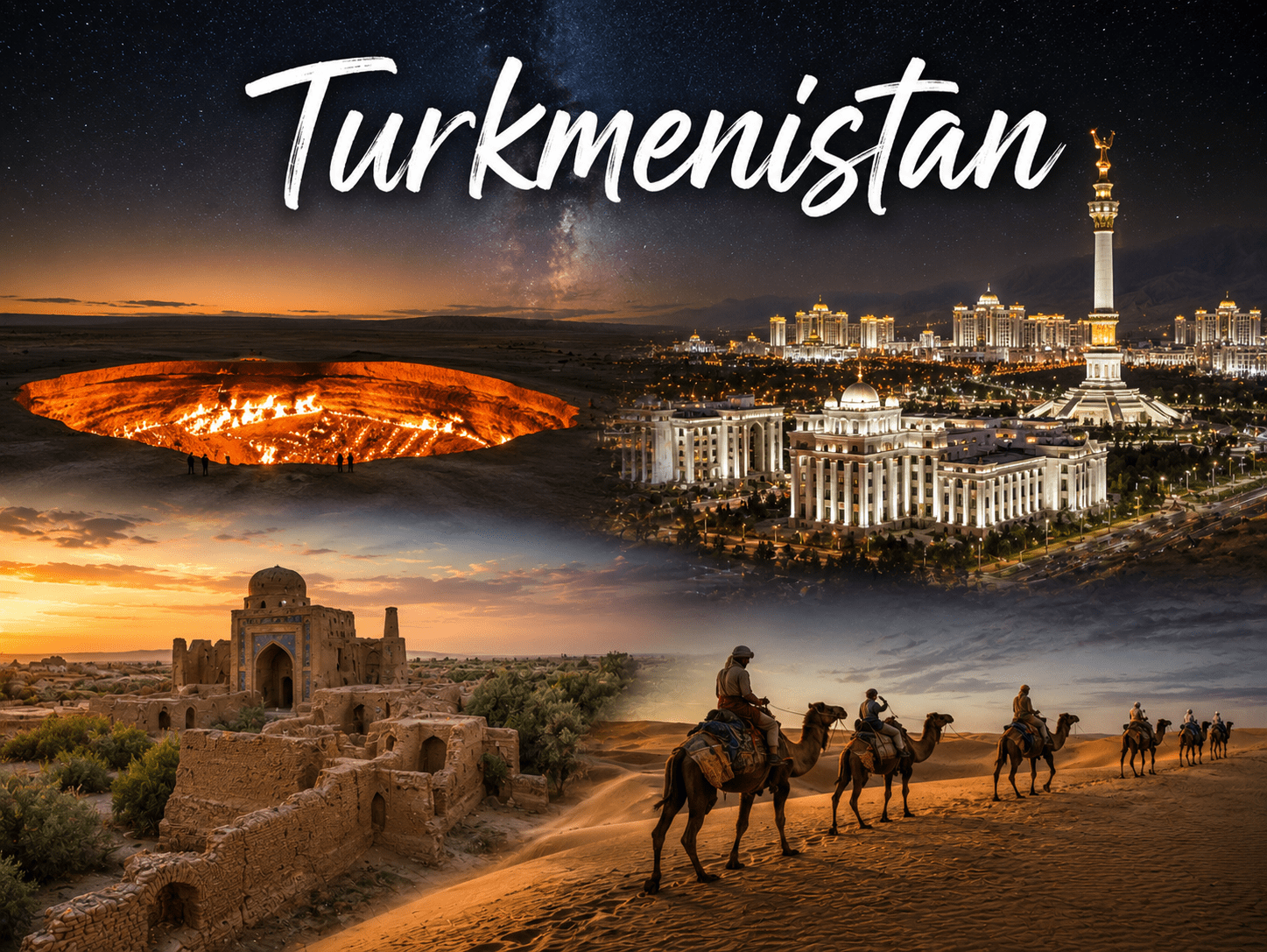
Introduction to Turkmenistan
Turkmenistan is a fascinating Central Asian country known for vast deserts, ancient Silk Road cities, striking marble architecture, and unique cultural traditions. Located between the Caspian Sea and the deserts of Central Asia, Turkmenistan offers travelers a blend of historical heritage and dramatic landscapes.
Visitors travel to Turkmenistan for:
- Ancient Silk Road history
- Desert adventures
- Unique architecture in Ashgabat
- Traditional Central Asian culture
- Historic ruins and fortresses
- Remote and untouched landscapes
Modern Turkmenistan combines ancient traditions with modern national identity and monumental architecture.
Historical Background of Turkmenistan
Ancient History of Turkmenistan
The history of Turkmenistan stretches back thousands of years and is deeply connected to the Silk Road trade routes.
Ancient civilizations in Turkmenistan developed:
- Caravan trade centers
- Fortified desert settlements
- Agricultural oasis communities
- Cultural exchange between Asia and the Middle East
Silk Road Importance
For centuries, Turkmenistan served as an important link between East and West along the Silk Road.
Trade routes passing through Turkmenistan connected:
- China
- Persia
- India
- The Mediterranean world
This exchange influenced architecture, culture, and commerce across the region.
Modern Development of Turkmenistan
Modern Turkmenistan became independent in the late 20th century and developed modern infrastructure, energy industries, and monumental urban projects.
Today, Turkmenistan is known for:
- Marble architecture
- Desert landscapes
- Natural gas resources
- Historical Silk Road heritage
Geography and Location of Turkmenistan
Where Is Turkmenistan Located?
Turkmenistan is located in Central Asia and borders:
- Kazakhstan
- Uzbekistan
- Afghanistan
- Iran
The country also borders the Caspian Sea.
Geographic Features
The geography of Turkmenistan includes:
- Karakum Desert
- Mountain regions
- Oasis cities
- Coastal Caspian areas
- Dry plains and canyons
Much of Turkmenistan is covered by desert terrain.
Climate of Turkmenistan
The climate in Turkmenistan is mostly dry and continental:
- Hot summers
- Cold winters in some regions
- Low annual rainfall
- Sunny weather across much of the year
Spring and autumn are generally the best seasons to visit Turkmenistan.
Culture and Society in Turkmenistan
Cultural Identity of Turkmenistan
Culture in Turkmenistan reflects Turkic, Persian, and Central Asian influences.
Important cultural traditions include:
- Hospitality and family values
- Traditional music and dance
- Carpet weaving
- Horse breeding traditions
- Nomadic heritage
Languages Spoken in Turkmenistan
The official language of Turkmenistan is Turkmen.
Russian is also understood in some urban areas and business settings.
Religion in Turkmenistan
Islam is the dominant religion in Turkmenistan, influencing customs and cultural traditions.
Mosques and historical religious sites are important landmarks throughout Turkmenistan.
Traditional Arts and Crafts
Traditional crafts in Turkmenistan include:
- Carpet weaving
- Jewelry making
- Embroidery
- Textile production
- Decorative arts
Turkmen carpets are internationally famous for their craftsmanship.
Cuisine of Turkmenistan
Food Culture in Turkmenistan
The cuisine of Turkmenistan reflects Central Asian traditions with influences from neighboring cultures.
Common ingredients include:
- Lamb and beef
- Rice and bread
- Yogurt and dairy products
- Herbs and spices
- Vegetables and tea
Meals in Turkmenistan often emphasize hospitality and shared dining.
Famous Foods in Turkmenistan
Plov
Plov is one of the most popular dishes in Turkmenistan, prepared with rice, meat, carrots, and spices.
Shashlik
Shashlik grilled meat skewers are widely enjoyed across Turkmenistan.
Traditional Bread
Fresh bread plays an important role in food culture throughout Turkmenistan.
Tea Culture
Tea is commonly served during meals and social gatherings in Turkmenistan.
Major Cities in Turkmenistan
Ashgabat – Capital City
Ashgabat is the capital and largest city of Turkmenistan.
The city is known for:
- White marble buildings
- Monumental architecture
- Wide boulevards
- Museums and cultural centers
Turkmenbashi
Türkmenbaşy is an important Caspian Sea port city.
Mary
Mary is known for nearby historical Silk Road sites.
Tourism in Turkmenistan
Why Visit Turkmenistan?
Tourism in Turkmenistan attracts travelers interested in:
- Silk Road history
- Desert expeditions
- Unique architecture
- Cultural heritage
- Ancient archaeological sites
Famous Attractions in Turkmenistan
Darvaza Gas Crater
Darvaza Gas Crater is one of the country’s most famous attractions, often called the “Door to Hell.”
Ancient City of Merv
State Historical and Cultural Park Ancient Merv is a UNESCO World Heritage Site connected to the Silk Road.
Neutrality Monument
Neutrality Monument is one of the most recognizable landmarks in the capital.
External DoFollow Links
- Turkmenistan Tourism Information: https://turkmenistan.gov.tm
- UNESCO Turkmenistan Sites: https://whc.unesco.org/en/statesparties/tm
- World Bank Turkmenistan Data: https://www.worldbank.org/en/country/turkmenistan
Economy of Turkmenistan
The economy of Turkmenistan is heavily supported by natural gas production, energy exports, agriculture, and infrastructure development. Due to its rich energy resources, Turkmenistan plays an important role in regional energy markets.
Major sectors in Turkmenistan include:
- Natural gas and energy
- Agriculture and cotton production
- Construction and infrastructure
- Textile manufacturing
- Transportation and trade
Energy industries remain central to the economic development of Turkmenistan.
Agriculture in Turkmenistan
Agriculture has historically been important in Turkmenistan, especially in oasis regions and irrigated farmland.
Key agricultural products include:
- Cotton
- Wheat
- Melons and fruits
- Vegetables and livestock
The famous melons of Turkmenistan are widely celebrated across Central Asia.
Currency of Turkmenistan
The official currency of Turkmenistan is the Turkmenistani Manat (TMT).
Currency Details:
- Currency: Turkmenistani Manat
- Code: TMT
- Central Bank: Central Bank of Turkmenistan
Cash remains commonly used in many areas of Turkmenistan.
Transportation in Turkmenistan
Public Transportation in Turkmenistan
Transportation in Turkmenistan includes:
- Railways
- Buses and taxis
- Domestic flights
- Highways connecting major cities
Infrastructure development has expanded transportation systems across Turkmenistan.
Railways in Turkmenistan
Rail travel plays an important role in connecting regions of Turkmenistan, especially across desert areas.
Rail lines connect:
- Ashgabat
- Mary
- Türkmenbaşy
- Border regions and trade routes
Airports in Turkmenistan
Major airports include:
- Ashgabat International Airport
- Türkmenbaşy International Airport
- Mary International Airport
These airports connect Turkmenistan with regional and international destinations.
Nature and Landscapes in Turkmenistan
Karakum Desert
The Karakum Desert covers much of Turkmenistan and is one of the country’s defining natural features.
Desert tourism activities include:
- Camping under desert skies
- Jeep expeditions
- Photography tours
- Exploring remote landscapes
Natural Beauty of Turkmenistan
Nature in Turkmenistan includes:
- Sand dunes and deserts
- Mountain scenery
- Canyons and cliffs
- Caspian Sea coastline
- Oasis settlements
The dramatic landscapes create a unique travel experience in Turkmenistan.
Nature Reserves and Parks
Repetek Biosphere Reserve
Repetek Biosphere Reserve is known for desert ecosystems and scientific research.
Yangykala Canyon
Yangykala Canyon is famous for colorful rock formations and dramatic canyon views.
Kopet Dag Mountains
Kopet Dag form part of the southern landscape near the Iranian border.
Historical Monuments in Turkmenistan
Ancient Silk Road Heritage
Historical monuments in Turkmenistan reflect centuries of Silk Road influence.
Travelers explore:
- Ancient fortresses
- Caravanserais
- Archaeological ruins
- Islamic architecture
UNESCO Heritage Sites
Ancient Merv
State Historical and Cultural Park Ancient Merv is among the most important Silk Road archaeological sites.
Kunya-Urgench
Kunya-Urgench is another UNESCO-listed historical destination in Turkmenistan.
Festivals and Traditions in Turkmenistan
Cultural Traditions in Turkmenistan
Traditional customs remain important throughout Turkmenistan.
Cultural traditions include:
- Hospitality ceremonies
- Traditional music and dance
- Carpet weaving arts
- Horse celebrations
- Family gatherings and festivals
Akhal-Teke Horses
The Akhal-Teke horse is an important national symbol of Turkmenistan.
These horses are famous for:
- Speed and endurance
- Metallic coat appearance
- Historical significance in Central Asia
Festivals in Turkmenistan
Festivals in Turkmenistan celebrate:
- National culture
- Traditional crafts
- Music and folklore
- Agricultural traditions
Education System in Turkmenistan
Structure of Education
Education in Turkmenistan includes:
- Primary and secondary schooling
- Vocational education
- Universities and technical institutions
Education development remains important in modern Turkmenistan.
Higher Education in Turkmenistan
Universities focus on:
- Engineering
- Energy industries
- Agriculture and sciences
- Technology and business studies
Best Time to Visit Turkmenistan
Seasonal Travel Guide
The best time to visit Turkmenistan depends on weather preferences:
- March–May: Mild spring temperatures
- September–November: Comfortable autumn climate
- Summer months: Very hot desert temperatures
- Winter months: Cooler weather in northern areas
Spring and autumn are generally ideal for tourism in Turkmenistan.
Interesting Facts About Turkmenistan
- Turkmenistan is home to the famous Darvaza Gas Crater
- Much of the country is covered by the Karakum Desert
- Turkmen carpets are internationally recognized
- The Akhal-Teke horse is a national symbol
- Ashgabat is famous for white marble architecture
- Ancient Silk Road cities remain important attractions in Turkmenistan
International Relations of Turkmenistan
Regional Importance
Turkmenistan plays an important role in Central Asian energy and trade routes.
International Organizations
Turkmenistan participates in:
- United Nations
- Regional Central Asian partnerships
- International energy cooperation initiatives
Food and Culinary Culture in Turkmenistan
The cuisine of Turkmenistan reflects Central Asian nomadic traditions combined with influences from Persian, Turkic, and Silk Road cultures. Food culture in Turkmenistan emphasizes hospitality, hearty meals, and the use of fresh bread, meat, rice, and dairy products.
Meals in Turkmenistan commonly include:
- Rice dishes and soups
- Lamb and beef meals
- Fresh bread and pastries
- Yogurt and dairy products
- Tea served during gatherings
Traditional dining customs remain an important part of social life in Turkmenistan.
Famous Foods in Turkmenistan
Plov
Plov is one of the most popular dishes in Turkmenistan, made with rice, meat, carrots, onions, and spices.
Shashlik
Shashlik grilled meat skewers are widely enjoyed throughout Turkmenistan.
Dograma
Dograma is a traditional meal in Turkmenistan prepared with bread, broth, and meat.
Traditional Bread
Freshly baked bread is highly respected in Turkmenistan and served with nearly every meal.
Shopping and Lifestyle in Turkmenistan
Shopping Experience in Turkmenistan
Shopping in Turkmenistan combines traditional bazaars with modern city stores.
Visitors can buy:
- Handmade carpets
- Silver jewelry
- Traditional textiles
- Decorative crafts
- Local tea and spices
Turkmen carpets are among the country’s most famous cultural products.
Traditional Markets in Turkmenistan
Markets in Turkmenistan are known for:
- Colorful textiles
- Traditional clothing
- Artisan handicrafts
- Fresh produce and spices
These bazaars provide insight into daily life and traditions in Turkmenistan.
Lifestyle in Turkmenistan
Life in Turkmenistan combines:
- Traditional family values
- Hospitality and respect for guests
- Cultural celebrations
- Urban modernization in major cities
- Nomadic heritage influences
Community and family traditions remain central to society in Turkmenistan.
Sports and Recreation in Turkmenistan
Popular Sports in Turkmenistan
Sports in Turkmenistan include:
- Football (soccer)
- Wrestling
- Horse racing
- Martial arts
- Athletics
Traditional horse sports are especially important in Turkmenistan.
Akhal-Teke Horse Culture
The Akhal-Teke horse is a major symbol of Turkmenistan and plays an important role in national culture.
Horse traditions include:
- Racing events
- Ceremonial celebrations
- Cultural festivals
Outdoor Activities in Turkmenistan
Outdoor recreation in Turkmenistan includes:
- Desert expeditions
- Canyon exploration
- Historical site tours
- Camping and photography
- Mountain hiking
The country’s remote landscapes make adventure tourism increasingly popular.
Travel Safety in Turkmenistan
Safety for Tourists
Turkmenistan is generally considered safe for organized tourism. Visitors should:
- Follow local laws and customs
- Carry identification and travel documents
- Respect cultural traditions
- Use authorized guides where required
Health and Travel Tips
Travelers visiting Turkmenistan should:
- Stay hydrated in desert climates
- Prepare for temperature extremes
- Carry sunscreen and protective clothing
- Plan transportation carefully in remote regions
Why Turkmenistan Is Unique
Cultural and Natural Identity
The uniqueness of Turkmenistan comes from its combination of:
- Silk Road heritage
- Vast desert landscapes
- White marble architecture
- Ancient archaeological ruins
- Nomadic cultural traditions
- Famous Akhal-Teke horses
Few destinations in Central Asia offer the same blend of historical mystery and dramatic scenery as Turkmenistan.
Final Summary
Turkmenistan is a remarkable Central Asian destination known for Silk Road history, desert landscapes, unique architecture, and traditional culture. From the glowing Darvaza Gas Crater to the ancient ruins of Merv and the marble city of Ashgabat, Turkmenistan offers travelers an unforgettable journey through one of the region’s most distinctive countries.
Visitors to Turkmenistan can enjoy:
- Ancient Silk Road heritage
- Desert expeditions and canyon landscapes
- Monumental marble architecture
- Traditional bazaars and carpets
- Central Asian cuisine and hospitality
- Historical archaeological sites
With its rich history and dramatic natural scenery, Turkmenistan remains one of Central Asia’s most intriguing travel destinations.
Key Facts About Turkmenistan
| Category | Information |
|---|---|
| Country Name | Turkmenistan |
| Region | Central Asia |
| Capital | Ashgabat |
| Currency | Turkmenistani Manat (TMT) |
| Official Language | Turkmen |
| Famous For | Darvaza Gas Crater, carpets |
| Major Attraction | Ancient Merv |
| Popular Sports | Horse racing and football |
| Geography | Desert and oasis landscapes |
| Best Time to Visit | March to May |

