



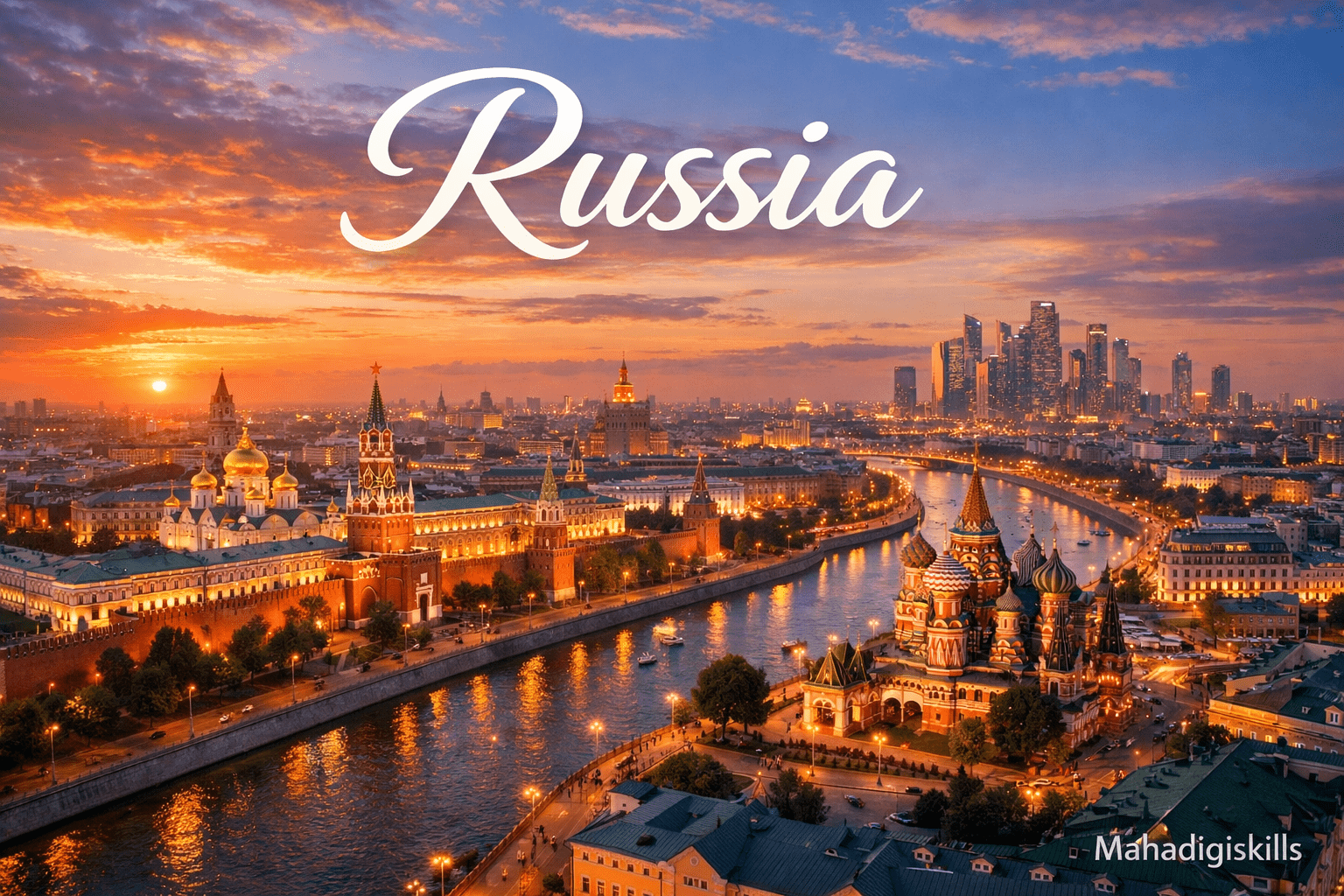
Russia, the largest country on Earth, stretches across Eastern Europe and northern Asia, covering 17.1 million square kilometers. Known for its sprawling landscapes, rich culture, and influential history, Russia offers travelers an unparalleled blend of tradition and modernity. From bustling metropolitan centers like Moscow to the frozen tundras of Siberia, the country’s vastness provides endless exploration opportunities.
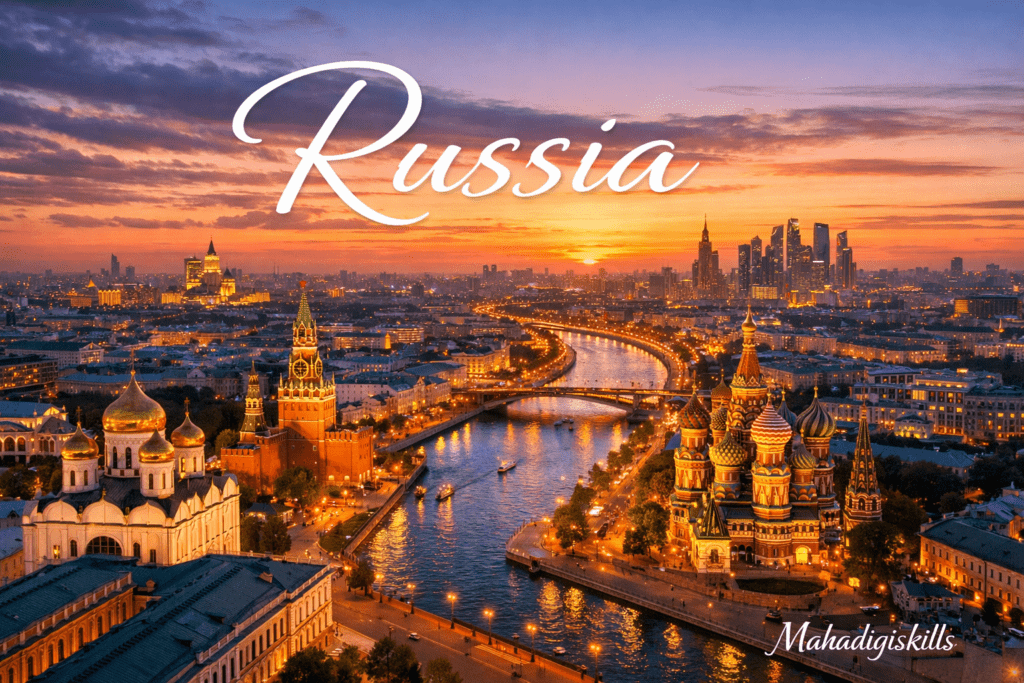
Historical Overview of Russia
The history of Russia is a tapestry of empires, revolutions, and cultural evolution. Early East Slavic tribes settled in the region around the 9th century, eventually forming the Kievan Rus’, a federation of principalities. The rise of the Tsardom of Moscow in the 15th century unified these territories, leading to the establishment of the Russian Empire under Peter the Great in the early 18th century.
During the 20th century, the Bolshevik Revolution of 1917 led to the formation of the Soviet Union, marking a new era of political, social, and economic transformation. Following the dissolution of the USSR in 1991, the country emerged as a federal state, continuing to influence global geopolitics.
Key Historical Landmarks:
- The Kremlin, Moscow – Political heart of the nation.
- Saint Basil’s Cathedral – Symbol of cultural and religious heritage.
- Hermitage Museum, Saint Petersburg – Home to masterpieces from across the globe.
For more details on historical context, you can check UNESCO World Heritage Sites in Russia.
Geography and Location
Situated on two continents—Europe and Asia—Russia shares borders with 16 countries, including China, Finland, Ukraine, and Kazakhstan. Its coordinates are approximately 61°N latitude and 105°E longitude, spanning 11 time zones. Key geographic features include:
- Ural Mountains: Natural divide between European and Asian territories.
- Siberian Plains: Expansive forests, rivers, and tundras.
- Volga River: Longest river in Europe, vital for transport and agriculture.
- Lake Baikal: Deepest freshwater lake, UNESCO-listed natural wonder.
Climate varies dramatically from arctic cold in the north to continental warmth in the south, making seasonal planning essential for travelers.
Culture and Traditions
Russian culture reflects a rich interplay of Slavic traditions, Orthodox Christianity, and global influences. Traditional music, folk dances, and literature remain cornerstones of society, while cities host modern art galleries, theaters, and contemporary festivals.
Language and Religion
- Official language: Russian
- Dialects: Regional variations in Siberia, the Urals, and Far East.
- Religion: Predominantly Russian Orthodox Christianity, with Islam, Buddhism, and Judaism present in minority communities.
Festivals and Cuisine
Festivals:
- Maslenitsa: Celebrates the end of winter with pancakes and folk games.
- Victory Day (May 9): Honors the WWII victory with parades and ceremonies.
Cuisine:
- Borscht: Beet soup served hot or cold.
- Pelmeni: Dumplings filled with meat or vegetables.
- Blini: Thin pancakes often paired with caviar or sour cream.
For cultural travelers, cities like Saint Petersburg showcase European-style canals, palaces, and theaters, while smaller towns maintain centuries-old crafts and traditions.
Economy and Trade
The economy of Russia is one of the largest globally, heavily influenced by its abundant natural resources. Energy exports, particularly oil and natural gas, drive national revenue, while industries like mining, metallurgy, aerospace, and technology play significant roles.
Currency and Financial System
- Currency: Russian Ruble (RUB)
- Major Trade Partners: China, Germany, Netherlands, Belarus, Italy, Turkey
- Key Industries:
- Energy: Oil, gas, coal
- Manufacturing: Automobiles, machinery, aerospace
- Technology & IT services: Software development, cybersecurity
The nation is also investing in digital economy initiatives, fostering startups in tech hubs like Moscow and Saint Petersburg. For economic data, you can refer to the World Bank – Russia Overview.
Major Cities and the Capital
Russia’s urban centers are a blend of historical charm and modern infrastructure.
Moscow – Capital and Political Hub
Moscow is the capital, administrative center, and largest city. It is home to the Kremlin, Red Square, and world-class museums. The city’s metro stations are architectural masterpieces, showcasing mosaics, chandeliers, and grand halls.
Saint Petersburg – Cultural Capital
Often called the “Venice of the North,” Saint Petersburg features canals, imperial palaces, and theaters like the Mariinsky. The city hosts the White Nights Festival, celebrating long summer days with music, dance, and cultural events.
Other Key Cities
- Novosibirsk: Economic and scientific hub in Siberia.
- Yekaterinburg: Gateway to the Ural Mountains with rich industrial history.
- Kazan: Center of Tatar culture and religious diversity.
- Sochi: Coastal resort city on the Black Sea, famous for winter sports.
Tourism Attractions
Travelers to this expansive country can experience a mix of natural wonders, historical landmarks, and cultural treasures.
Natural Attractions
- Lake Baikal: The world’s deepest freshwater lake, ideal for eco-tourism and hiking.
- Kamchatka Peninsula: Volcanoes, geysers, and wildlife in a remote setting.
- Caucasus Mountains: Popular for skiing, trekking, and adventure sports.
Historical and Cultural Sites
- Kremlin and Red Square: Iconic political and architectural symbols.
- Hermitage Museum: One of the largest and oldest museums globally.
- Trans-Siberian Railway: Offers scenic long-distance travel across the country.
Unique Experiences
- Northern Lights in Murmansk: Visible in the Arctic Circle regions during winter.
- Traditional Russian Baths (Banya): A cultural ritual for relaxation and wellness.
Best Times to Visit and Travel Tips
- Summer (June to August): Ideal for city tours, cultural festivals, and long daylight hours in the north.
- Winter (December to February): Perfect for skiing, winter sports, and experiencing festive celebrations.
- Transportation: Efficient public transport in cities, high-speed trains, and domestic flights for long distances.
Travelers are advised to plan logistics carefully due to the vast distances and extreme seasonal temperatures.
Official Language and Dialects
- Primary Language: Russian
- Dialects: Variations exist in Siberia, the Urals, and Far Eastern regions.
- Minority Languages: Tatar, Bashkir, Chechen, and others are recognized in respective autonomous regions.
Unique and Interesting Facts
- Russia is the largest country in the world, covering 17.1 million square kilometers.
- It has 11 time zones and shares land borders with 16 nations.
- Lake Baikal contains approximately 20% of the world’s unfrozen freshwater.
- The country is a permanent member of the United Nations Security Council.
- Home to the world’s coldest inhabited town, Oymyakon, with temperatures dropping below -70°C.
Russia in Global Organizations
Russia plays a significant role in international relations and global governance.
United Nations Membership
- Member Since: 24 October 1945 (original founding member)
- Status: Permanent member of the UN Security Council
- Contributions: Peacekeeping missions, global policy influence, humanitarian aid
Other Global Organizations
- G20: Major economic discussions and policymaking
- BRICS: Partnership with Brazil, India, China, and South Africa on economic cooperation
- World Trade Organization (WTO): Participates in global trade regulations
- UNESCO World Heritage Sites: Hosts numerous cultural and natural heritage sites
Travel Itineraries and Exploration Tips
Due to its vast size, planning is essential for a memorable visit.
Suggested 7-Day Itinerary
- Day 1-2 – Moscow: Kremlin, Red Square, Bolshoi Theatre
- Day 3 – Sergiev Posad: Golden Ring town with historic monasteries
- Day 4-5 – Saint Petersburg: Hermitage Museum, Peterhof Palace, canals
- Day 6 – Lake Baikal: Nature trails, boat rides, and wildlife spotting
- Day 7 – Sochi or Caucasus Mountains: Skiing, mountain treks, or Black Sea relaxation
Transportation Tips
- Domestic Flights: Best for covering long distances
- Trains: Trans-Siberian Railway offers scenic and immersive travel
- Public Transit: Metro systems in Moscow and Saint Petersburg are efficient and affordable
Cultural and Social Insights
Arts and Literature
- Renowned for contributions to literature: Tolstoy, Dostoevsky, Pushkin
- Ballet and opera are celebrated worldwide, with the Mariinsky and Bolshoi theatres leading performances
Folk Traditions and Music
- Folk instruments: Balalaika and Domra
- Seasonal festivals and local crafts reflect centuries-old heritage
Cuisine and Dining
- Russian cuisine is hearty and diverse, featuring soups, dumplings, pickled vegetables, and fish dishes
- Tea culture is deeply ingrained, often accompanied by sweets and pastries
Best Times to Visit Recap
- Summer: Ideal for city exploration, riverside walks, and festivals
- Winter: Offers unique snowy landscapes, winter sports, and holiday festivities
- Spring & Autumn: Quieter periods with moderate weather, perfect for cultural tours
Final Summary
Exploring Russia is a journey through history, culture, and nature. From the grandeur of Moscow and Saint Petersburg to the natural wonders of Siberia and Lake Baikal, the country offers experiences that are both diverse and unforgettable. Its global influence, vibrant traditions, and rich heritage make it a must-visit destination for travelers and scholars alike.
Whether you are drawn by historic architecture, cultural festivals, culinary delights, or scenic landscapes, Russia promises an adventure that is truly unmatched.
Key Facts Table
| Feature | Details |
|---|---|
| Capital | Moscow |
| Largest City | Moscow |
| Official Language | Russian |
| Currency | Russian Ruble (RUB) |
| Population | ~146 million |
| Area | 17.1 million km² |
| Time Zones | 11 |
| Borders | 16 countries |
| Major Cities | Moscow, Saint Petersburg, Novosibirsk, Yekaterinburg, Kazan, Sochi |
| Famous Rivers | Volga, Lena, Yenisei |
| Famous Lakes | Lake Baikal |
| Climate | Arctic to Continental |
| UNESCO Sites | Kremlin, Saint Petersburg Historic Center, Lake Baikal |
| Travel Best Time | Summer (June-Aug), Winter (Dec-Feb) |
| UN Status | Founding Member, Security Council Permanent Member |
List of All 195 Countries
A
- Afghanistan
- Albania
- Algeria
- Andorra
- Angola
- Antigua and Barbuda
- Argentina
- Armenia
- Australia
- Austria
- Azerbaijan
- Bahamas
- Bahrain
- Bangladesh
- Barbados
- Belarus
- Belgium
- Belize
- Benin
- Bhutan
- Bolivia
- Bosnia and Herzegovina
- Botswana
- Brazil
- Brunei
- Bulgaria
- Burkina Faso
- Burundi
- Cabo Verde
- Cambodia
- Cameroon
- Canada
- Central African Republic
- Chad
- Chile
- China
- Colombia
- Comoros
- Congo (Congo-Brazzaville)
- Costa Rica

