



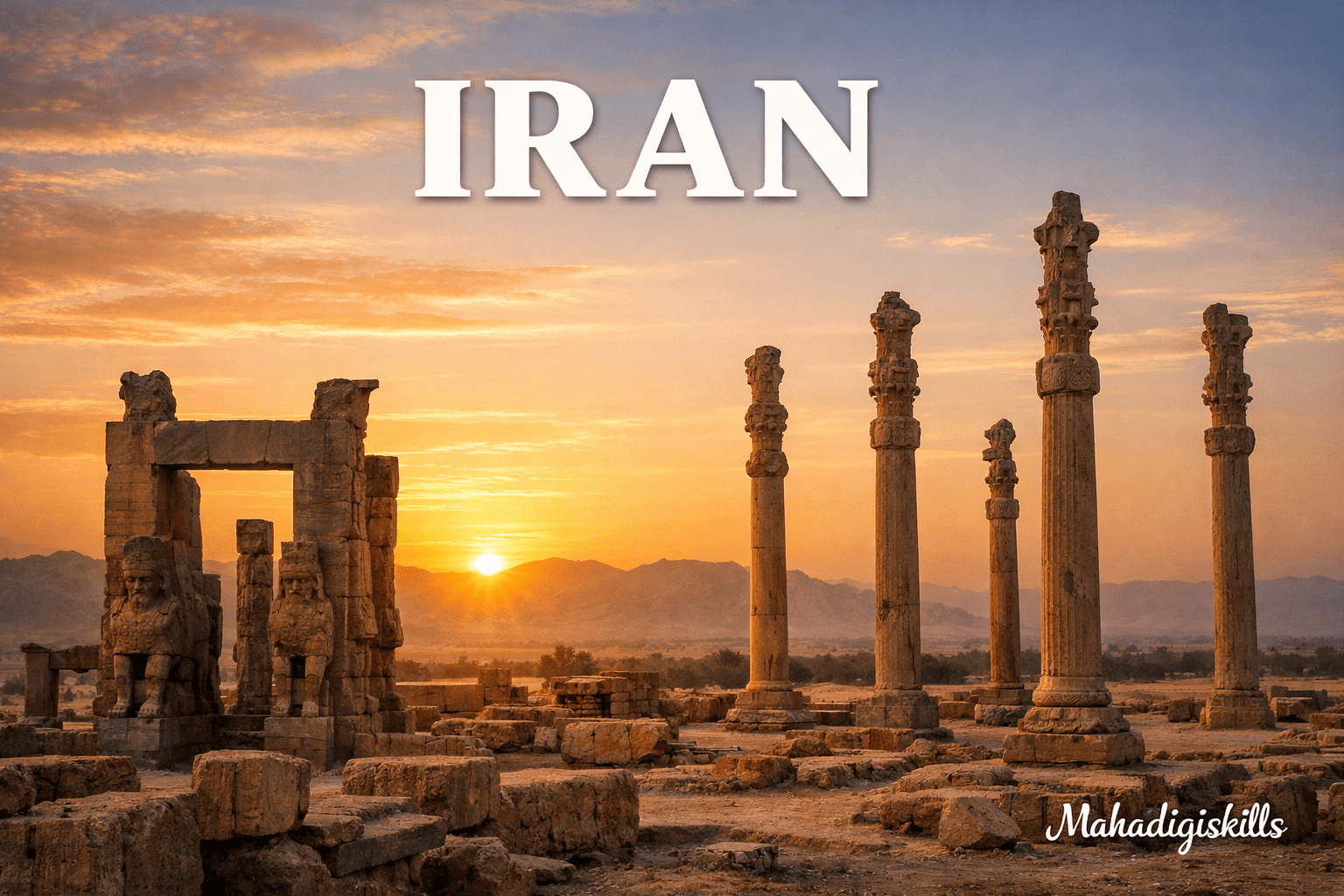
Introduction to Iran
The Iran is a historic and culturally rich country in southwestern Asia, known for its ancient civilizations, architectural wonders, and deep cultural traditions. Formerly known as Persia, the Iran played a central role in world history through powerful empires, influential art and literature, and intellectual achievements that shaped vast regions of Asia and beyond.
Today, the Iran stands as the Islamic Republic of Iran, blending its ancient Persian heritage with modern geopolitical significance. From the bustling capital of Tehran to the desert landscapes and mountain ranges, the Iran offers diverse experiences for visitors and scholars alike.
In this comprehensive guide, we will explore every major aspect of Iran, including history, geography, culture, economy, languages, major cities, tourism, and travel insights designed to help you understand and explore this extraordinary country.
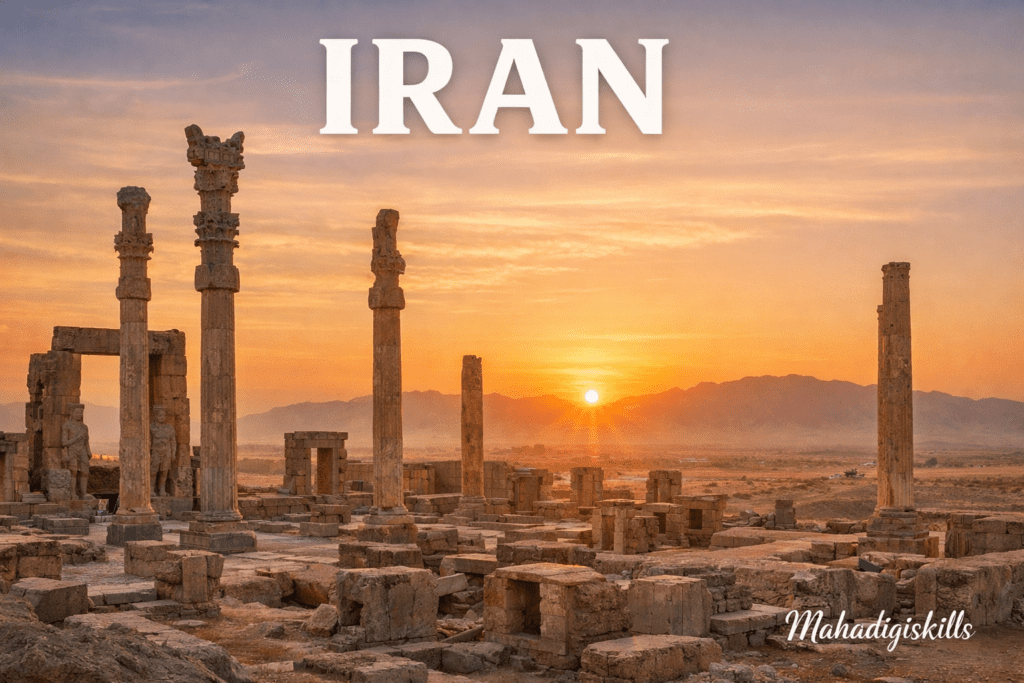
History of Iran
Ancient Civilizations
The region of Iran has been inhabited for thousands of years and is one of the world’s oldest continuous centers of civilization. Evidence suggests that early humans lived in the area as far back as the Lower Paleolithic Age.
Throughout ancient history, Iran was the heart of several major empires, including:
- The Achaemenid Empire (c. 550–330 BC) – Founded by Cyrus the Great, this was one of the largest empires in ancient history.
- Parthian Empire – An influential power that controlled large parts of Asia.
- Sasanian Empire – The last pre‑Islamic Persian empire, known for its art, culture, and military strength.
These empires established the political, cultural, and architectural foundations that continue to define Iran’s identity.
Islamic Conquest and Medieval Era
In the 7th century CE, Arab Muslim forces conquered the region, introducing Islam and fundamentally shaping the culture and social structures of Iran. This marked the beginning of a long historical period where Persian culture became intertwined with Islamic civilization.
During the Islamic Golden Age, the Iranian lands were renowned centers of science, philosophy, art, and literature. Persian scholars, poets, and philosophers contributed immensely to world knowledge.
Modern Era
In the 20th century, Iran underwent major transformations. The Pahlavi dynasty sought to modernize and Westernize the country, ultimately leading to widespread political dissatisfaction.
In 1979, the Islamic Revolution transformed Iran into the Islamic Republic, reshaping its governance and regional relationships. Since then, the country’s political system combines elements of theocratic leadership and republican structures, and its geopolitical policies have had lasting global impacts.
Geography of Iran
Where is Iran Located?
The Iran is a vast country in southwestern Asia, positioned at the crossroads of the Middle East, Central Asia, and South Asia. It is bounded by several countries and bodies of water:
- North: Azerbaijan, Armenia, Turkmenistan, Caspian Sea
- East: Afghanistan, Pakistan
- South: Persian Gulf, Gulf of Oman
- West: Turkey, Iraq
Iran covers approximately 1.65 million sq. km (636,372 sq. mi), making it one of the largest countries in Asia.
Topography and Climate
The landscape of Iran is incredibly diverse:
- Mountain ranges such as the Alborz and Zagros
- Desert regions in central Iran
- Coastal plains along the Persian Gulf and Caspian Sea
- Fertile valleys and basins
The climate varies greatly—from very dry deserts to subtropical regions near the Caspian Sea. Summers can be extremely hot, particularly in the south, while winters are cold in the mountainous regions.
Culture of Iran
Language and Ethnicity
The official language of Iran is Persian (Farsi), spoken by the majority of the population. Various regional languages and dialects also exist, including Azerbaijani, Kurdish, Luri, and others.
Ethnically, the Iran includes Persians, Azeris, Kurds, Arabs, Baloch, and more, contributing to its cultural diversity.
Religion and Traditions
The dominant religion in Iran is Shia Islam, primarily the Twelver branch. Smaller communities of Sunni Muslims, Christians, and Zoroastrians also live in the country.
Iranian culture features a strong tradition of hospitality, family values, poetry, and philosophical thought that dates back millennia.
Art, Music & Cuisine
Iran’s contribution to world culture is immense:
Persian Carpets
Iranian carpets and rugs are famed globally, known for their intricate designs, colors, and craftsmanship. Iran produces a large share of the world’s handmade carpets and has historic techniques inscribed on the UNESCO heritage list.
Music & Art
Traditional music, architecture (e.g., Persian gardens, mosques), and classical poetry (like the Shahnameh) are central to Iranian identity.
Cuisine
Iranian food is renowned for its rich flavors, featuring rice dishes such as chelo kebab, stews like ghormeh sabzi, and aromatic spices. Many visitors praise the depth and complexity of Iranian cuisine and its hospitality culture.
Major Cities of Iran
Tehran (Capital)
Tehran is the bustling capital of the Iran, serving as the political, economic, and cultural hub of the nation. The city blends modern urban development with historical sites, parks, museums, and bazaars.
Isfahan
Called “Half of the World” by locals due to its historic grandeur, Isfahan features stunning Islamic architecture, bridges, and UNESCO heritage sites.
Shiraz
Famous for poetry, Persian gardens, and the ancient ruins of Persepolis and Pasargadae (UNESCO sites).
Yazd
A historic desert city known for its wind‑catchers, qanats, and unique earthen architecture.
Tabriz
A cultural and commercial hub in the northwest with a historic bazaar and Kurdish influence.
Iran Economy, Trade, and Tourism
Economy of Iran
The Iran has a diverse economy, heavily influenced by its oil and gas sector, agriculture, manufacturing, and services. Oil and natural gas contribute significantly to the country’s GDP and government revenue.(worldbank.org)
Despite international sanctions, Iran maintains strong domestic industries and is investing in technology, infrastructure, and energy diversification.
Key Economic Sectors
Oil and Gas
- Iran holds some of the largest proven oil reserves in the world, primarily located in the southwest (Khuzestan) and offshore in the Persian Gulf.
- It is a member of OPEC and exports oil globally, supporting its trade balance.
Agriculture
Agriculture in Iran is concentrated in fertile valleys and river plains. Major crops include:
- Wheat and barley
- Rice and sugar beets
- Fruits: pomegranates, dates, and pistachios
- Saffron (world’s largest producer)
Manufacturing
Iran has a growing industrial base:
- Petrochemicals and steel production
- Automotive manufacturing
- Food processing and textiles
- Cement and construction materials
These industries support domestic demand and export potential.
Currency of Iran
The official currency of Iran is the Iranian Rial (IRR).
Travelers often use local currency for markets, transport, and smaller purchases. In major cities, credit cards are increasingly accepted, but cash remains essential.
Trade Partners
The main trade partners of Iran include:
- China – Largest trading partner and oil importer
- United Arab Emirates – Trade hub and re-export partner
- India – Oil, gas, and consumer goods
- Turkey – Trade in energy and industrial goods
- European countries – Mainly machinery, chemicals, and technology
International trade is crucial to the Iran economy despite geopolitical challenges.
Tourism in Iran
Tourism in Iran is growing as the country highlights its historic, cultural, and natural sites. Visitors are drawn to ancient ruins, UNESCO heritage sites, religious landmarks, and beautiful landscapes.
Top Tourist Attractions
UNESCO World Heritage Sites
Iran has 24 UNESCO World Heritage Sites, including:
- Persepolis – Ancient ceremonial capital of the Achaemenid Empire
- Pasargadae – Tomb of Cyrus the Great
- Golestan Palace – Historic palace in Tehran
- Naqsh-e Jahan Square – Iconic square in Isfahan
These sites showcase Iran’s rich Persian history and architectural mastery.(whc.unesco.org)
Religious Sites
Iran is home to important Shia Muslim pilgrimage sites:
- Imam Reza Shrine (Mashhad) – Largest mosque complex in the world
- Fatima Masumeh Shrine (Qom) – Spiritual center and theological hub
Religious tourism plays a major role in the Iran economy.
Natural Attractions
- Caspian Sea coast – Lush forests and beaches
- Dasht-e Kavir & Dasht-e Lut – Famous Iranian deserts
- Alborz and Zagros Mountains – Skiing, hiking, and mountaineering
- Persian Gulf Islands – Tropical islands and resort tourism
Nature tourism allows visitors to explore Iran’s diverse ecosystems.
Cultural Experiences
- Persian Cuisine – Kebabs, stews, rice dishes with saffron and herbs
- Traditional Bazaars – Grand Bazaar of Tehran and Tabriz
- Nowruz Festival – Persian New Year, celebrated in March
- Music & Art – Persian classical music, calligraphy, carpet weaving
These experiences offer a deep insight into Iranian culture and traditions.
Transportation in Iran
Getting around Iran is feasible via air, rail, road, and even domestic bus networks.
Airports
- Tehran Imam Khomeini International Airport – Main international hub
- Mashhad International Airport – Eastern Iran
- Shiraz Airport – South-central region, near Persepolis
- Isfahan Airport – Central cultural hub
Air travel is the fastest way to cover long distances in Iran.
Roads, Trains, and Public Transport
- Highways connect major cities such as Tehran, Isfahan, Shiraz, and Mashhad.
- Long-distance buses are affordable and widely used.
- Iran also has a growing rail network, including high-speed trains between Tehran, Qom, and Isfahan.
Best Time to Visit Iran
The ideal months to visit Iran are March to May (spring) and September to November (autumn).
- Spring – Mild temperatures, blooming gardens, and Nowruz celebrations
- Autumn – Pleasant weather, clear skies, and cultural festivals
Summer can be extremely hot in southern Iran, and winter is cold in mountainous regions.
DoFollow References
- UNESCO World Heritage: https://whc.unesco.org
- World Bank Iran Overview: https://www.worldbank.org/en/country/iran
- CIA World Factbook: https://www.cia.gov/the-world-factbook/
These sources provide authoritative and updated information about Iran’s economy, culture, and tourism.
Unique Facts, International Role & Travel Tips in Iran
Unique and Interesting Facts About Iran
The Iran is a country of extraordinary history, culture, and natural beauty. Here are some fascinating facts about Iran:
1. Persian Heritage
Iran is the heir to the ancient Persian Empire, influencing art, architecture, literature, and science across the Middle East and beyond. The Persian language (Farsi) has remained a major cultural force for over 2,500 years.
2. UNESCO World Heritage Sites
With 24 UNESCO World Heritage Sites, Iran is one of the most historically rich countries globally. Sites include Persepolis, Naqsh-e Jahan Square, and the Golestan Palace, highlighting its architectural and cultural legacy.
3. Persian Gardens
The Persian Garden, an ancient architectural concept emphasizing symmetry and water features, originated in Iran. Many Persian gardens are UNESCO-listed.
4. Nowruz Festival
The Persian New Year, Nowruz, is celebrated in Iran every spring and has been recognized by UNESCO as an Intangible Cultural Heritage. It symbolizes renewal, family gatherings, and cultural continuity.
5. Diverse Landscapes
From deserts like Dasht-e Lut to mountains such as the Alborz Range, Iran offers remarkable geographical diversity that supports both eco-tourism and adventure travel.
Iran in International Organizations
The Iran actively participates in global diplomacy and international development.
United Nations Membership
Iran is a member of the United Nations (UN) and engages in international cooperation, peace initiatives, and cultural exchanges.
Official UN page: https://www.un.org
Other International Organizations
- Organization of Islamic Cooperation (OIC)
- Economic Cooperation Organization (ECO)
- Non-Aligned Movement (NAM)
- World Bank & IMF participation
Participation in these organizations allows Iran to collaborate on economic, humanitarian, and cultural initiatives globally.
Travel Tips for Visiting Iran
Visiting Iran is a unique experience that requires preparation and cultural awareness.
Entry Requirements
- Passport valid for at least 6 months
- Visa depending on nationality
- Travel insurance recommended
Safety Tips
- Stick to major cities and tourist destinations
- Respect local customs and religious norms
- Use licensed transport and guided tours
Currency and Payments
- The official currency is the Iranian Rial (IRR)
- Cash is widely used; credit cards are accepted in some urban centers
Local Etiquette
- Dress modestly, especially near mosques
- Show respect for elders and religious practices
- Greetings and hospitality are important in social interactions
DoFollow References
- UNESCO World Heritage: https://whc.unesco.org
- World Bank Iran Overview: https://www.worldbank.org/en/country/iran
- CIA World Factbook: https://www.cia.gov/the-world-factbook/
These sources provide authoritative information on Iran’s history, economy, and culture.
Final Summary
The Iran is a country where ancient history, modern culture, and breathtaking landscapes converge. From the ruins of Persepolis to the bustling streets of Tehran, and from the Persian Gulf coastline to the deserts of Dasht-e Kavir, Iran offers a wealth of experiences for travelers, historians, and cultural enthusiasts.
Its rich traditions, festivals like Nowruz, diverse geography, and Persian heritage make Iran a fascinating destination. With growing tourism infrastructure and UNESCO-recognized heritage sites, Iran continues to draw global attention and admiration.
Whether you are exploring ancient civilizations, religious landmarks, Persian gardens, or culinary delights, Iran provides an unforgettable journey into the heart of the Middle East.
Key Facts About Iran
| Category | Information |
|---|---|
| Country Name | Iran |
| Capital City | Tehran |
| Continent | Asia (Middle East) |
| Coordinates | 32.4279° N, 53.6880° E |
| Population | ~88 million |
| Official Language | Persian (Farsi) |
| Other Languages | Kurdish, Azerbaijani, Luri, Arabic |
| Currency | Iranian Rial (IRR) |
| Government | Islamic Republic |
| Highest Point | Mount Damavand (5,671 m) |
| Lowest Point | Caspian Sea (-28 m) |
| Main Industries | Oil & gas, agriculture, manufacturing, services |
| Major Exports | Crude oil, petrochemicals, carpets, pistachios |
| UN Membership | Yes |
List of All 195 Countries
A
- Afghanistan
- Albania
- Algeria
- Andorra
- Angola
- Antigua and Barbuda
- Argentina
- Armenia
- Australia
- Austria
- Azerbaijan
- Bahamas
- Bahrain
- Bangladesh
- Barbados
- Belarus
- Belgium
- Belize
- Benin
- Bhutan
- Bolivia
- Bosnia and Herzegovina
- Botswana
- Brazil
- Brunei
- Bulgaria
- Burkina Faso
- Burundi
- Cabo Verde
- Cambodia
- Cameroon
- Canada
- Central African Republic
- Chad
- Chile
- China
- Colombia
- Comoros
- Congo (Congo-Brazzaville)
- Costa Rica

