



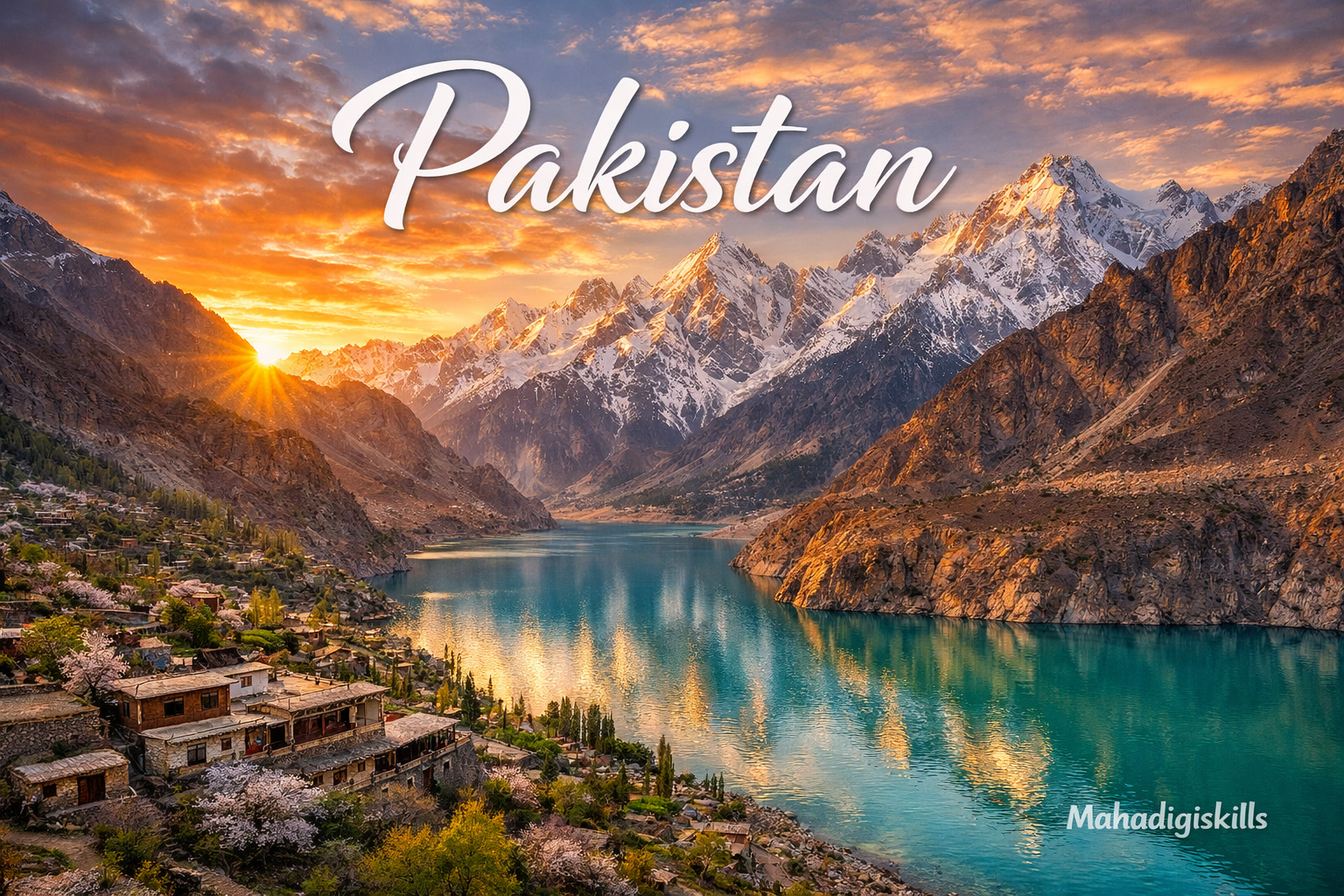
Introduction to Pakistan
Pakistan is a fascinating South Asian country known for its rich cultural heritage, ancient civilizations, diverse landscapes, and vibrant traditions. Located at the crossroads of Central Asia, South Asia, and the Middle East, Pakistan offers travelers an incredible blend of historical landmarks, mountain ranges, deserts, and modern cities.
Pakistan’s identity is shaped by thousands of years of history, including the Indus Valley Civilization, Islamic empires, and colonial influences. Today, Pakistan stands as a country with dynamic cities, unique cultural traditions, and breathtaking natural scenery ranging from the Himalayan mountains to the Arabian Sea coastline.
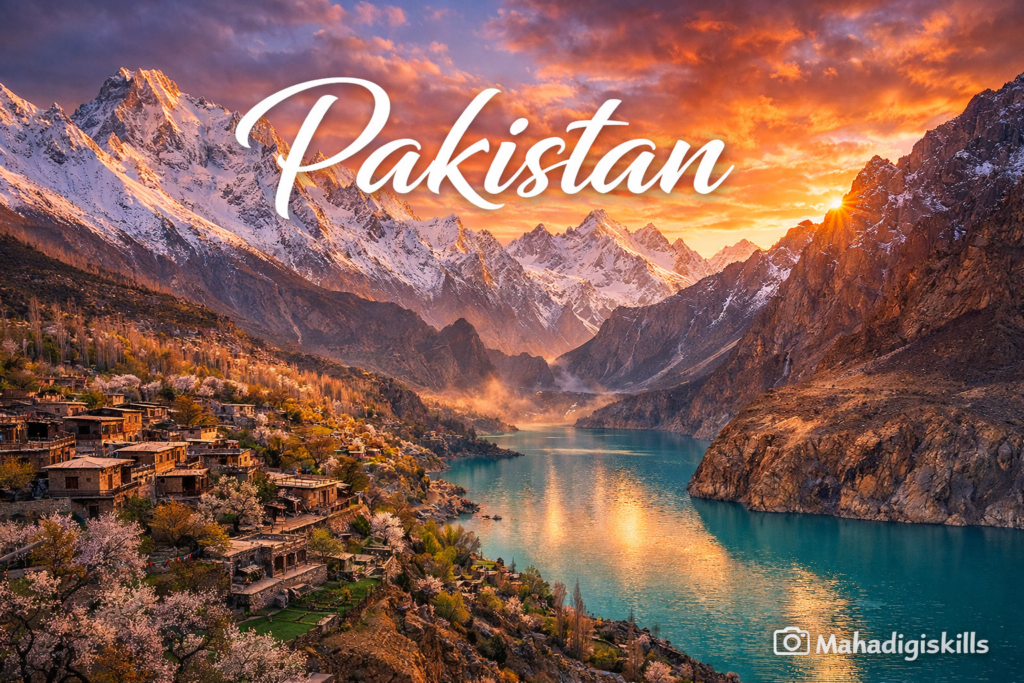
Visitors exploring Pakistan can experience ancient archaeological sites, colorful festivals, traditional cuisine, and warm hospitality. With its diverse geography and culture, Pakistan has become increasingly recognized as a destination for adventure tourism, historical exploration, and cultural discovery.
History of Pakistan
The history of Pakistan dates back thousands of years and includes some of the oldest civilizations in human history.
Indus Valley Civilization
One of the earliest known urban civilizations developed along the Indus River around 2500 BCE. Cities such as Mohenjo-daro and Harappa demonstrated advanced urban planning, drainage systems, and trade networks.
These ancient settlements represent one of the most important archaeological discoveries in South Asia and highlight Pakistan’s role in early human development.
Islamic Era and Mughal Influence
During the medieval period, the region that is now Pakistan saw the rise of Islamic empires, including the Delhi Sultanate and the Mughal Empire.
The Mughal period left a lasting legacy in architecture, culture, and administration. Historic landmarks such as Lahore Fort and Badshahi Mosque reflect the grandeur of Mughal design.
British Colonial Period
In the 19th century, the territory became part of British India. During this time, modern infrastructure, railways, and administrative systems were introduced.
Creation of Pakistan
Pakistan was established on 14 August 1947 after the partition of British India. The creation of the country was driven by the vision of Muhammad Ali Jinnah, who advocated for a separate homeland for Muslims of the subcontinent.
Since independence, Pakistan has evolved into a significant regional nation with growing economic and cultural influence.
External Source:
https://www.britannica.com/place/Pakistan
Geography and Location of Pakistan
Pakistan is located in South Asia, sharing borders with India, Afghanistan, Iran, and China. It also has a coastline along the Arabian Sea.
Geographic Coordinates
Approximately 30°N latitude and 70°E longitude
Total Area
About 881,913 square kilometers
Pakistan’s geography is incredibly diverse, including:
- High mountain ranges
- Fertile plains
- Vast deserts
- Coastal regions
Major Geographic Regions
Northern Mountains
Northern Pakistan contains some of the world’s highest mountains, including parts of the Himalayas, Karakoram, and Hindu Kush ranges.
The famous K2, the world’s second-highest mountain, is located here.
Indus River Plain
The Indus River flows through the country and supports agriculture in the fertile plains of Punjab and Sindh.
Deserts
Pakistan also features large desert areas including:
- Thar Desert
- Cholistan Desert
- Kharan Desert
Coastal Region
The southern coastline along the Arabian Sea includes Karachi and Gwadar, important ports and commercial centers.
Culture and Traditions of Pakistan
Pakistan has a vibrant culture shaped by regional diversity, religious traditions, and centuries of historical influences.
Languages
The official language is Urdu, while English is widely used in business and government.
Common regional languages include:
- Punjabi
- Sindhi
- Pashto
- Balochi
- Saraiki
These languages reflect the country’s diverse ethnic communities.
Religion
Islam is the dominant religion in Pakistan and plays an important role in daily life and cultural traditions. Religious festivals and customs influence social values and community activities.
Festivals
Major celebrations include:
- Eid-ul-Fitr – marking the end of Ramadan
- Eid-ul-Adha – festival of sacrifice
- Pakistan Day (23 March) – national celebration
- Independence Day (14 August) – patriotic festivities across the country
Cultural festivals featuring music, poetry, and traditional arts are also widely celebrated.
Music and Arts
Pakistan has a rich artistic heritage including:
- Qawwali music
- Classical South Asian music traditions
- Folk dances and regional performances
Poetry is also highly valued, particularly works by Allama Iqbal, a national philosopher and poet.
Cuisine
Pakistani cuisine is famous for its rich flavors, spices, and traditional cooking techniques.
Popular dishes include:
- Biryani
- Nihari
- Karahi
- Seekh kebabs
- Haleem
Street food culture is vibrant in cities such as Lahore, Karachi, and Islamabad.
Official Language and Dialects in Pakistan
Pakistan’s linguistic diversity reflects its multicultural society.
Official Language
Urdu
Widely Spoken Languages
- Punjabi – largest spoken language
- Sindhi – spoken in Sindh province
- Pashto – common in Khyber Pakhtunkhwa
- Balochi – used in Balochistan
English functions as a secondary official language and is widely used in higher education, government, and international communication.
DoFollow Links
UN Member Profile
https://www.un.org/en/about-us/member-states/pakistan
UNESCO World Heritage Sites
https://whc.unesco.org/en/statesparties/pk
Economy of Pakistan
Pakistan has a mixed and developing economy supported by agriculture, industry, services, and trade. Over the years, the country has experienced economic transformation through infrastructure development, manufacturing growth, and expanding international trade.
Currency and Financial System
- Currency: Pakistani Rupee (PKR)
- Central Bank: State Bank of Pakistan
- Major Trade Partners: China, United States, United Arab Emirates, Saudi Arabia, United Kingdom
The financial sector includes banks, insurance companies, and growing fintech services. Major economic hubs such as Karachi, Lahore, and Islamabad serve as centers for commerce and investment.
Key Economic Industries
Agriculture
Agriculture remains one of the most important sectors in Pakistan’s economy.
Major agricultural products include:
- Wheat
- Rice
- Cotton
- Sugarcane
- Mangoes and citrus fruits
The fertile plains of the Indus River Basin support large-scale farming activities.
Textile Industry
Pakistan is one of the world’s leading textile producers and exporters. The industry contributes significantly to employment and exports.
Manufacturing and Industry
Important industrial sectors include:
- Cement production
- Steel manufacturing
- Automotive production
- Pharmaceutical industries
Industrial zones in Punjab and Sindh provinces play a major role in economic activity.
Information Technology
The technology sector is expanding rapidly, with growing software development, IT services, and freelancing industries.
Technology parks and innovation hubs are emerging in major cities.
External Source:
https://www.worldbank.org/en/country/pakistan
Major Cities of Pakistan
Pakistan is home to several vibrant cities that reflect the country’s economic strength, cultural diversity, and historical heritage.
Islamabad – Capital City
Islamabad is the capital city of Pakistan, known for its modern planning, green landscapes, and government institutions.
Major attractions include:
- Faisal Mosque
- Pakistan Monument
- Daman-e-Koh viewpoint
- Lok Virsa Museum
The city is considered one of the most organized and scenic capitals in South Asia.
Karachi – Economic Hub
Karachi is the largest city and financial center of Pakistan. Located along the Arabian Sea, it serves as the country’s main port and commercial hub.
Important places in Karachi include:
- Clifton Beach
- Quaid-e-Azam Mausoleum
- Pakistan Maritime Museum
- Mohatta Palace
Karachi is known for its diverse population, vibrant nightlife, and business districts.
Lahore – Cultural Heart
Lahore is widely regarded as the cultural capital of Pakistan. The city is famous for its historical monuments, food culture, and artistic heritage.
Popular attractions include:
- Lahore Fort
- Badshahi Mosque
- Shalimar Gardens
- Lahore Museum
Lahore’s historic Walled City reflects centuries of Mughal architecture and cultural development.
Other Important Cities
Peshawar
One of the oldest cities in South Asia, located near the historic Khyber Pass. Peshawar has deep cultural roots and vibrant bazaars.
Quetta
The capital of Balochistan province, surrounded by mountains and known for fruit orchards and unique tribal cultures.
Multan
Often called the City of Saints, Multan is famous for its Sufi shrines and spiritual heritage.
Tourism Attractions in Pakistan
Pakistan offers extraordinary tourism opportunities ranging from mountain adventures to historical landmarks and natural beauty.
Northern Mountain Regions
The northern areas are among the most spectacular landscapes in the world.
Popular destinations include:
- Hunza Valley
- Skardu
- Fairy Meadows
- Naltar Valley
These regions feature glaciers, lakes, and towering mountain peaks including K2.
UNESCO World Heritage Sites
Pakistan hosts several globally recognized heritage sites.
Mohenjo-daro
Ancient ruins from the Indus Valley Civilization that highlight advanced urban planning.
Taxila
Historic archaeological site reflecting Buddhist, Greek, and Persian influences.
Lahore Fort and Shalimar Gardens
Magnificent Mughal-era architectural landmarks located in Lahore.
External Source:
https://whc.unesco.org/en/statesparties/pk
Natural Wonders
Pakistan is home to stunning natural landscapes.
Deosai National Park
One of the highest plateaus in the world, known for wildlife and breathtaking scenery.
Attabad Lake
A turquoise lake in Hunza Valley created after a landslide, now a major tourist attraction.
Hingol National Park
Located in Balochistan, featuring unique rock formations and diverse wildlife.
Beaches and Coastal Tourism
The Arabian Sea coastline offers beautiful beach destinations.
Popular beaches include:
- Clifton Beach
- French Beach
- Hawksbay
- Gwadar coastline
These locations provide opportunities for relaxation, fishing, and marine exploration.
Best Time to Visit Pakistan
The best time to travel depends on the region being visited.
Spring (March – May)
Spring is ideal for visiting northern valleys and cultural cities.
Summer (June – August)
Best season for mountain tourism and trekking in northern Pakistan.
Autumn (September – November)
Perfect for scenic landscapes, especially in Hunza Valley when leaves change color.
Winter (December – February)
Suitable for snowfall tourism in mountain regions such as Skardu and Murree.
Transportation and Travel Tips
Pakistan has multiple transportation options for travelers.
Domestic Flights
Airlines connect major cities including Karachi, Lahore, Islamabad, and Skardu.
Railways
Pakistan Railways offers extensive train routes linking cities and provinces.
Road Travel
Highways and motorways connect major urban centers.
Important routes include:
- M1 Motorway (Islamabad – Peshawar)
- M2 Motorway (Lahore – Islamabad)
- Karakoram Highway (China–Pakistan route)
The Karakoram Highway is considered one of the most scenic highways in the world.
Unique and Interesting Facts about Pakistan
Pakistan has many fascinating aspects that make it unique globally.
- Home to K2, the second-highest mountain in the world
- The Karakoram Highway is among the highest paved international roads
- Pakistan has one of the largest irrigation systems in the world
- The country has a young population, with a large percentage under 30 years old
- Pakistan is known for hospitality and welcoming culture
The nation is also a member of international organizations including the United Nations, Organization of Islamic Cooperation (OIC), and South Asian regional groups.
DoFollow Links
United Nations Member Profile
https://www.un.org/en/about-us/member-states/pakistan
World Bank Pakistan Overview
https://www.worldbank.org/en/country/pakistan
Pakistan in Global Organizations
Pakistan plays an important role in international diplomacy, economic cooperation, and global development initiatives. The country participates in several major international organizations.
United Nations Membership
Pakistan became a member of the United Nations on 30 September 1947, shortly after gaining independence.
The country contributes to:
- UN peacekeeping missions
- International development programs
- Humanitarian assistance efforts
Pakistan is one of the largest contributors to UN peacekeeping forces, participating in missions around the world.
External Source
https://www.un.org/en/about-us/member-states/pakistan
Other International Organizations
Pakistan is also a member of numerous regional and global organizations, including:
Organization of Islamic Cooperation (OIC)
This organization promotes cooperation among Muslim-majority countries in areas such as culture, economics, and diplomacy.
South Asian Association for Regional Cooperation (SAARC)
Pakistan participates in regional cooperation efforts with South Asian neighbors focusing on economic growth and cultural exchange.
Shanghai Cooperation Organization (SCO)
Membership in this Eurasian political and economic alliance strengthens regional connectivity and trade.
World Trade Organization (WTO)
Through WTO membership, Pakistan participates in international trade regulation and global commerce.
Suggested Travel Itinerary for Pakistan
Because Pakistan offers a wide variety of landscapes and attractions, travelers can design exciting itineraries combining culture, history, and nature.
10-Day Travel Itinerary
Day 1 – Islamabad
Explore the capital city and visit:
- Faisal Mosque
- Pakistan Monument
- Lok Virsa Museum
The city offers scenic views and modern infrastructure.
Day 2 – Taxila and Islamabad Surroundings
Visit Taxila, a UNESCO archaeological site showcasing Buddhist and ancient civilizations.
Day 3 – Lahore
Travel to Lahore and explore historical landmarks including:
- Lahore Fort
- Badshahi Mosque
- Shalimar Gardens
Enjoy the famous Lahori food culture.
Day 4 – Lahore Cultural Tour
Walk through the Walled City of Lahore, visit local markets, and explore museums.
Day 5 – Skardu
Fly to Skardu in northern Pakistan, gateway to the Karakoram mountain range.
Day 6 – Hunza Valley
Visit stunning destinations such as:
- Attabad Lake
- Baltit Fort
- Eagle’s Nest viewpoint
Hunza Valley is famous for breathtaking landscapes and welcoming communities.
Day 7 – Fairy Meadows
A trekking paradise offering spectacular views of Nanga Parbat, one of the highest mountains in the world.
Day 8 – Deosai National Park
Explore one of the highest plateaus on Earth, known for wildlife and scenic grasslands.
Day 9 – Karachi
Travel to Karachi and visit:
- Quaid-e-Azam Mausoleum
- Clifton Beach
- Mohatta Palace
Enjoy the coastal atmosphere of the Arabian Sea.
Day 10 – Gwadar Coast
Discover the beautiful beaches and landscapes along the Gwadar coastline.
Best Experiences in Pakistan
Visitors traveling across Pakistan can enjoy:
- Mountain trekking in the Karakoram region
- Cultural exploration in historic cities
- Desert adventures in Cholistan
- Coastal tourism along the Arabian Sea
- Wildlife exploration in national parks
Pakistan’s diversity makes it an ideal destination for adventure travelers, photographers, historians, and cultural explorers.
Final Summary
Pakistan is a country rich in history, culture, and natural beauty. From the ancient cities of the Indus Valley Civilization to the towering peaks of the Karakoram mountains, Pakistan offers an extraordinary range of experiences.
Travelers visiting Pakistan can explore vibrant cities such as Lahore, Karachi, and Islamabad, discover UNESCO heritage sites, and enjoy breathtaking landscapes including Hunza Valley, Deosai National Park, and the Karakoram Highway.
The country’s cultural diversity, traditional cuisine, music, and festivals create a welcoming atmosphere for visitors. Combined with growing tourism infrastructure and international recognition, Pakistan continues to emerge as an exciting destination for global travelers.
Key Facts About Pakistan
| Feature | Details |
|---|---|
| Official Name | Islamic Republic of Pakistan |
| Capital | Islamabad |
| Largest City | Karachi |
| Population | Approximately 240 million |
| Area | 881,913 km² |
| Official Language | Urdu |
| Widely Spoken Languages | Punjabi, Sindhi, Pashto, Balochi |
| Currency | Pakistani Rupee (PKR) |
| Independence | 14 August 1947 |
| Major River | Indus River |
| Highest Mountain | K2 |
| Climate | Diverse – desert, temperate, alpine |
| UNESCO Sites | Mohenjo-daro, Taxila, Lahore Fort |
| UN Membership | Member since 1947 |
DoFollow Links
United Nations – Pakistan
https://www.un.org/en/about-us/member-states/pakistan
UNESCO World Heritage Sites
https://whc.unesco.org/en/statesparties/pk
World Bank Pakistan Overview
https://www.worldbank.org/en/country/pakistan
List of All 195 Countries
A
- Afghanistan
- Albania
- Algeria
- Andorra
- Angola
- Antigua and Barbuda
- Argentina
- Armenia
- Australia
- Austria
- Azerbaijan
- Bahamas
- Bahrain
- Bangladesh
- Barbados
- Belarus
- Belgium
- Belize
- Benin
- Bhutan
- Bolivia
- Bosnia and Herzegovina
- Botswana
- Brazil
- Brunei
- Bulgaria
- Burkina Faso
- Burundi
- Cabo Verde
- Cambodia
- Cameroon
- Canada
- Central African Republic
- Chad
- Chile
- China
- Colombia
- Comoros
- Congo (Congo-Brazzaville)
- Costa Rica

