


Introduction
El Salvador is the smallest country in Central America, yet it offers an incredible combination of natural beauty, vibrant culture, and fascinating history. Located along the Pacific Ocean, El Salvador is known for its dramatic volcanic landscapes, beautiful beaches, and welcoming communities.
Despite its compact size, El Salvador provides travelers with a wide range of experiences. Visitors can explore colonial towns, surf world-class waves, hike volcanic mountains, and discover ancient archaeological sites.
From the lively capital San Salvador to the scenic Ruta de las Flores, El Salvador continues to grow as a popular travel destination in Central America.
History of El Salvador
The history of El Salvador reflects the influence of indigenous civilizations, Spanish colonization, and modern political development.
Indigenous Civilizations
Before European explorers arrived, the territory that is now El Salvador was inhabited by several indigenous groups.
The most prominent cultures included:
- Pipil people
- Lenca communities
- Maya civilizations
These societies developed agricultural systems, trade networks, and religious traditions long before the arrival of Europeans.
Archaeological sites reveal temples, pyramids, and settlements that demonstrate the advanced culture of these early civilizations.
Spanish Colonization
Spanish explorers reached the region in the 16th century, eventually bringing the territory under colonial rule.
During this period:
- Spanish language spread across the region
- Catholic Christianity became the dominant religion
- Colonial towns and churches were established
The area was incorporated into the Captaincy General of Guatemala, which governed much of Central America during the colonial era.
Independence from Spain
In 1821, Central American territories declared independence from Spain.
Shortly after independence, the region briefly joined the Mexican Empire, followed by membership in the Federal Republic of Central America.
By 1841, El Salvador became a fully independent republic.
Modern History
Throughout the 20th century, El Salvador experienced political challenges, including economic inequality and civil conflict.
The Salvadoran Civil War (1980–1992) significantly affected the nation. Peace agreements signed in 1992 helped bring stability and democratic reforms.
Today, El Salvador continues to develop economically and socially while preserving its cultural heritage.
External Source
https://www.britannica.com/place/El-Salvador
Geography and Location
El Salvador is located in Central America, bordered by Honduras and Guatemala, with the Pacific Ocean forming its southern coastline.
Geographic Coordinates
Approximate coordinates:
13° North latitude
88° West longitude
Neighboring Countries
El Salvador shares borders with:
- Guatemala to the west
- Honduras to the north and east
The Pacific Ocean lies to the south.
Despite being the smallest country in the region, El Salvador features diverse landscapes including mountains, volcanoes, lakes, and beaches.
Major Geographic Regions
The geography of El Salvador is defined by volcanic mountains, fertile valleys, and coastal plains.
Volcanic Mountain Range
El Salvador is often called the “Land of Volcanoes.”
More than 20 volcanoes stretch across the country, forming a dramatic landscape.
Important volcanoes include:
- Santa Ana Volcano
- San Miguel Volcano
- Izalco Volcano
These volcanic formations contribute to fertile soil that supports agriculture.
Coastal Plains
The Pacific coastline features sandy beaches, fishing communities, and surf destinations.
The coastline attracts international surfers due to consistent waves and warm water temperatures.
Central Plateau
The central plateau is where most of the population lives, including the capital city San Salvador.
This region has fertile land and moderate temperatures suitable for agriculture and urban development.
Culture and Traditions of El Salvador
The culture of El Salvador blends indigenous heritage with Spanish colonial influence.
Music, dance, food, and festivals play an important role in national identity.
Language
The official language of El Salvador is Spanish.
Spanish is used in government, education, and everyday communication.
Some indigenous languages still exist in small communities, although they are less widely spoken today.
Religion
Religion is an important part of society.
The majority of citizens identify as Christian, with the largest groups being:
- Roman Catholic
- Protestant denominations
Religious celebrations and community gatherings are important cultural traditions.
Music and Dance
Traditional Salvadoran music often features:
- Marimba instruments
- Guitar-based folk music
- Traditional dance performances
Music and dance are especially common during festivals and national celebrations.
Salvadoran Cuisine
Food in El Salvador is flavorful and reflects indigenous and Spanish culinary traditions.
The most famous national dish is:
Pupusas
Pupusas are thick corn tortillas filled with ingredients such as:
- Cheese
- Beans
- Pork
- Vegetables
They are typically served with curtido, a fermented cabbage slaw.
Other popular dishes include:
- Yuca frita (fried cassava)
- Tamales
- Seafood dishes along the coast
Street food culture is vibrant in cities and towns.
Festivals and Celebrations
El Salvador hosts many colorful cultural celebrations throughout the year.
August Festival (Fiestas Agostinas)
This national festival takes place in San Salvador and includes:
- Parades
- Music
- Religious ceremonies
- Cultural events
Day of the Dead
Families honor their ancestors by visiting cemeteries and preparing traditional foods.
Patron Saint Festivals
Many towns celebrate their patron saints with:
- Street festivals
- Traditional dances
- Fireworks
These events reflect strong community traditions.
Internal Link Suggestion
Related blog:
Argentina Travel Guide/argentina-travel-guide
External DoFollow Links
United Nations
https://www.un.org/en/about-us/member-states/el-salvador
UNESCO Heritage Sites
https://whc.unesco.org/en/statesparties/sv
Economy and Industries
El Salvador has a developing and diversified economy supported by agriculture, manufacturing, services, and tourism. The country’s strategic location in Central America makes it an important trade hub within the region.
Economic reforms and international trade agreements have helped El Salvador expand its economy and improve infrastructure.
Currency
One unique feature of El Salvador’s financial system is its use of the United States Dollar (USD) as the official currency.
In addition, the country has adopted Bitcoin as legal tender, making it one of the first nations in the world to do so.
Major Economic Sectors
Agriculture
Agriculture has historically been a major part of the economy.
Key agricultural exports include:
- Coffee
- Sugar
- Corn
- Tropical fruits
Salvadoran coffee is internationally recognized for its high quality and rich flavor.
Manufacturing
Manufacturing is another important sector in El Salvador.
Major industries include:
- Textile production
- Food processing
- Chemicals
- Electronics assembly
Many factories operate in export processing zones, supporting international trade.
Tourism
Tourism is growing rapidly and contributes to employment and economic development.
Travelers visit El Salvador for its:
- Volcanoes
- Surfing beaches
- Colonial towns
- Cultural festivals
Government programs continue to promote tourism as a major driver of economic growth.
External Source
https://www.worldbank.org/en/country/elsalvador
Major Cities in El Salvador
Although El Salvador is relatively small, it has several important cities that serve as cultural and economic centers.
San Salvador – The Capital City
San Salvador is the capital and largest city of El Salvador.
Located in a valley surrounded by volcanoes, the city is the country’s political, cultural, and financial center.
Key attractions include:
- Metropolitan Cathedral
- National Palace
- Plaza Barrios
- Museum of Art of El Salvador
The city also offers shopping centers, restaurants, and nightlife.
Santa Ana
Santa Ana is the second-largest city and is known for its beautiful architecture and historic landmarks.
Highlights include:
- Santa Ana Cathedral
- National Theater of Santa Ana
- Nearby Santa Ana Volcano
The city is also a gateway to many natural attractions in western El Salvador.
San Miguel
San Miguel is one of the most important economic centers in the eastern region of El Salvador.
The city is known for:
- Local festivals
- Markets
- Cultural traditions
The nearby San Miguel Volcano is one of the most active volcanoes in Central America.
Tourism and Major Attractions
El Salvador has become a popular destination for travelers seeking adventure, nature, and culture.
Ruta de las Flores
The Ruta de las Flores (Route of the Flowers) is one of the most famous tourist routes in El Salvador.
This scenic route passes through several charming towns known for:
- Coffee plantations
- Art markets
- Colorful murals
- Mountain landscapes
Popular towns along the route include:
- Juayúa
- Apaneca
- Ataco
Visitors can enjoy local food festivals and artisan crafts.
Santa Ana Volcano
Santa Ana Volcano is the highest volcano in El Salvador.
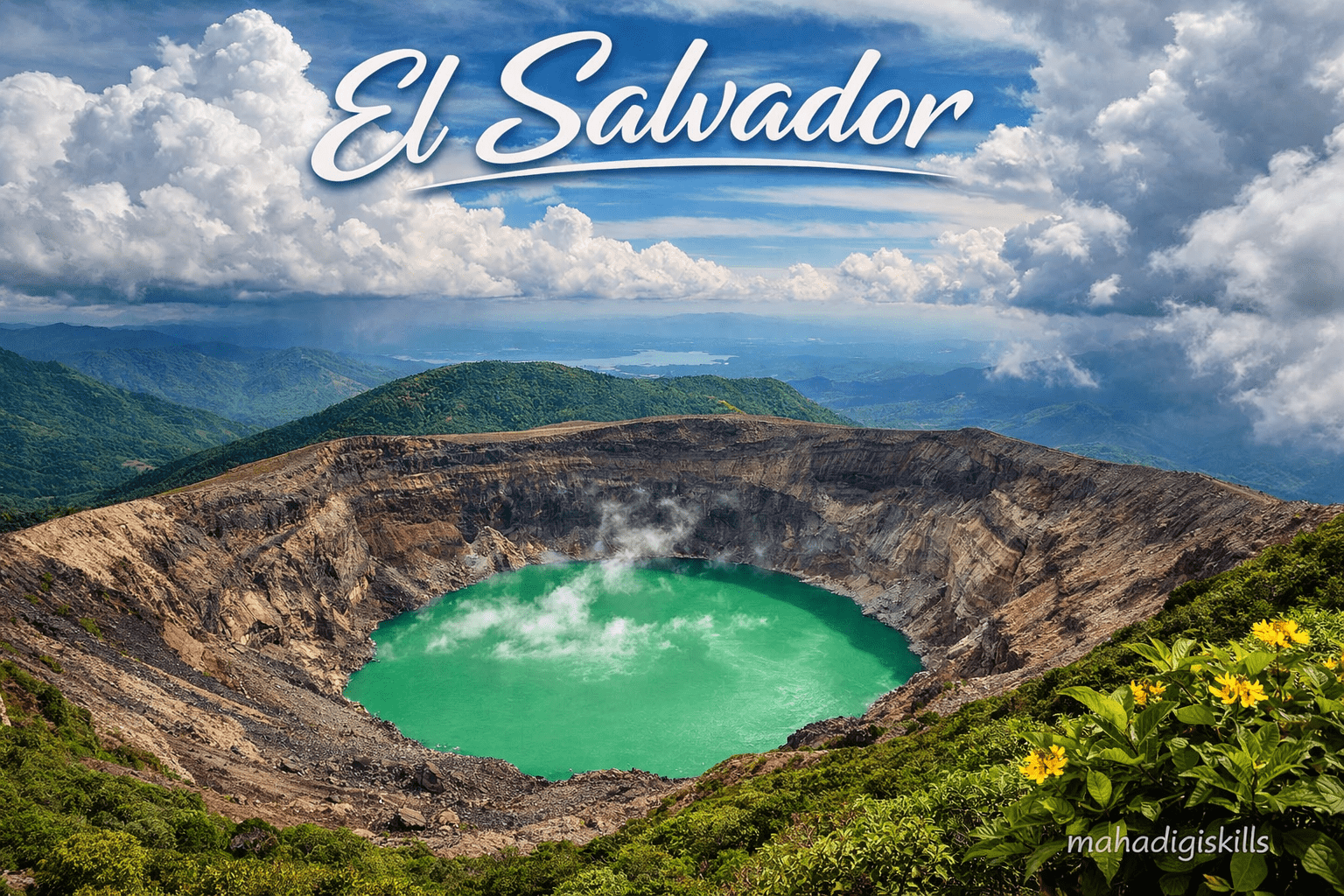
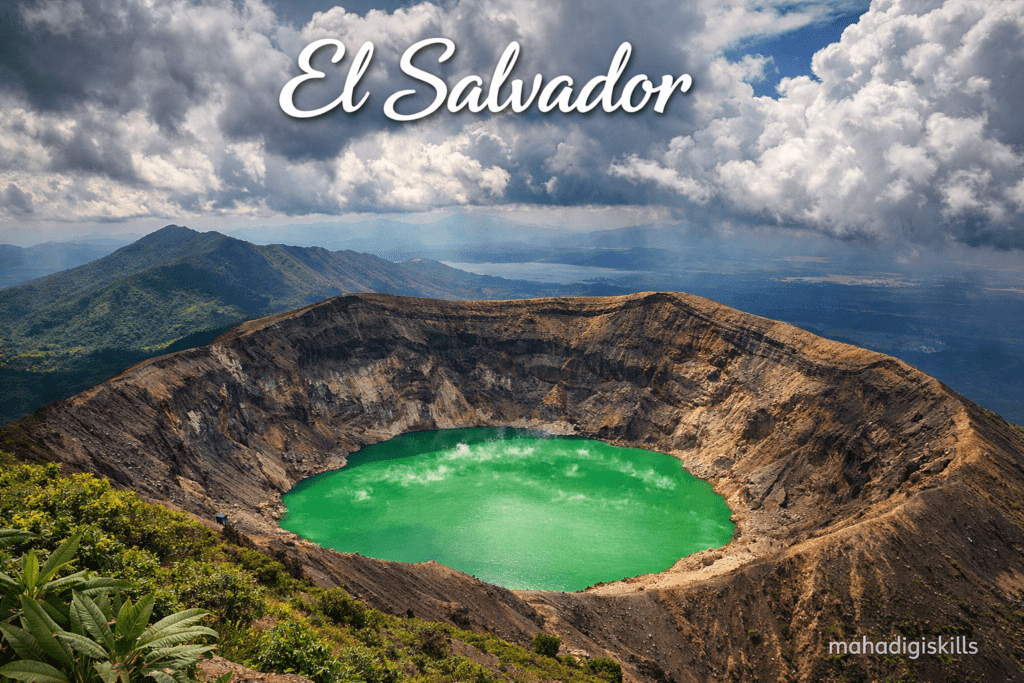
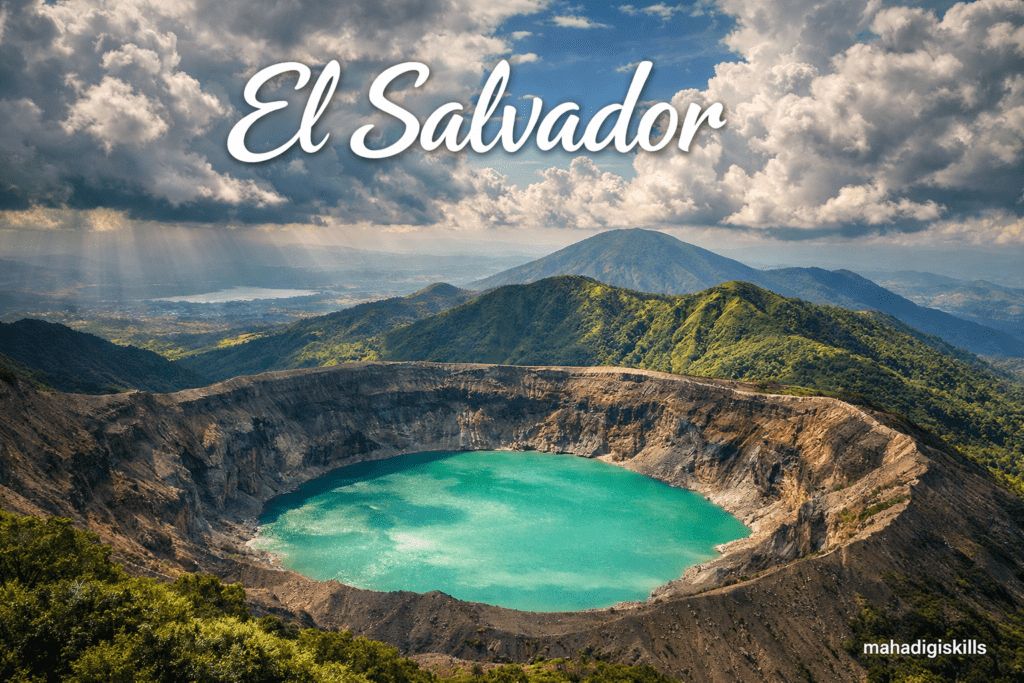
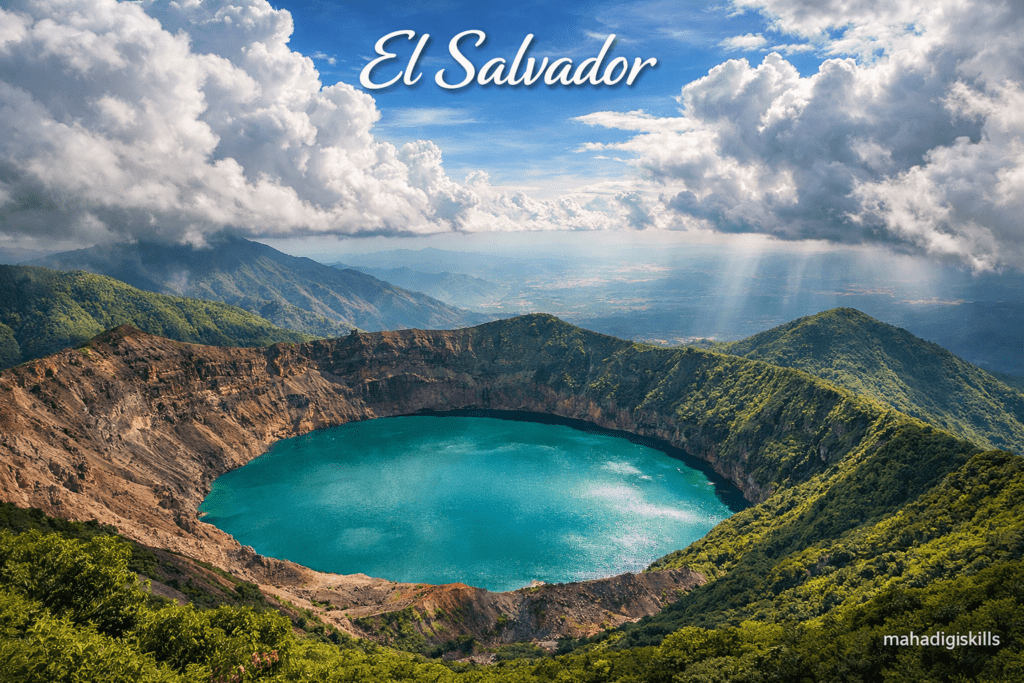
Adventurous travelers often hike to the summit, where they can see a spectacular turquoise crater lake.
The surrounding national park offers hiking trails and scenic views.
Lake Coatepeque
Lake Coatepeque is a stunning volcanic lake surrounded by mountains.
The lake is a popular destination for:
- Swimming
- Kayaking
- Boat tours
- Lakeside restaurants
It is considered one of the most beautiful natural attractions in El Salvador.
Tazumal Archaeological Site
Tazumal is one of the most important Mayan archaeological sites in El Salvador.
The site includes:
- Pyramids
- Ancient structures
- Archaeological artifacts
It provides insight into the region’s early civilizations.
Pacific Coast Beaches
El Salvador’s Pacific coastline offers excellent beaches and world-class surfing destinations.
El Tunco Beach
El Tunco is the most famous surf town in El Salvador.
The area attracts surfers from around the world due to its consistent waves.
Visitors can also enjoy:
- Beachfront restaurants
- Nightlife
- Surf schools
El Sunzal
El Sunzal is another popular surfing destination.
The long right-hand waves here make it ideal for beginner and experienced surfers alike.
Costa del Sol
Costa del Sol offers relaxing beaches and luxury resorts.
This destination is popular for:
- Fishing
- Swimming
- Beach vacations
National Parks and Nature
El Salvador protects several natural areas that preserve biodiversity and scenic landscapes.
Examples include:
- El Imposible National Park, known for wildlife and hiking
- Montecristo Cloud Forest, famous for rare plants and birds
- Los Volcanes National Park, which includes three volcanic peaks
These parks offer eco-tourism opportunities for visitors who enjoy nature and outdoor adventures.
Transportation and Travel Infrastructure
Traveling within El Salvador is relatively easy due to the country’s compact size.
Airports
The main international airport is:
Monseñor Óscar Arnulfo Romero International Airport
This airport connects El Salvador with major cities across North America, Central America, and Europe.
Road Transportation
Modern highways connect major cities and tourist destinations.
Public buses are widely used, though many tourists prefer:
- Shuttle services
- Private transportation
- Rental cars
Regional Travel
Because the country is small, most destinations can be reached within a few hours from San Salvador.
This makes it easy for travelers to explore multiple locations during a short visit.
Best Time to Visit El Salvador
El Salvador has a tropical climate with two main seasons.
Dry Season
The best time to visit is between:
November and April
During this period, travelers enjoy sunny weather and comfortable temperatures.
Rainy Season
The rainy season runs from:
May to October
Although rain showers occur frequently, landscapes become lush and green.
Surfing conditions remain excellent during this season.
External DoFollow Links
World Bank
https://www.worldbank.org/en/country/elsalvador
UNESCO Heritage Sites
https://whc.unesco.org/en/statesparties/sv
Languages and Communication
Language is an important part of identity and communication in El Salvador.
Official Language
The official language of El Salvador is Spanish, which is spoken by the vast majority of the population.
Spanish is used in:
- Government administration
- Education
- Media and communication
- Tourism services
Visitors will find that Spanish dominates everyday life in both urban and rural communities.
Indigenous Languages
Historically, several indigenous languages were spoken in El Salvador.
One of the most notable is Nawat (Pipil language), which survives in small communities today.
Efforts are being made by cultural organizations and educators to preserve indigenous languages and traditions.
Population and Demographics
El Salvador has a population of approximately 6.3 million people.
Most residents live in urban areas, particularly around the capital region.
Major demographic groups include:
- Mestizo (mixed Indigenous and Spanish heritage)
- Indigenous peoples
- European descendants
Urban development has expanded rapidly in recent decades, especially in San Salvador and surrounding metropolitan areas.
El Salvador in International Organizations
El Salvador participates in several international organizations that promote global cooperation and economic development.
United Nations Membership
El Salvador became a member of the United Nations in 1945.
Through its participation, the country contributes to global efforts related to:
- Peacekeeping
- Sustainable development
- Environmental protection
- International cooperation
External Source
https://www.un.org/en/about-us/member-states/el-salvador
Other International Organizations
El Salvador is also a member of several regional and international institutions including:
- Organization of American States (OAS)
- World Trade Organization (WTO)
- Central American Integration System (SICA)
- International Monetary Fund (IMF)
These partnerships help strengthen economic and diplomatic relationships worldwide.
Unique and Interesting Facts
El Salvador has several fascinating characteristics that make it unique in Central America.
1. The Land of Volcanoes
El Salvador is often called the “Land of Volcanoes.”
More than 20 volcanoes stretch across the country, creating dramatic landscapes and fertile agricultural land.
2. Smallest Country in Central America
Despite being the smallest nation in the region, El Salvador has a rich cultural heritage and diverse geography.
Its compact size makes it easy for travelers to explore multiple destinations in a short time.
3. One of the First Countries to Adopt Bitcoin
El Salvador became the first country in the world to adopt Bitcoin as legal tender in 2021.
This decision attracted global attention and sparked international discussions about digital currency.
4. Famous Surfing Destination
El Salvador is known for some of the best surfing waves in Central America.
Beaches such as El Tunco and El Sunzal host international surfing competitions and attract surfers from around the world.
5. Coffee Culture
High-quality Salvadoran coffee is exported worldwide and is an important part of the country’s economy and cultural identity.
Many travelers enjoy visiting traditional coffee plantations located in the mountain regions.
Travel Tips for Visitors
Traveling to El Salvador can be an exciting experience when visitors plan ahead.
Cultural Etiquette
Visitors should respect local traditions and cultural values.
Helpful tips include:
- Greeting people politely
- Dressing appropriately in religious sites
- Supporting local businesses and artisans
Transportation Tips
Because El Salvador is relatively small, travel between destinations is convenient.
Common transportation options include:
- Intercity buses
- Shuttle services
- Rental vehicles
Travel times between major destinations are usually short.
Safety and Preparation
Tourists should:
- Follow official travel advice
- Stay aware of surroundings in busy urban areas
- Use trusted transportation services
Most tourist destinations are welcoming and friendly to visitors.
Best Travel Experiences
El Salvador offers diverse travel experiences for adventure seekers, nature lovers, and cultural explorers.
Nature and Adventure
Outdoor activities include:
- Volcano hiking
- Surfing on Pacific beaches
- Exploring national parks
- Visiting volcanic lakes
Cultural Exploration
Travelers can enjoy:
- Historic towns
- Traditional markets
- Local festivals
- Coffee plantation tours
Beach Tourism
The Pacific coast offers relaxing beach destinations with excellent seafood and scenic sunsets.
Many visitors combine surfing adventures with beach vacations.
Final Summary
El Salvador may be the smallest country in Central America, but it offers a remarkable range of travel experiences. From volcanic mountains and scenic lakes to vibrant cities and surfing beaches, the country’s landscapes are both diverse and breathtaking.
Its cultural heritage reflects a blend of indigenous traditions and Spanish colonial influence, visible in cuisine, festivals, and local communities. Cities such as San Salvador and Santa Ana provide modern amenities while maintaining strong historical connections.
With growing tourism, improved infrastructure, and welcoming people, El Salvador continues to attract travelers seeking authentic Central American adventures.
Key Facts Table
| Category | Information |
|---|---|
| Capital City | San Salvador |
| Largest City | San Salvador |
| Population | ~6.3 million |
| Official Language | Spanish |
| Currency | United States Dollar (USD) |
| Continent | North America (Central America region) |
| Major Natural Features | Volcanoes, lakes, Pacific beaches |
| Famous Landmark | Santa Ana Volcano |
| UN Membership | 1945 |
| Major Tourism Areas | San Salvador, Ruta de las Flores, Pacific coast |
List of All 195 Countries
- Afghanistan
- Albania
- Algeria
- Andorra
- Angola
- Antigua and Barbuda
- Argentina
- Armenia
- Australia
- Austria
- Azerbaijan
- Bahamas
- Bahrain
- Bangladesh
- Barbados
- Belarus
- Belgium
- Belize
- Benin
- Bhutan
- Bolivia
- Bosnia and Herzegovina
- Botswana
- Brazil
- Brunei
- Bulgaria
- Burkina Faso
- Burundi
- Cabo Verde
- Cambodia
- Cameroon
- Canada
- Central African Republic
- Chad
- Chile
- China
- Colombia
- Comoros
- Congo (Congo-Brazzaville)
- Costa Rica