



Introduction
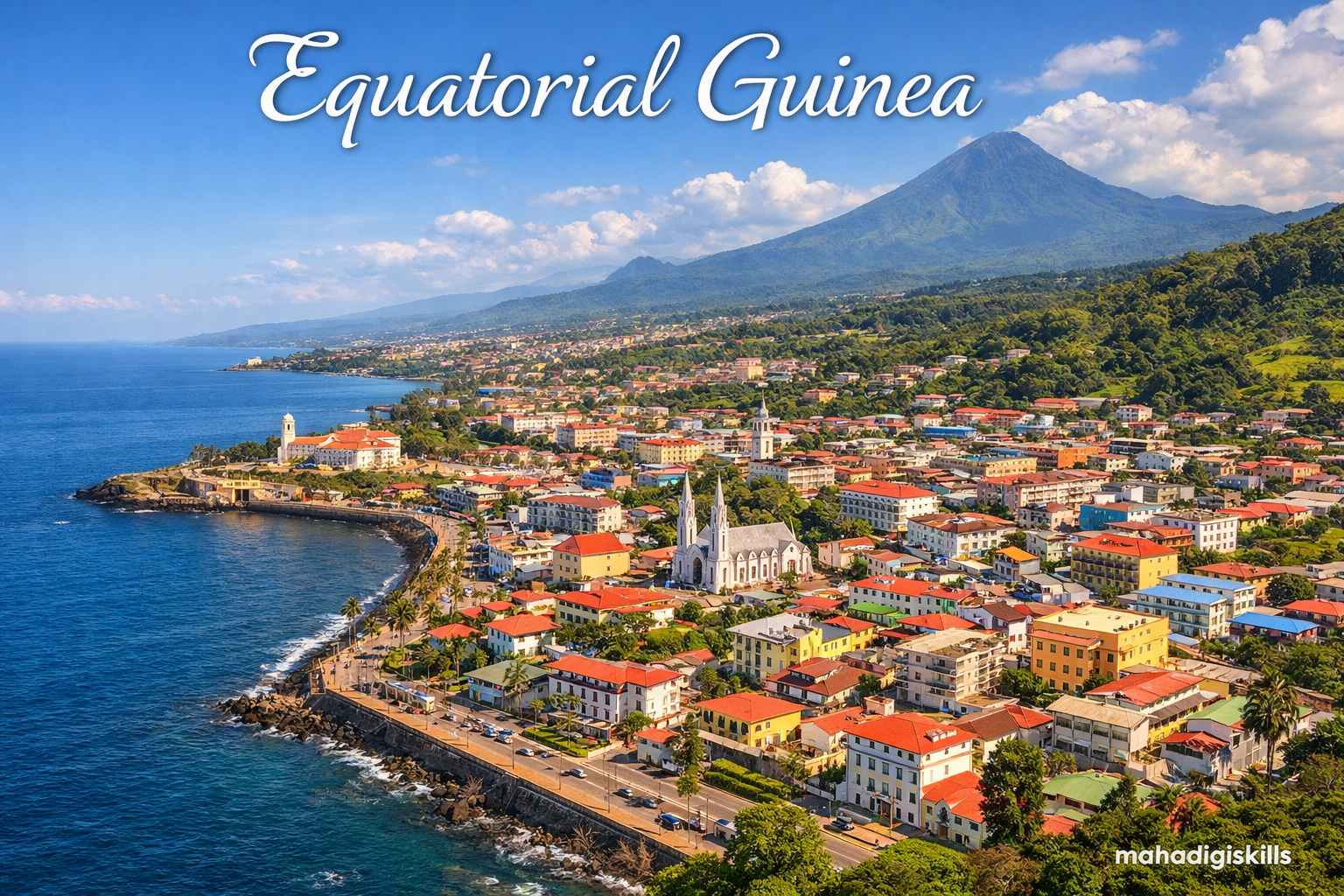
Equatorial Guinea is one of the most fascinating yet lesser-known countries in Central Africa. Located along the western coast of the African continent, this nation is unique because it consists of both mainland territory and several islands in the Gulf of Guinea. With rich cultural traditions, diverse landscapes, and a complex colonial history, the country offers a remarkable blend of African heritage and European influence.
Many travelers are intrigued by Equatorial Guinea due to its tropical rainforests, volcanic islands, and vibrant cities such as Malabo and Bata. Despite being relatively small in size, the nation holds significant importance in Africa because of its natural resources, particularly oil and gas.
This guide explores the history, geography, culture, economy, tourism, and unique characteristics that define Equatorial Guinea today.
Historical Background
The history of Equatorial Guinea reflects centuries of migration, trade, and colonial influence. Indigenous communities lived in the region long before European explorers arrived along the Atlantic coast.
Early Indigenous Civilizations
Before European contact, several ethnic groups inhabited the region that is now known as Equatorial Guinea.
Some of the most prominent groups included:
- Fang people, primarily living on the mainland
- Bubi people, native to Bioko Island
- Ndowe communities, located along coastal regions
These societies developed agricultural systems, trade networks, and cultural traditions that remain important today.
Portuguese Exploration
In 1472, Portuguese explorer Fernão do Pó discovered the island now known as Bioko. For several centuries, Portugal controlled many islands in the Gulf of Guinea.
The island was originally named Fernando Pó after the explorer.
Portuguese traders used the islands as strategic points for maritime routes along the West African coast.
Spanish Colonial Rule
During the 18th century, Portugal transferred control of the territory to Spain. The region became part of the Spanish colonial empire and was governed as Spanish Guinea.
Spanish rule introduced several major developments:
- Christian missionary activity
- Spanish language influence
- Development of cocoa plantations
- Administrative colonial systems
The Spanish language remains the official language today, making this country one of the few Spanish-speaking nations in Africa.
Independence in 1968
Equatorial Guinea gained independence from Spain on October 12, 1968.
Francisco Macías Nguema became the first president after independence. However, the early years of independence were marked by political instability and economic challenges.
In 1979, Teodoro Obiang Nguema Mbasogo came to power after a coup and has remained a major political figure in the country.
Geography of Equatorial Guinea
Equatorial Guinea has one of the most unique geographic structures in Africa because it consists of mainland territory and several islands.
Location
The country is located in Central Africa along the Gulf of Guinea.
Geographic coordinates:
1.65° N latitude and 10.27° E longitude
Neighboring Countries
The mainland region borders two countries:
- Cameroon to the north
- Gabon to the south and east
The western boundary faces the Atlantic Ocean.
Regions of the Country
Equatorial Guinea is divided into two main geographic parts.
Mainland Region – Río Muni
Río Muni forms the continental portion of Equatorial Guinea.
It contains:
- Dense rainforests
- Rivers and wildlife habitats
- Agricultural communities
This region accounts for most of the country’s land area.
Island Region
The island territory includes several important islands.
Bioko Island
Bioko Island is the most important island because it contains the national capital Malabo.
The island features:
- Volcanic mountains
- Tropical forests
- Coastal beaches
Annobón Island
Annobón lies far south in the Atlantic Ocean and is known for its volcanic landscape and fishing communities.
Climate
Equatorial Guinea has a tropical climate characterized by:
- Warm temperatures year-round
- High humidity
- Significant rainfall
Average temperatures range between 24°C and 30°C.
The rainy seasons vary between mainland and island regions.
Culture and Traditions
Culture in Equatorial Guinea reflects a blend of indigenous heritage and Spanish colonial influence.
Ethnic Diversity
Several ethnic groups contribute to the cultural landscape of Equatorial Guinea.
Major groups include:
- Fang
- Bubi
- Ndowe
- Annobonese
Each community maintains distinct traditions, languages, and customs.
Religion
Religion plays an important role in society.
The majority of the population practices Christianity, particularly Roman Catholicism, due to Spanish missionary influence.
Some communities also practice traditional African beliefs.
Music and Dance
Music and dance are important expressions of cultural identity.
Traditional instruments include:
- Drums
- Wooden percussion instruments
- Hand-crafted string instruments
Cultural festivals often feature colorful costumes and energetic dance performances.
Food and Cuisine
Cuisine in Equatorial Guinea reflects local ingredients and African culinary traditions.
Common foods include:
- Cassava
- Plantains
- Rice
- Fish and seafood
- Tropical fruits
One popular dish is pepper soup, a flavorful broth often prepared with fish or meat.
Seafood is widely consumed due to the country’s coastal geography.
Festivals
Several national celebrations and festivals occur throughout the year.
Important celebrations include:
- Independence Day (October 12)
- Religious holidays such as Christmas and Easter
- Local cultural festivals celebrating ethnic traditions
These events often include music, traditional clothing, and community gatherings.
Economy Overview
Equatorial Guinea has experienced significant economic transformation due to the discovery of natural resources.
Oil and Gas Industry
The most important sector of the economy is petroleum production.
Offshore oil discoveries in the 1990s dramatically increased national revenue and made the country one of Africa’s major oil producers.
Oil exports contribute a large portion of government income.
Agriculture
Before the oil boom, agriculture was the main economic activity.
Key crops include:
- Cocoa
- Coffee
- Timber
- Bananas
Agriculture remains important for rural communities.
Trade Partners
Major international trade partners include:
- United States
- China
- Spain
- European Union countries
Exports primarily include:
- Petroleum
- Natural gas
- Timber
Currency
The country uses the Central African CFA franc (XAF).
This currency is shared by several Central African nations.
External Source
World Bank
https://www.worldbank.org
Major Cities of Equatorial Guinea
Although the country is small, several cities serve as economic and administrative centers.
Malabo – The Capital
Malabo is the capital city, located on Bioko Island.
Key features include:
- Government institutions
- Colonial architecture
- Presidential palace
- Port facilities
The city overlooks the Atlantic Ocean and serves as an important political and economic hub.
Bata – Mainland Commercial Center
Bata is the largest city on the mainland.
It functions as a major commercial center and transportation hub for Río Muni.
The city includes:
- Markets
- Ports
- Growing infrastructure
Bata continues to expand due to economic development.
Oyala (Ciudad de la Paz)
Ciudad de la Paz is a new planned city designed to serve as a future administrative capital.
Modern government buildings and infrastructure are being developed there.
Tourism in Equatorial Guinea
Tourism in Equatorial Guinea is still developing, but the country offers extraordinary opportunities for travelers seeking untouched landscapes, tropical rainforests, and unique cultural experiences. Because tourism infrastructure is relatively new, many destinations remain pristine and less crowded compared with other African travel hotspots.
From volcanic islands to dense jungle reserves, Equatorial Guinea provides adventure tourism, wildlife exploration, and cultural discovery.
Top Tourist Attractions
Malabo – Colonial Architecture and Coastal Views
The capital city Malabo is one of the most important travel destinations in Equatorial Guinea.
Located on Bioko Island, the city combines colonial architecture with modern government buildings and scenic coastal views.
Popular attractions in Malabo include:
- Malabo Cathedral – A beautiful colonial-era Catholic cathedral
- Independence Square – A historic civic space in the city center
- Presidential Palace – One of the most recognizable landmarks in the capital
- Malabo National Park area – Nearby natural landscapes and hiking routes
Visitors often enjoy exploring the waterfront and markets that reflect the culture of Equatorial Guinea.
Bioko Island – Volcanic Landscapes and Rainforests
Bioko Island is one of the most spectacular regions of Equatorial Guinea.
The island is famous for:
- Volcanic mountains
- Dense tropical forests
- Unique wildlife habitats
- Beautiful beaches
One of the island’s most impressive features is Pico Basilé, the highest mountain in Equatorial Guinea, rising over 3,000 meters above sea level.
The mountain offers panoramic views of the Atlantic Ocean and surrounding landscapes.
Pico Basilé National Park
Pico Basilé National Park protects one of the most important ecosystems in Equatorial Guinea.
The park contains:
- Tropical rainforests
- Rare bird species
- Monkeys and other wildlife
- Hiking trails
Nature lovers and researchers often visit this park to observe biodiversity that is unique to the region.
Annobón Island – Remote Atlantic Paradise
Annobón Island is one of the most remote parts of Equatorial Guinea.
This volcanic island is located far south in the Atlantic Ocean and offers stunning natural scenery.
Highlights include:
- Black volcanic beaches
- Fishing villages
- Tropical forests
- Birdlife and marine ecosystems
Because of its isolation, Annobón remains one of the least explored destinations in Equatorial Guinea.
Beaches and Coastal Destinations
The Atlantic coastline of Equatorial Guinea features several beautiful beaches that remain relatively undiscovered by international tourists.
Arena Blanca Beach
Arena Blanca is one of the most famous beaches on Bioko Island.
Visitors enjoy:
- White sand beaches
- Crystal-clear water
- Seasonal butterfly migrations
- Relaxing ocean views
The beach is popular among locals and visitors looking for a peaceful escape near Malabo.
Ureca Beaches
Ureca, located on the southern coast of Bioko Island, offers pristine beaches and dramatic coastal scenery.
This region is especially important for sea turtle nesting, making it a significant conservation area in Equatorial Guinea.
Wildlife and Biodiversity
One of the most remarkable features of Equatorial Guinea is its biodiversity.
The country’s rainforests support many species of animals and plants found nowhere else.
Tropical Rainforests
Large portions of Equatorial Guinea are covered by dense equatorial rainforests.
These forests are home to:
- Monkeys
- Forest elephants
- Antelope species
- Exotic birds
- Rare reptiles
The forests of Río Muni are particularly important for conservation efforts.
Marine Ecosystems
The Atlantic waters surrounding Equatorial Guinea support rich marine biodiversity.
Common marine life includes:
- Sea turtles
- Dolphins
- Tropical fish
- Coral reef species
Fishing communities depend on these marine resources for their livelihoods.
Transportation and Travel
Traveling within Equatorial Guinea can involve a combination of air travel, road transportation, and boat connections between islands.
International Airports
The main international airport serving Equatorial Guinea is:
Malabo International Airport
This airport connects the country with major cities in:
- Europe
- West Africa
- Central Africa
Another important airport is located in Bata on the mainland.
Domestic Transportation
Domestic travel often includes:
- Regional flights between islands and mainland
- Road transportation within cities
- Boat travel to smaller islands
Infrastructure development continues to improve transportation networks across Equatorial Guinea.
Best Time to Visit Equatorial Guinea
The climate of Equatorial Guinea is tropical, meaning temperatures remain warm throughout the year.
However, seasonal rainfall affects travel conditions.
Dry Season
The best time to visit Equatorial Guinea is typically during the drier months, when travel conditions are more comfortable.
Dry seasons generally occur:
- December to February in many regions
- June to September in some mainland areas
During these months, wildlife viewing and outdoor exploration are easier.
Rainy Season
Rainy seasons bring heavy tropical rainfall, especially in rainforest regions.
Despite the rain, the landscapes become extremely lush and green, offering dramatic scenery for photographers and nature enthusiasts.
Cultural Tourism Experiences
Travelers interested in culture will find many opportunities to experience local traditions in Equatorial Guinea.
Popular cultural experiences include:
- Visiting traditional markets
- Watching local dance performances
- Sampling regional cuisine
- Learning about indigenous crafts
These experiences allow visitors to connect with the everyday life of communities throughout the country.
Internal Link Suggestion
Related article:
Argentina Travel Guide/argentina-travel-guide
External DoFollow Links
World Bank
https://www.worldbank.org/en/country/equatorialguinea
UNESCO
https://whc.unesco.org
United Nations
https://www.un.org/en/member-states/equatorial-guinea
Languages in Equatorial Guinea
Language diversity plays an important role in communication and cultural identity in Equatorial Guinea.
Official Languages
One of the most unique characteristics of Equatorial Guinea is that Spanish is the primary official language, making it the only Spanish-speaking country in Africa.
Spanish is widely used in:
- Government administration
- Education
- Media
- Business communication
In addition to Spanish, French and Portuguese are also recognized as official languages. These languages help strengthen diplomatic and economic relationships with neighboring countries and international organizations.
Indigenous Languages
Several indigenous languages are spoken across Equatorial Guinea, reflecting the country’s ethnic diversity.
Common indigenous languages include:
- Fang language, widely spoken on the mainland
- Bubi language, native to Bioko Island
- Ndowe language, used in coastal communities
- Annobonese Creole, spoken on Annobón Island
These languages preserve cultural traditions and local identity.
Population and Society
The population of Equatorial Guinea is estimated at around 1.7 million people.
Although the country is relatively small in population, it is culturally diverse and includes multiple ethnic communities.
Major Ethnic Groups
Several ethnic groups contribute to the social fabric of Equatorial Guinea.
The largest groups include:
- Fang – primarily located in the mainland region of Río Muni
- Bubi – traditional inhabitants of Bioko Island
- Ndowe – coastal communities
- Annobonese – residents of Annobón Island
Each group maintains distinct traditions, cultural practices, and historical heritage.
Equatorial Guinea in International Organizations
The country participates in several global organizations and regional partnerships.
United Nations Membership
Equatorial Guinea joined the United Nations in 1968, shortly after gaining independence from Spain.
Membership in the UN allows the country to participate in international discussions about:
- Global security
- Sustainable development
- Environmental protection
- Economic cooperation
External Source
https://www.un.org/en/about-us/member-states/equatorial-guinea
Regional and International Partnerships
In addition to the United Nations, Equatorial Guinea is a member of:
- African Union (AU)
- Economic Community of Central African States (ECCAS)
- Organization of the Petroleum Exporting Countries (OPEC)
- International Monetary Fund (IMF)
These organizations support economic collaboration, political stability, and regional development.
Unique and Interesting Facts
Several fascinating facts make Equatorial Guinea stand out globally.
Only Spanish-Speaking Nation in Africa
The country is the only African nation where Spanish is the main official language.
This unique cultural connection reflects its historical relationship with Spain.
One of Africa’s Major Oil Producers
Since offshore oil discoveries in the 1990s, Equatorial Guinea has become one of the leading petroleum producers in Sub-Saharan Africa.
Oil exports significantly influence the national economy.
Home to Rare Wildlife
Rainforests across Equatorial Guinea contain rare species of animals and plants.
Some wildlife includes:
- Forest elephants
- Chimpanzees
- Rare monkeys
- Exotic birds
These ecosystems are among the most biodiverse in Central Africa.
Volcanic Islands
Bioko Island and Annobón Island are volcanic in origin.
The dramatic volcanic landscapes give Equatorial Guinea stunning mountains and scenic coastal views.
Travel Tips for Visitors
Travelers planning to visit Equatorial Guinea should prepare carefully due to the country’s developing tourism infrastructure.
Entry Requirements
Visitors typically require:
- A valid passport
- Travel visa
- Health documentation (such as vaccination certificates)
Checking official travel requirements before visiting Equatorial Guinea is recommended.
Cultural Etiquette
Respect for local customs is important.
Visitors should:
- Dress modestly in rural areas
- Ask permission before photographing people
- Respect local traditions and communities
Transportation Tips
Because the country includes islands and mainland territory, transportation may involve:
- Domestic flights
- Boat travel
- Road transportation
Planning travel routes in advance is helpful.
Best Experiences in Equatorial Guinea
Visitors can enjoy several memorable experiences when exploring Equatorial Guinea.
Nature Exploration
Nature lovers can explore:
- Rainforest national parks
- Volcanic mountains
- Wildlife reserves
These landscapes provide incredible biodiversity and scenic beauty.
Cultural Discovery
Travelers can experience:
- Traditional music and dance
- Local markets and crafts
- Indigenous communities and customs
These cultural encounters reveal the authentic heritage of Equatorial Guinea.
Coastal Relaxation
The Atlantic coastline offers peaceful beaches and dramatic scenery.
Visitors can enjoy:
- Fishing villages
- Ocean sunsets
- Tropical island landscapes
Final Summary
Equatorial Guinea is a unique country located in Central Africa with a fascinating blend of cultures, languages, and natural landscapes. Its history reflects centuries of indigenous traditions combined with Spanish colonial influence, creating a distinctive cultural identity.
From the volcanic mountains of Bioko Island to the dense rainforests of Río Muni, the country offers extraordinary biodiversity and scenic beauty. Cities such as Malabo and Bata serve as important centers for government, trade, and cultural life.
Although tourism is still developing, Equatorial Guinea presents exciting opportunities for travelers seeking unexplored destinations, tropical environments, and authentic cultural experiences.
With growing economic development and international partnerships, the country continues to evolve while preserving its rich heritage and natural environment.
Key Facts Table
| Category | Information |
|---|---|
| Capital | Malabo |
| Largest City | Bata |
| Population | ~1.7 million |
| Official Languages | Spanish, French, Portuguese |
| Currency | Central African CFA franc (XAF) |
| Continent | Africa |
| Major Natural Features | Rainforests, volcanic islands |
| Highest Mountain | Pico Basilé |
| UN Membership | 1968 |
| Major Economic Sector | Oil and gas |
List of All 195 Countries
- Afghanistan
- Albania
- Algeria
- Andorra
- Angola
- Antigua and Barbuda
- Argentina
- Armenia
- Australia
- Austria
- Azerbaijan
- Bahamas
- Bahrain
- Bangladesh
- Barbados
- Belarus
- Belgium
- Belize
- Benin
- Bhutan
- Bolivia
- Bosnia and Herzegovina
- Botswana
- Brazil
- Brunei
- Bulgaria
- Burkina Faso
- Burundi
- Cabo Verde
- Cambodia
- Cameroon
- Canada
- Central African Republic
- Chad
- Chile
- China
- Colombia
- Comoros
- Congo (Congo-Brazzaville)
- Costa Rica

