



Introduction
Eritrea is a fascinating country located in the Horn of Africa, known for its rich history, diverse cultures, and dramatic landscapes. Situated along the Red Sea, the nation has long served as an important crossroads connecting Africa, the Middle East, and Europe.
Travelers who explore Eritrea often discover a unique blend of ancient civilizations, colonial architecture, and natural beauty. From the historic streets of Asmara to the remote islands of the Dahlak Archipelago, the country offers remarkable cultural and environmental diversity.
Although tourism in Eritrea remains relatively limited compared with other destinations, those who visit often appreciate the authentic experiences and historical depth the country provides.
This guide explores the history, geography, culture, economy, and tourism opportunities found across Eritrea.
Historical Background
The history of Eritrea stretches back thousands of years and includes influences from ancient African kingdoms, Arab traders, and European colonial powers.
Ancient Civilizations
Some of the earliest known civilizations in the region existed more than 3,000 years ago.
The territory that now forms Eritrea was once connected to the Kingdom of Aksum, a powerful trading empire that dominated parts of the Horn of Africa and the Red Sea region.
Aksum controlled important trade routes linking Africa with:
- Arabia
- India
- The Mediterranean world
Ancient ports located in Eritrea helped facilitate maritime trade during this period.
Ottoman and Egyptian Influence
During the 16th century, parts of the Red Sea coast were controlled by the Ottoman Empire.
Later, Egyptian rulers extended influence over coastal territories. These administrations focused mainly on strategic port locations rather than inland regions.
Italian Colonial Period
In the late 19th century, Italy established colonial rule over Eritrea.
The country officially became the Colony of Eritrea in 1890, marking the beginning of decades of Italian administration.
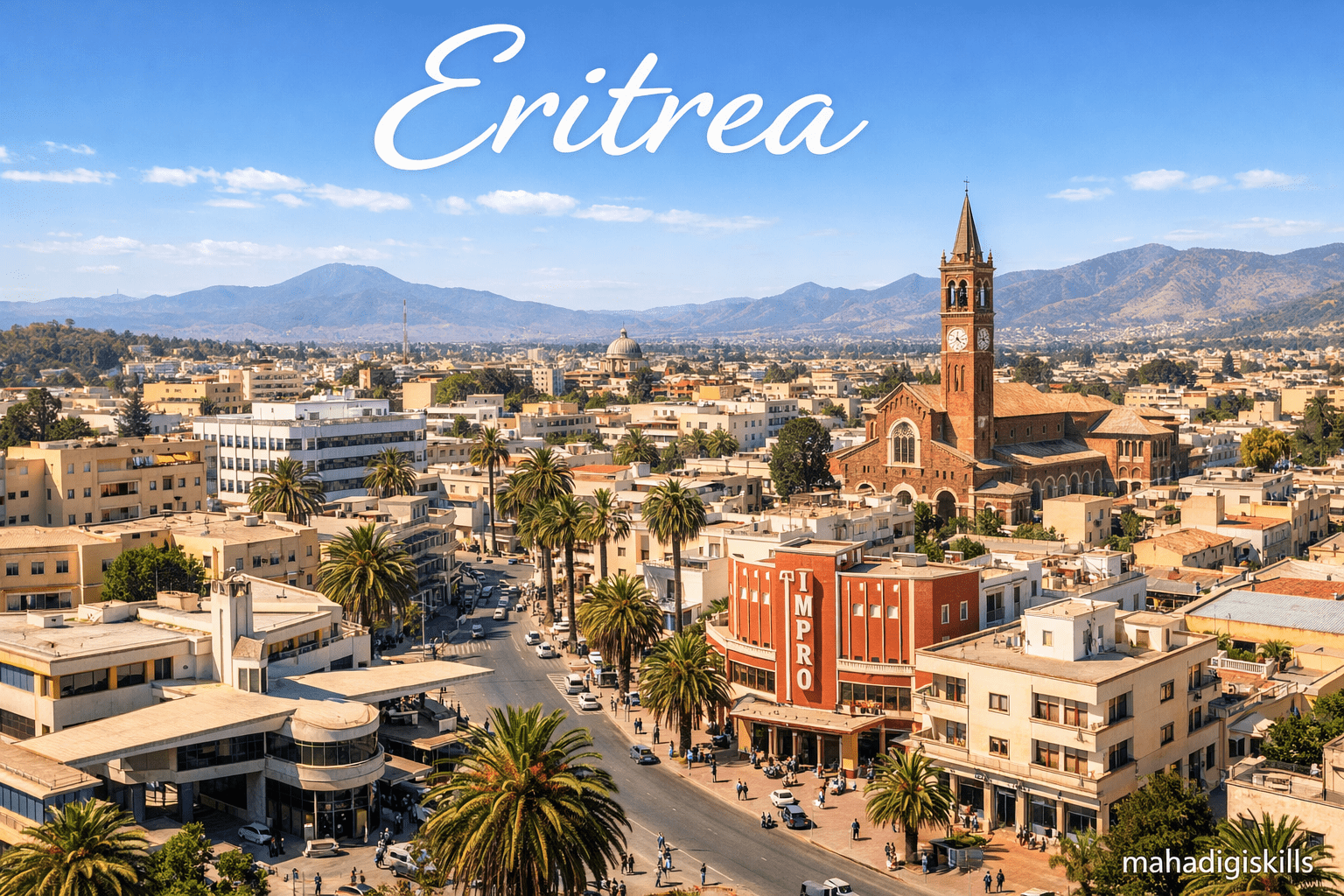
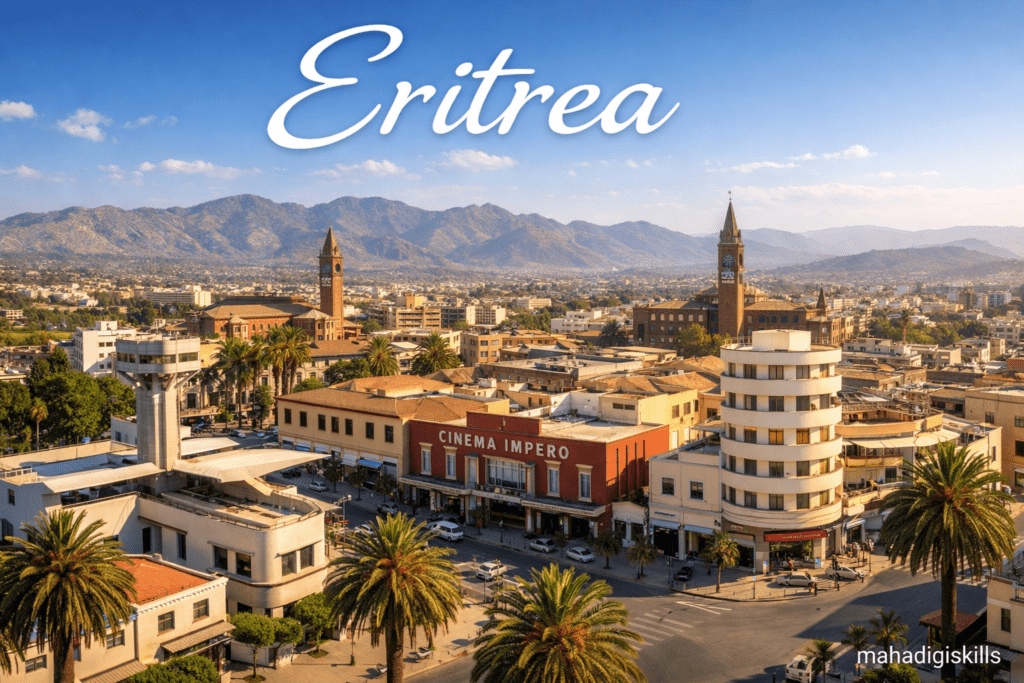
Italian influence shaped infrastructure and architecture, especially in Asmara, where many Art Deco and modernist buildings remain today.
These structures later contributed to the city’s recognition as a UNESCO World Heritage Site.
British Administration
During World War II, British forces defeated Italian troops and assumed control of Eritrea in 1941.
The British administered the territory for about a decade before its political future was debated internationally.
Federation with Ethiopia
In 1952, Eritrea was federated with Ethiopia under a United Nations resolution.
However, political tensions soon arose, and Ethiopia eventually annexed the territory, leading to conflict.
Independence Struggle
A long war for independence lasted from 1961 to 1991.
After years of resistance and negotiations, Eritrea officially gained independence in 1993 following a national referendum.
This event marked the beginning of Eritrea’s existence as a sovereign nation.
Geography of Eritrea
Eritrea’s geography is remarkably diverse, featuring mountains, deserts, coastal plains, and islands.
Location
Eritrea lies in northeastern Africa, along the Red Sea coast.
Geographic coordinates:
15.18° N latitude and 39.78° E longitude
Neighboring Countries
Eritrea shares land borders with:
- Sudan to the west
- Ethiopia to the south
- Djibouti to the southeast
The eastern border faces the Red Sea, providing access to important maritime routes.
Major Geographic Regions
Eritrea is generally divided into three major physical regions.
Central Highlands
The Central Highlands include the capital city Asmara.
This region has cooler temperatures and fertile agricultural land.
The highlands also contain scenic mountains and valleys.
Coastal Plains
The eastern coastal region stretches along the Red Sea.
This area features:
- Sandy beaches
- Coral reefs
- Fishing communities
Ports along the coast have historically supported trade.
Western Lowlands
The western region of Eritrea consists of plains and savannah landscapes.
Agriculture and livestock farming are common activities in this area.
Climate
Eritrea experiences several climate zones due to its varied geography.
Highland Climate
The central highlands enjoy moderate temperatures compared with surrounding regions.
Cooler weather makes cities like Asmara comfortable throughout much of the year.
Coastal Climate
The Red Sea coastline has a hot and humid climate.
Temperatures in coastal cities such as Massawa can become extremely high during summer.
Lowland Climate
The western lowlands experience semi-arid conditions with seasonal rainfall.
These areas support agriculture during the rainy season.
Culture and Traditions
Culture in Eritrea reflects a mixture of African, Middle Eastern, and Mediterranean influences.
Ethnic Diversity
Eritrea is home to nine recognized ethnic groups, each with its own language and traditions.
Major groups include:
- Tigrinya
- Tigre
- Afar
- Saho
- Bilen
This diversity contributes to the rich cultural landscape of the country.
Religion
Religion plays a central role in society.
The two major religions practiced in Eritrea are:
- Christianity
- Islam
Christian communities often belong to the Eritrean Orthodox Church, while Muslim communities are prominent in coastal and lowland areas.
Traditional Music and Dance
Music and dance traditions are an essential part of celebrations in Eritrea.
Traditional performances often include:
- Drums
- String instruments
- Rhythmic dancing
Cultural festivals showcase regional costumes and community traditions.
Cuisine
Food in Eritrea reflects influences from Ethiopian, Middle Eastern, and Mediterranean cooking styles.
Popular dishes include:
- Injera with stews
- Zigni (spicy meat stew)
- Lentil dishes
- Fresh seafood along the Red Sea coast
Coffee ceremonies are also an important social tradition.
Economy Overview
The economy of Eritrea relies on several key sectors.
Agriculture
Agriculture provides employment for many residents.
Major crops include:
- Sorghum
- Barley
- Wheat
- Vegetables
Livestock farming is also common.
Mining
Mining is an important part of the economy.
The country has deposits of:
- Gold
- Copper
- Zinc
- Potash
Mining projects have attracted international investment.
Fishing
The long coastline along the Red Sea supports fishing communities.
Marine resources include:
- Fish
- Lobster
- Shellfish
Fishing contributes to food supply and export opportunities.
Major Cities of Eritrea
Although Eritrea is not heavily urbanized, several cities play important roles in government and commerce.
Asmara – The Capital
Asmara is the capital and largest city in Eritrea.
The city is famous for its Italian colonial architecture, modernist buildings, and cultural landmarks.
Important attractions include:
- Fiat Tagliero Building
- Asmara Cathedral
- Cinema Impero
- Palm-lined boulevards
Asmara was designated a UNESCO World Heritage Site in 2017.
Massawa – Historic Port City
Massawa is an important port city on the Red Sea coast.
The city is known for:
- Ottoman-era architecture
- Coral stone buildings
- Historical port activities
Massawa has long served as a gateway for maritime trade.
Keren
Keren is one of the largest cities in Eritrea and an important agricultural center.
The city is famous for its:
Cultural festivals
Traditional markets
Camel trade
Tourism in Eritrea
Tourism in Eritrea is still developing compared with other destinations in Africa, but the country offers extraordinary opportunities for travelers who enjoy history, culture, and untouched landscapes. From historic port cities to beautiful islands in the Red Sea, the country provides a unique combination of cultural heritage and natural beauty.
Visitors who travel through Eritrea often discover authentic experiences, friendly communities, and scenic environments that remain largely undiscovered by mass tourism.
Top Tourist Attractions
Asmara – Architectural Treasure
Asmara, the capital of Eritrea, is one of the most fascinating cities in Africa due to its remarkable collection of Italian modernist architecture.
The city features buildings constructed during the Italian colonial period in the early twentieth century. Many of these structures remain beautifully preserved.
Important landmarks include:
- Fiat Tagliero Building, an iconic futuristic service station
- Cinema Impero, a classic Art Deco cinema
- Asmara Cathedral, a historic religious landmark
- Palm-lined boulevards and cafés
Because of its architectural significance, Asmara was designated a UNESCO World Heritage Site.
Visitors walking through the city often feel as if they have stepped into a European city from the 1930s.
Massawa – Historic Red Sea Port
Massawa is one of the most important coastal cities in Eritrea and has played a central role in maritime trade for centuries.
Located along the Red Sea coast, the city is famous for its coral-stone architecture and historical influence from Ottoman, Egyptian, and Italian cultures.
Key highlights include:
- Historic port district
- Coral stone buildings
- Old mosques and colonial structures
- Scenic sea views
Massawa also serves as a gateway to the beautiful islands of the Red Sea.
Dahlak Archipelago
The Dahlak Archipelago is one of the most stunning natural destinations associated with Eritrea.
This group of more than 200 islands lies in the Red Sea and offers incredible marine biodiversity.
Popular activities in the archipelago include:
- Snorkeling
- Scuba diving
- Fishing
- Island exploration
The coral reefs surrounding the islands are home to colorful fish, sea turtles, and other marine species.
Because tourism infrastructure remains limited, the islands maintain a pristine and peaceful environment.
Natural Landscapes and Wildlife
Nature is one of the most remarkable aspects of Eritrea. The country contains diverse ecosystems ranging from mountain forests to desert plains and marine habitats.
Highland Mountains
The central highlands provide cooler temperatures and scenic mountain landscapes.
These regions support agriculture and also offer excellent viewpoints overlooking valleys and plains.
Travelers visiting Eritrea often appreciate the dramatic landscapes surrounding the highland cities.
Red Sea Marine Ecosystems
The Red Sea coastline near Eritrea contains rich marine biodiversity.
Common marine life includes:
- Coral reefs
- Dolphins
- Sea turtles
- Tropical fish species
These ecosystems attract divers and marine researchers from around the world.
Wildlife in the Lowlands
The western lowlands of Eritrea support wildlife populations adapted to semi-arid conditions.
Animals found in these areas include:
- Gazelles
- Antelope
- Hyenas
- Various bird species
Although wildlife tourism is still developing, the landscapes offer exciting opportunities for ecological exploration.
Beaches of Eritrea
The Red Sea coastline offers beautiful beaches that remain largely untouched by large tourist crowds.
Gurgusum Beach
Gurgusum Beach is located near Massawa and offers relaxing coastal scenery.
Visitors enjoy:
- Warm Red Sea waters
- Peaceful beaches
- Spectacular sunsets
The calm environment makes it ideal for relaxing by the sea.
Dahlak Island Beaches
Many beaches across the Dahlak Archipelago feature clear water and white sand.
These beaches provide excellent opportunities for:
- Swimming
- Snorkeling
- Boat excursions
Because the islands are remote, they offer a quiet and natural travel experience.
Cultural Tourism Experiences
Cultural tourism is an important aspect of visiting Eritrea. Travelers interested in heritage and traditions will find many opportunities to engage with local communities.
Popular cultural activities include:
- Exploring traditional markets
- Attending cultural festivals
- Observing traditional coffee ceremonies
- Learning about regional crafts and textiles
These experiences provide deeper insight into the everyday life of people across the country.
Transportation and Travel
Travel within Eritrea involves a combination of road travel and flights.
International Airport
The main international gateway is:
Asmara International Airport
Flights connect the country with destinations in:
- Europe
- The Middle East
- Africa
Road Transportation
Roads connect major cities such as:
- Asmara
- Massawa
- Keren
Bus services and taxis are commonly used for domestic travel.
Historic Eritrean Railway
One of the most fascinating transportation attractions in Eritrea is the Asmara–Massawa railway.
This historic railway was built during the Italian colonial era and travels through mountains and tunnels connecting the highlands to the coast.
Today, sections of the railway operate as a heritage attraction for visitors.
Best Time to Visit Eritrea
The climate varies depending on elevation and location.
Highland Travel Season
The central highlands around Asmara are comfortable throughout most of the year due to moderate temperatures.
Travelers often visit during the cooler months when outdoor exploration is pleasant.
Coastal Travel Season
The Red Sea coast can become extremely hot during summer.
The best time to visit coastal destinations such as Massawa is during cooler months when temperatures are more manageable.
Internal Link Suggestion
Related article:
Argentina Travel Guide/argentina-travel-guide
External DoFollow Links
United Nations
https://www.un.org/en/member-states/eritrea
World Bank
https://www.worldbank.org/en/country/eritrea
UNESCO
https://whc.unesco.org
Languages in Eritrea
Language diversity reflects the multicultural heritage of Eritrea. Because the country includes several ethnic communities, many languages are spoken across different regions.
Official Languages
Unlike many countries, Eritrea does not have a single official language. Instead, the government recognizes multiple languages for communication and administration.
The most widely used languages include:
- Tigrinya
- Arabic
- English
Tigrinya is commonly spoken in the central highlands and in the capital city. Arabic is widely used in coastal areas and for international communication, while English is frequently used in education and business.
Indigenous Languages
Several indigenous languages represent the cultural diversity of Eritrea.
Important regional languages include:
- Tigre
- Afar
- Saho
- Bilen
- Kunama
- Nara
Each language reflects the traditions and identity of different ethnic groups living within the country.
Population and Society
The population of Eritrea is estimated at around 3.7 million people. Most residents live in rural areas, where agriculture and pastoral activities remain important for daily life.
Urban centers such as Asmara, Keren, and Massawa serve as economic and cultural hubs.
Ethnic Diversity
Nine major ethnic groups live across Eritrea, each maintaining distinct customs and traditions.
These groups include:
- Tigrinya
- Tigre
- Afar
- Saho
- Bilen
- Kunama
- Nara
- Rashaida
- Hedareb
Cultural diversity contributes to the country’s rich traditions in language, music, and food.
Eritrea in International Organizations
The country participates in several international organizations that promote cooperation and development.
United Nations Membership
Eritrea joined the United Nations in 1993, shortly after gaining independence.
Membership allows the country to participate in international discussions related to:
- Peace and security
- Economic development
- Environmental protection
- Global cooperation
External Source
https://www.un.org/en/about-us/member-states/eritrea
Regional Organizations
Eritrea also participates in regional partnerships including:
- African Union (AU)
- Intergovernmental Authority on Development (IGAD)
- International Monetary Fund (IMF)
These partnerships help strengthen diplomatic and economic relationships with neighboring countries.
Unique and Interesting Facts
Several fascinating facts make Eritrea unique in Africa and the world.
UNESCO World Heritage Capital
The capital city Asmara is recognized as a UNESCO World Heritage Site because of its exceptional collection of Italian modernist architecture.
Buildings constructed during the early twentieth century remain remarkably preserved.
One of Africa’s Youngest Nations
Modern Eritrea became an independent country in 1993, making it one of the newest nations in Africa.
Historic Railway Through the Mountains
The Asmara–Massawa railway is considered one of the most scenic railway routes in Africa.
This historic railway climbs steep mountain landscapes connecting the highlands with the Red Sea coast.
Large Red Sea Island Territory
The Dahlak Archipelago, located off the coast of Eritrea, contains more than 200 islands and offers exceptional marine biodiversity.
Rich Coffee Culture
Coffee plays an important role in social life. Traditional coffee ceremonies involve roasting beans, brewing fresh coffee, and sharing it with guests.
Travel Tips for Visitors
Traveling to Eritrea can be a rewarding experience for visitors interested in culture, history, and nature.
Entry Requirements
Visitors should prepare the following documents before traveling:
- Valid passport
- Travel visa
- Health documentation if required
Checking official travel guidelines before visiting Eritrea is recommended.
Cultural Etiquette
Respect for local traditions is important.
Travelers should:
- Dress modestly in rural communities
- Ask permission before photographing people
- Respect religious customs and cultural practices
These gestures help build positive interactions with local communities.
Transportation Advice
Travel within Eritrea may involve:
- Domestic flights
- Road travel between cities
- Boat travel to Red Sea islands
Planning routes ahead of time helps ensure smooth travel experiences.
Best Experiences in Eritrea
Visitors exploring Eritrea can enjoy a wide variety of cultural and natural experiences.
Historical Exploration
Travelers can explore:
- Colonial architecture in Asmara
- Historic port areas of Massawa
- Cultural markets in Keren
These destinations reveal the rich heritage of the country.
Nature and Adventure
Outdoor enthusiasts can enjoy:
- Mountain landscapes
- Red Sea islands
- Wildlife observation in rural regions
The diverse geography provides excellent opportunities for exploration.
Coastal Relaxation
The Red Sea coastline offers peaceful beaches and scenic marine environments.
Visitors often enjoy:
- Snorkeling and diving
- Boat trips to islands
- Fishing excursions
Final Summary
Eritrea is a unique destination located in the Horn of Africa, offering a remarkable combination of historical heritage, cultural diversity, and natural beauty. Its landscapes range from mountain highlands and agricultural valleys to coastal plains and tropical islands.
Cities such as Asmara, Massawa, and Keren reflect centuries of history and cultural exchange. The Italian colonial architecture of Asmara, now protected as a UNESCO World Heritage Site, stands as one of the most distinctive urban landscapes in Africa.
Although tourism remains relatively limited, Eritrea provides authentic travel experiences for visitors seeking historical exploration, cultural discovery, and untouched natural environments.
Key Facts Table
| Category | Information |
|---|---|
| Capital | Asmara |
| Largest City | Asmara |
| Population | ~3.7 million |
| Major Languages | Tigrinya, Arabic, English |
| Currency | Eritrean Nakfa |
| Continent | Africa |
| Coastline | Red Sea |
| Major Islands | Dahlak Archipelago |
| Independence | 1993 |
| UN Membership | 1993 |
List of All 195 Countries
- Afghanistan
- Albania
- Algeria
- Andorra
- Angola
- Antigua and Barbuda
- Argentina
- Armenia
- Australia
- Austria
- Azerbaijan
- Bahamas
- Bahrain
- Bangladesh
- Barbados
- Belarus
- Belgium
- Belize
- Benin
- Bhutan
- Bolivia
- Bosnia and Herzegovina
- Botswana
- Brazil
- Brunei
- Bulgaria
- Burkina Faso
- Burundi
- Cabo Verde
- Cambodia
- Cameroon
- Canada
- Central African Republic
- Chad
- Chile
- China
- Colombia
- Comoros
- Congo (Congo-Brazzaville)
- Costa Rica

