



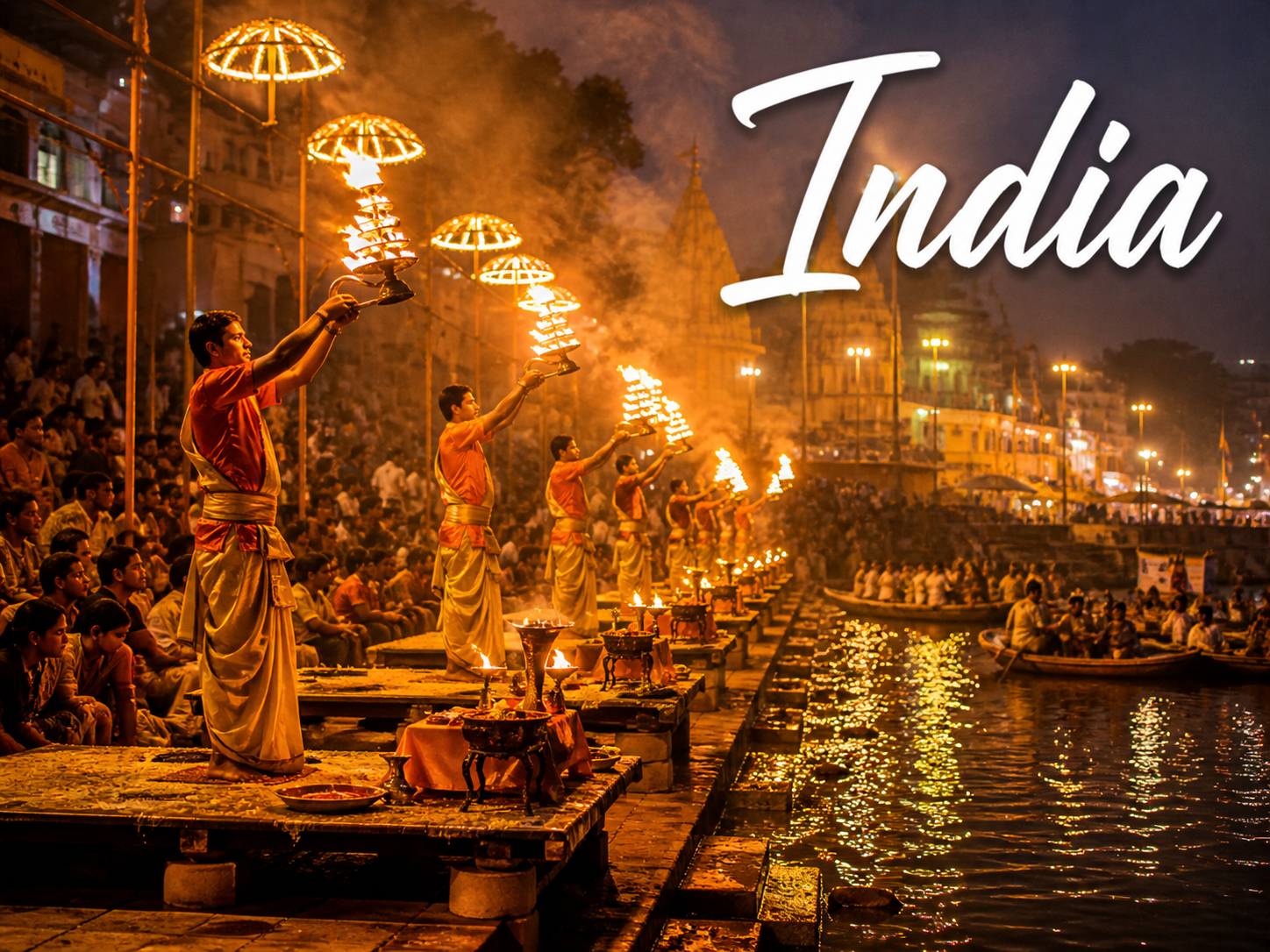
India
🌍 Introduction
India is one of the most diverse and culturally rich countries in the world, known for its ancient history, vibrant traditions, and breathtaking landscapes. Located in South Asia, India attracts millions of visitors every year who come to explore its heritage, spirituality, cuisine, and natural beauty.
From the towering Himalayas in the north to the tropical beaches in the south, India offers an unmatched variety of experiences. Whether you are interested in history, culture, food, or adventure, India provides something for everyone.
🏛 History of India
Ancient Civilizations
The history of India begins with the
Indus Valley Civilization,
one of the world’s earliest urban cultures, dating back to around 2500 BCE.
This civilization in India was known for:
- Advanced city planning
- Drainage systems
- Trade networks
Vedic Period and Early Kingdoms
After the Indus Valley period, India entered the Vedic age, during which early Hindu traditions were formed. Powerful kingdoms and empires began to emerge across India.
Maurya and Gupta Empires
Two of the most influential empires in India were:
- Maurya Empire
- Gupta Empire
Under rulers like
Ashoka,
India saw the spread of Buddhism and strong governance systems.
Medieval India and Mughal Era
During the medieval period, India experienced the rise of various dynasties, including the Mughals. The Mughal Empire left a lasting impact on India’s architecture, art, and culture.
One of the most iconic monuments from this era is the
Taj Mahal,
a symbol of love and one of the most visited sites in India.
British Colonial Rule
In the 18th century, India came under British rule. This period significantly influenced the economy, infrastructure, and political system of India.
Independence of India
India gained independence in 1947 after a long struggle led by leaders such as
Mahatma Gandhi.
Since independence, India has grown into one of the largest democracies in the world.
🌎 Geography of India
Location and Coordinates
India is located in South Asia and is the seventh-largest country in the world.
- Coordinates: 20.5937° N, 78.9629° E
- Continent: Asia
Neighboring Countries
India shares borders with:
- Pakistan
- China
- Nepal
- Bhutan
- Bangladesh
- Myanmar
Physical Features
The geography of India is incredibly diverse:
- Himalayan mountains in the north
- Indo-Gangetic plains
- Thar Desert in the west
- Coastal regions and islands
The
Himalayas
form a natural boundary for India.
Climate
India experiences a variety of climates:
- Tropical in the south
- Desert in the west
- Alpine in the north
The monsoon season plays a major role in shaping agriculture in India.
🎭 Culture of India
Traditions and Heritage
Culture in India is deeply rooted in history, religion, and regional diversity. Each state in India has its own traditions, clothing, language, and customs.
Religion in India
India is home to multiple religions:
- Hinduism
- Islam
- Christianity
- Sikhism
- Buddhism
- Jainism
This diversity makes India one of the most spiritually rich countries in the world.
Festivals of India
Festivals are an essential part of life in India:
- Diwali
- Holi
- Navratri
- Eid al-Fitr
These festivals reflect the unity and diversity of India.
Music and Dance
India has a rich tradition of music and dance:
- Classical music (Hindustani & Carnatic)
- Bollywood music
- Folk dances
Dance forms like Bharatanatyam and Kathak originated in India.
Food Culture of India
Cuisine in India is world-famous for its variety and flavors:
- North Indian curries
- South Indian dosa and idli
- Street food like chaat
Spices are an essential part of cooking in India.
🗣 Language in India
Official Languages
India has two official languages at the national level:
- Hindi
- English
Regional Languages
There are 20+ officially recognized languages in India, including:
- Tamil
- Telugu
- Bengali
- Marathi
This linguistic diversity makes India unique.
🏙 Major Cities of India
New Delhi (Capital)
The capital of India, New Delhi, is:
- Political center
- Home to major government institutions
Mumbai
Mumbai is:
- Financial capital of India
- Home to Bollywood
Bengaluru
- IT hub of India
- Known as the Silicon Valley of India
Kolkata
- Cultural capital of India
- Rich literary heritage
🌐 India in Global Organizations
India is an important member of:
International Monetary Fund
United Nations
World Bank
💰 Economy of India
Overview of India’s Economy
India has one of the fastest-growing major economies in the world and is considered a global economic powerhouse. Over the past few decades, India has transformed from an agriculture-based economy into a diversified economy driven by industry, services, and technology.
Today, India ranks among the largest economies globally in terms of GDP and purchasing power parity. With a large workforce and expanding middle class, India continues to attract global investment.
Key Economic Sectors in India
1. Agriculture
Agriculture remains a vital sector in India, employing a significant portion of the population.
Major crops in India include:
- Rice
- Wheat
- Sugarcane
- Cotton
The agricultural sector in India is highly dependent on the monsoon season.
2. Information Technology (IT)
The IT sector is one of the biggest contributors to the economy of India.
Cities like Bengaluru and Hyderabad are known as global IT hubs. Companies from India provide:
- Software services
- IT consulting
- Outsourcing solutions
3. Manufacturing and Industry
Manufacturing is rapidly growing in India, supported by initiatives like “Make in India.”
Key industries include:
- Automobile manufacturing
- Textiles
- Pharmaceuticals
Global companies such as
Tata Group
and
Reliance Industries
play a major role in the industrial growth of India.
4. Services Sector
The services sector dominates the economy of India, including:
- Banking
- Tourism
- Telecommunications
Currency of India
The official currency of India is:
- Indian Rupee (INR)
Major Trade Partners
India’s key trade partners include:
- United States
- China
- United Arab Emirates
- European Union
Exports from India include:
- Textiles
- Pharmaceuticals
- Software services
Economic Strengths and Challenges
Strengths:
- Large consumer market
- Skilled workforce
- Growing digital economy
Challenges:
- Income inequality
- Infrastructure gaps
- Environmental concerns
Organizations like the
- World Bank
- International Monetary Fund
support development initiatives in India.
🏝 Tourist Attractions in India
🏛 Historical Attractions
1. Taj Mahal
The
Taj Mahal
is one of the most famous monuments in the world and a UNESCO World Heritage Site.
2. Jaipur City Palace
Located in Rajasthan,
City Palace, Jaipur
showcases royal heritage and architecture of India.
🌿 Natural Attractions
1. Kerala Backwaters
The
Kerala Backwaters
offer serene landscapes and houseboat experiences in India.
2. Himalayas
The
Himalayas
provide breathtaking scenery and adventure tourism opportunities in India.
🏖 Coastal Destinations
India also offers beautiful coastal destinations like:
- Goa
- Andaman Islands
🕌 Religious & Spiritual Sites
India is known for its spiritual tourism:
- Varanasi Ghats
- Golden Temple
✨ Unique Facts About India
Here are some fascinating facts about India:
- India is the world’s largest democracy.
- It has one of the oldest continuous civilizations.
- Yoga originated in India.
- India has over 40 UNESCO World Heritage Sites.
- The railway network in India is one of the largest in the world.
🌆 More About Cities in India
Mumbai – Financial Capital
Mumbai is:
- Economic hub of India
- Home to Bollywood
Bengaluru – Tech Hub
Bengaluru is:
- IT capital of India
- Known for startups and innovation
Chennai – Cultural Center
Chennai is:
- Known for classical music and dance
- Major industrial city in India
Hyderabad – Emerging Metro
Hyderabad is:
- Known for IT and heritage
- Famous for biryani
✈️ Best Time to Visit India
Ideal Travel Season
The best time to visit India is:
- October to March
This period offers:
- Pleasant weather
- Ideal conditions for sightseeing
Seasonal Travel
- Summer (April–June): Hot in most parts of India
- Monsoon (July–September): Lush greenery but heavy rainfall
🚗 Transportation in India
Getting Around
Transportation in India is diverse:
- Trains (extensive network)
- Domestic flights
- Buses
- Auto-rickshaws
Railways
Indian Railways is one of the largest rail networks globally and a major mode of travel in India.
🧭 Travel Tips for India
- Respect local customs and traditions
- Dress modestly in religious places
- Use bottled water
- Plan travel routes in advance
🔗 External DoFollow Links
- United Nations: https://www.un.org
- World Bank: https://www.worldbank.org
- UNESCO: https://whc.unesco.org
🎭 Deep Cultural Insights of India
Traditions and Daily Life
India is a country where tradition and modernity coexist seamlessly. Daily life in India varies greatly from region to region, influenced by language, religion, and local customs. In rural areas, India still preserves ancient traditions, while urban centers showcase rapid modernization and global influence.
Family values play a central role in India, and social structures are deeply rooted in cultural heritage. Festivals, rituals, and community gatherings are an essential part of everyday life in India.
Religion and Spiritual Life
India is one of the most spiritually diverse countries in the world. It is the birthplace of major religions such as:
- Hinduism
- Buddhism
- Jainism
- Sikhism
Religious practices are deeply integrated into daily life in India, with temples, mosques, churches, and gurudwaras found across the country.
Festivals and Celebrations
Festivals in India are vibrant, colorful, and celebrated with great enthusiasm.
Diwali
The festival of lights,
Diwali,
symbolizes the victory of light over darkness.
Holi
The
Holi
is celebrated with colors, music, and joy across India.
Durga Puja
Celebrated mainly in eastern India, Durga Puja is known for grand decorations and cultural performances.
🍽 Food Guide of India
Traditional Indian Dishes
Cuisine in India is incredibly diverse and varies by region:
- Butter chicken
- Biryani
- Masala dosa
- Paneer dishes
Each region of India has its own specialties and flavors.
Street Food Culture
Street food is an essential part of life in India:
- Chaat
- Pani puri
- Samosa
Street food reflects the vibrant culinary culture of India.
Beverages
Popular drinks in India include:
- Chai (tea)
- Lassi
- Fresh fruit juices
🗺 7-Day Travel Itinerary for India
Day 1: Arrival in New Delhi
Explore:
- City landmarks
- Markets
- Cultural sites
Day 2: Delhi Sightseeing
Visit:
- India Gate
- Qutub Minar
Day 3: Agra Visit
Travel to Agra and see:
- Taj Mahal
Day 4: Jaipur Exploration
Discover:
- Amber Fort
- City Palace
Day 5: Travel to Varanasi
Experience:
- Varanasi Ghats
Day 6: Cultural Experience
Enjoy:
- Local traditions
- Cuisine
- Markets
Day 7: Return & Departure
Return to Delhi and prepare for departure.
🌍 India and Global Presence
India plays a major role in global affairs and is a member of:
- United Nations
- World Bank
- International Monetary Fund
These memberships highlight the importance of India in global development and diplomacy.
🤔 Interesting & Lesser-Known Facts About India
- India is the largest democracy in the world.
- The game of chess originated in India.
- Ayurveda, one of the oldest medical systems, began in India.
- India has one of the largest film industries globally.
- The Kumbh Mela in India is the largest gathering of people in the world.
🔗 Internal Link Suggestion
If you enjoyed reading about India, explore another destination:
➡️ Argentina Travel Guide (internal blog link suggestion)
📊 Final Summary
India is a land of incredible diversity, where history, culture, spirituality, and modern development come together. From ancient monuments to bustling cities and peaceful landscapes, India offers a unique experience for every traveler.
Whether you are exploring heritage sites, enjoying local cuisine, or experiencing festivals, India provides unforgettable memories and cultural richness.
📋 Key Facts About India
| Category | Details |
|---|---|
| Country Name | India |
| Capital | New Delhi |
| Continent | Asia |
| Coordinates | 20.5937° N, 78.9629° E |
| Official Languages | Hindi, English |
| Currency | Indian Rupee (INR) |
| Population | 1.4+ billion |
| Independence | 1947 |
| Climate | Diverse (tropical to alpine) |
| Major Cities | Delhi, Mumbai, Bengaluru, Kolkata |
| Major Attraction | Taj Mahal |
| UN Membership | Yes |
List of All 195 Countries
- Afghanistan
- Albania
- Algeria
- Andorra
- Angola
- Antigua and Barbuda
- Argentina
- Armenia
- Australia
- Austria
- Azerbaijan
- Bahamas
- Bahrain
- Bangladesh
- Barbados
- Belarus
- Belgium
- Belize
- Benin
- Bhutan
- Bolivia
- Bosnia and Herzegovina
- Botswana
- Brazil
- Brunei
- Bulgaria
- Burkina Faso
- Burundi
- Cabo Verde
- Cambodia
- Cameroon
- Canada
- Central African Republic
- Chad
- Chile
- China
- Colombia
- Comoros
- Congo (Congo-Brazzaville)
- Costa Rica

