



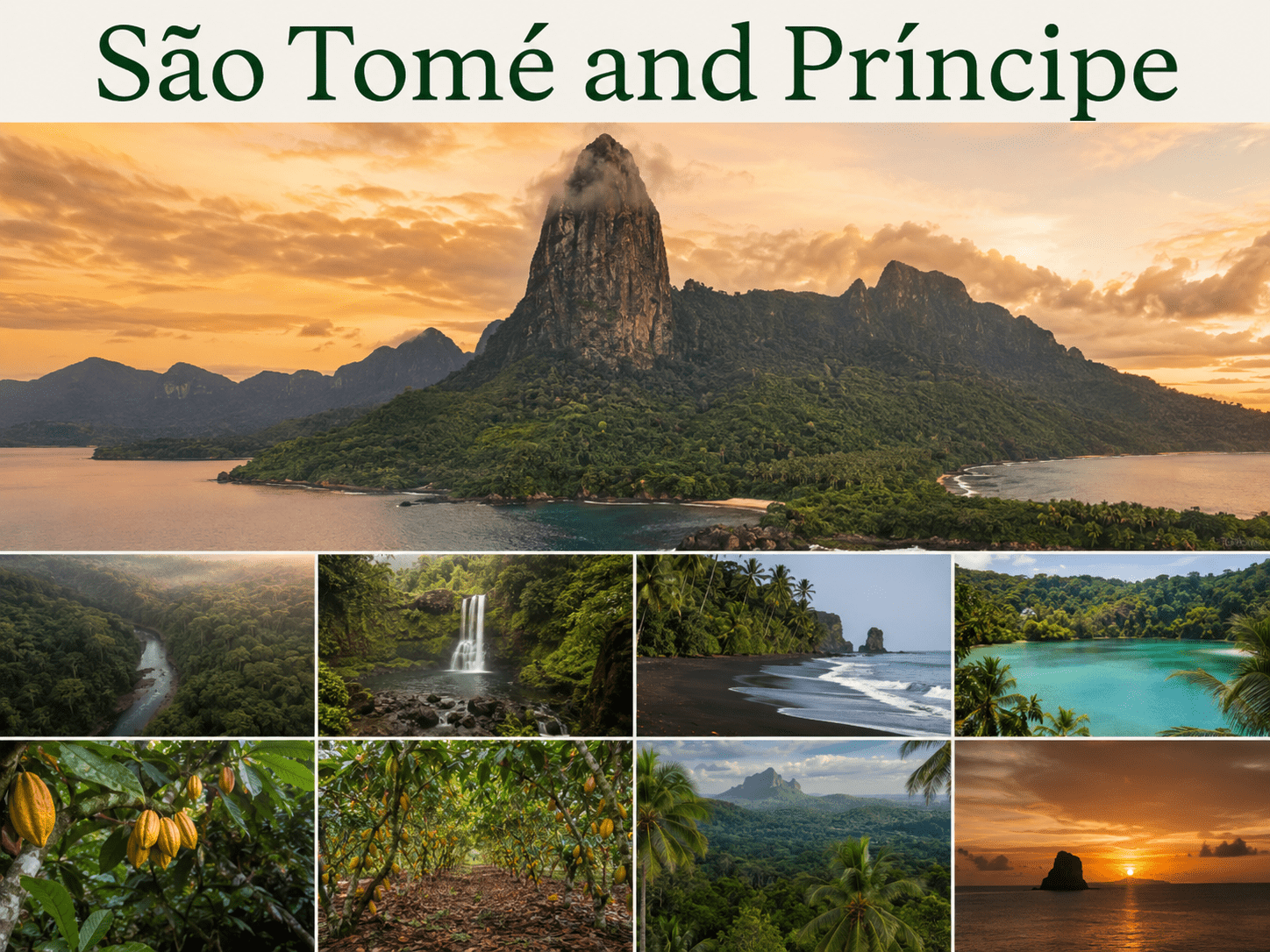
Introduction – Africa’s Hidden Tropical Paradise
São Tomé and Príncipe is a small island nation located in the Gulf of Guinea off the western coast of Central Africa. Known for its volcanic landscapes, dense rainforests, pristine beaches, and rich colonial history, it remains one of Africa’s least explored travel destinations.
Travelers visit São Tomé and Príncipe for:
- Untouched tropical beaches
- Rainforest hiking adventures
- Volcano landscapes
- Historic colonial architecture
- Wildlife and birdwatching
- Cocoa plantation tours
This destination is perfect for eco-tourism and travelers seeking raw, untouched natural beauty.
Historical Background of the Islands
Early Portuguese Discovery
The islands of São Tomé and Príncipe were discovered by Portuguese explorers in the late 15th century.
Key developments:
- Uninhabited islands initially
- Portuguese settlement and colonization
- Development of sugar plantations
Plantation Economy Era
The islands became a major center for:
- Sugar production
- Slave labor system
- Later cocoa and coffee plantations
Independence Movement
São Tomé and Príncipe gained independence in 1975 after centuries of Portuguese rule.
Modern Era
Today, the country focuses on:
- Eco-tourism
- Agriculture
- Fisheries
- Sustainable development
Geography and Location
Where is São Tomé and Príncipe Located?
São Tomé and Príncipe is located in the Gulf of Guinea, near the equator, off the coast of Central Africa.
Nearby countries include:
- Gabon
- Equatorial Guinea
Island Composition
The country consists of two main islands:
- São Tomé (larger island)
- Príncipe (smaller island)
Plus several smaller islets.
Geographic Features
The landscape includes:
- Volcanic mountains
- Dense tropical rainforest
- Coastal cliffs
- Black sand beaches
Climate of the Islands
Equatorial Tropical Climate
São Tomé and Príncipe has warm and humid weather year-round.
Seasonal Pattern
- Rainy season: October to May
- Dry season: June to September
Best Time to Visit
Ideal months:
- June to September
Perfect for:
- Beach tourism
- Hiking
- Wildlife exploration
Culture and Traditions
African and Portuguese Influence
Culture in São Tomé and Príncipe blends:
- African heritage
- Portuguese colonial influence
- Creole traditions
Music and Dance
Popular cultural forms include:
- Ússua
- Socopé
- Traditional drumming
Community Lifestyle
Life is:
- Relaxed
- Community-oriented
- Nature-connected
Religion and Society
Most people in São Tomé and Príncipe follow Christianity, mainly Roman Catholicism.
Religion influences:
- Festivals
- Daily routines
- Community gatherings
Cuisine of São Tomé and Príncipe
Island Food Culture
Food is based on:
- Fresh fish
- Tropical fruits
- Cocoa and chocolate influence
- Root vegetables
Popular Dishes
Calulu
A traditional fish or meat stew.
Banana-Based Dishes
Common staple food ingredient.
Grilled Seafood
Freshly caught fish and shellfish.
Chocolate Heritage
The country is famous for:
- High-quality cocoa production
- Artisan chocolate products
- Plantation tours
Economy of the Country
Agriculture-Based Economy
São Tomé and Príncipe depends on:
- Cocoa exports
- Fishing industry
- Tourism
- Small-scale agriculture
Currency
The official currency is the Dobra (STN).
Key Industries
- Cocoa production
- Eco-tourism
- Fishing
- Small agriculture
Major City in the Country
São Tomé City – Capital
São Tomé is the capital featuring:
- Colonial architecture
- Coastal harbor
- Markets and cultural centers
Languages Spoken
The official language in São Tomé and Príncipe is Portuguese.
Creole languages are also widely spoken.
Tourist Attractions
Obô National Park
A lush rainforest reserve with rare wildlife.
Pico Cão Grande
A dramatic volcanic plug rising from the jungle.
Rolas Island
A small island located on the equator line.
Praia Jalé
A nesting site for sea turtles.
International Memberships
São Tomé and Príncipe is part of:
- United Nations (UN)
- African Union (AU)
- Community of Portuguese Language Countries (CPLP)
Official Sources
UN São Tomé and Príncipe Profile
Volcanic Landscapes, Rainforests & Natural Wonders
São Tomé and Príncipe is a dramatic blend of volcanic peaks, dense equatorial rainforest, and untouched coastline. Much of the land is still wild, making it one of Africa’s top eco-tourism destinations.
Visitors come for:
- Jungle trekking
- Volcano landscapes
- Hidden waterfalls
- Birdwatching
- Remote beaches
Pico Cão Grande – The Iconic Volcanic Peak
One of the most striking landmarks in São Tomé and Príncipe is Pico Cão Grande, a towering volcanic plug rising sharply from the jungle.
Highlights:
- 370+ meter vertical rock spire
- Surrounded by rainforest
- Popular for photography
- Visible from miles away
It is one of the most dramatic natural formations in Africa.
Obô National Park Ecosystem
The Obô National Park in São Tomé and Príncipe covers large areas of rainforest and mountains.
Features include:
- Endemic plant species
- Rare birds and monkeys
- Dense jungle trails
- Freshwater streams
Waterfalls and Hidden Pools
The islands are full of waterfalls such as:
- São Nicolau Falls
- Bombaim Waterfall
- Praia Jalé streams
These spots are perfect for:
- Swimming
- Photography
- Nature hikes
Marine Life & Ocean Activities
Coral Reefs and Marine Biodiversity
The coastal waters of São Tomé and Príncipe include:
- Coral reefs
- Tropical fish
- Sea turtles
- Dolphins
Diving and Snorkeling
Popular activities:
- Reef diving
- Lagoon snorkeling
- Marine photography
- Coastal exploration
Príncipe Island Waters
Príncipe offers some of the clearest waters in the region:
- Calm beaches
- Coral ecosystems
- Secluded coves
Festivals and Cultural Celebrations
Independence Day Celebrations
A major national event in São Tomé and Príncipe featuring:
- Parades
- Music performances
- Cultural dances
- Flag ceremonies
Carnival Celebrations
Carnival includes:
- Colorful costumes
- African drumming
- Street performances
- Traditional dances
Local Community Festivals
Village-based celebrations often include:
- Harvest festivals
- Fishing celebrations
- Religious gatherings
Adventure Tourism Activities
Jungle Trekking
Exploring São Tomé and Príncipe includes:
- Rainforest hikes
- Mountain climbing
- Wildlife spotting
Beach Exploration
Popular beach experiences:
- Black sand beaches
- Hidden coves
- Coastal walking routes
Island Hopping
Travel between islands involves:
- Small boats
- Ferry services
- Charter trips
Hidden Gems of the Islands
Rolas Island (Equator Island)
A famous spot where visitors can:
- Stand on the equator line
- Explore small beaches
- Visit lighthouse viewpoints
Praia Jalé Turtle Beach
A protected area where:
- Sea turtles nest
- Conservation projects operate
- Eco-tourism is encouraged
Lagoa Azul
A beautiful lagoon known for:
- Calm blue waters
- Snorkeling spots
- Scenic picnic areas
Príncipe Biosphere Reserve
A UNESCO-recognized area featuring:
- Dense forests
- Rare wildlife
- Protected ecosystems
Transportation and Travel System
Air Travel
São Tomé and Príncipe is connected by:
- São Tomé International Airport
- Flights to Portugal
- Regional African routes
Inter-Island Travel
Between islands:
- Small aircraft flights
- Boat transport
- Charter services
Local Transport
On islands:
- Taxis
- Minibuses
- Rental vehicles
Road Conditions
Road travel includes:
- Coastal scenic routes
- Jungle roads
- Mountain paths
Cuisine and Food Culture
Island Diet
Food in São Tomé and Príncipe includes:
- Fresh fish
- Tropical fruits
- Cocoa-based products
- Root vegetables
Popular Dishes
- Calulu stew
- Grilled fish
- Banana-based meals
- Coconut rice dishes
Chocolate Culture
The country is known for:
- Cocoa plantations
- Artisan chocolate production
- Plantation tours
Education and Development
Education System
São Tomé and Príncipe focuses on:
- Primary education access
- Secondary schooling
- Technical training
Economic Growth
Key development areas:
- Eco-tourism expansion
- Agriculture modernization
- Fishing industry growth
Urban Development
Capital city improvements include:
- Port upgrades
- Tourism facilities
- Market expansion
Daily Life and Culture
Life in São Tomé City
In São Tomé:
- Coastal markets are active
- Colonial buildings remain
- Fishing is a key livelihood
Rural Island Life
Outside the capital:
- Farming communities
- Cocoa plantations
- Simple village living
Cultural Values
Core values include:
- Community cooperation
- Respect for nature
- Strong family bonds
Government and Political Structure
São Tomé and Príncipe is a semi-presidential democratic republic in Central Africa, known for its peaceful political transitions compared to many small island states.
Head of State
The President is the head of state and represents national unity.
Head of Government
The Prime Minister manages daily administration and government operations.
Parliament
The National Assembly is responsible for:
- Law making
- National budget
- Policy oversight
Political Stability
São Tomé and Príncipe is considered relatively stable with:
- Multi-party elections
- Democratic governance
- Peaceful transitions of power
Famous Landmarks in São Tomé and Príncipe
Pico Cão Grande
The most iconic landmark:
- Volcanic rock spire
- Surrounded by rainforest
- Popular for photography
Obô National Park
A major ecological treasure featuring:
- Dense rainforest
- Endemic wildlife
- Hiking trails
Rolas Island
Famous for:
- Equator line marker
- Tropical beaches
- Small island exploration
Lagoa Azul
A scenic lagoon known for:
- Crystal blue water
- Calm swimming areas
- Coastal views
Príncipe Island Biosphere Reserve
A UNESCO-recognized ecosystem featuring:
- Protected forests
- Rare biodiversity
- Eco-tourism sites
Unique and Interesting Facts About São Tomé and Príncipe
Second Smallest African Country
It is one of Africa’s smallest nations by land area and population.
Volcanic Origin
The islands are formed from extinct volcanoes.
Equator Landmark
Rolas Island allows visitors to stand directly on the equator.
Cocoa Excellence
It is known for producing some of the world’s finest cocoa.
Biodiversity Hotspot
The country has many species found nowhere else on Earth.
Economy and Business Growth
Agriculture-Based Economy
São Tomé and Príncipe depends on:
- Cocoa exports
- Fishing industry
- Small-scale farming
- Eco-tourism
Currency
The official currency is the Dobra (STN).
Key Industries
- Cocoa and chocolate production
- Eco-tourism
- Fisheries
- Small agriculture
Foreign Investment Focus
Investment opportunities include:
- Tourism resorts
- Renewable energy
- Agriculture modernization
Major City in São Tomé and Príncipe
São Tomé – Capital City
São Tomé is the main urban center featuring:
- Colonial architecture
- Coastal harbor
- Government institutions
- Local markets
Transportation and Infrastructure
Air Connectivity
São Tomé and Príncipe is connected via:
- São Tomé International Airport
- Flights to Portugal
- Regional African routes
Inter-Island Travel
Between islands:
- Domestic flights
- Boat services
- Charter transport
Local Transport
On islands:
- Taxis
- Minibuses
- Rental vehicles
Road Network
Travel includes:
- Scenic coastal roads
- Jungle routes
- Mountain drives
Travel Itinerary (7 Days)
Day 1–2: São Tomé City
Explore markets, colonial buildings, and coastal views.
Day 3: Obô National Park
Rainforest hiking and wildlife exploration.
Day 4: Pico Cão Grande
Scenic viewpoints and photography.
Day 5: Lagoa Azul
Swimming and relaxation.
Day 6: Rolas Island
Equator experience and beach time.
Day 7: Príncipe Island
Eco-tourism and nature exploration.
Best Time to Visit
Dry Season (Ideal Time)
June to September is best for:
- Hiking
- Beach visits
- Wildlife tours
Rainy Season
October to May brings:
- Lush green landscapes
- Heavy rainfall
- Fewer tourists
Challenges and Future Development
Infrastructure Limitations
São Tomé and Príncipe faces:
- Limited road infrastructure
- Small transport network
Economic Diversification
Key goals include:
- Tourism expansion
- Agricultural modernization
- Renewable energy projects
Environmental Protection
The country is focusing on:
- Forest conservation
- Marine protection
- Sustainable tourism
Final Summary
São Tomé and Príncipe is one of Africa’s most beautiful and least explored island nations, offering volcanic peaks, lush rainforests, cocoa plantations, and pristine beaches. From the dramatic Pico Cão Grande to the peaceful waters of Lagoa Azul, it is a destination defined by raw natural beauty and ecological richness.
Its peaceful lifestyle, biodiversity, and strong eco-tourism focus make it a true hidden paradise in the Gulf of Guinea.
Key Facts Table
| Category | Information |
|---|---|
| Official Name | Democratic Republic of São Tomé and Príncipe |
| Capital City | São Tomé |
| Region | Central Africa |
| Language | Portuguese |
| Currency | Dobra (STN) |
| Population | ~220,000 |
| Famous Landmark | Pico Cão Grande |
| Climate | Tropical equatorial |
| Major Industries | Cocoa, tourism, fishing |
| Tourism Type | Eco-tourism, nature, beaches |
| UN Membership | Yes |
| Special Feature | Volcanic island biodiversity hotspot |
FAQ Section
What is São Tomé and Príncipe famous for?
São Tomé and Príncipe is famous for rainforests, cocoa, and volcanic landscapes.
What is the capital city?
The capital is São Tomé.
Is it good for tourism?
Yes, especially for eco-tourism and nature travel.
What language is spoken?
Portuguese is the official language.
When is the best time to visit?
June to September is ideal.

