



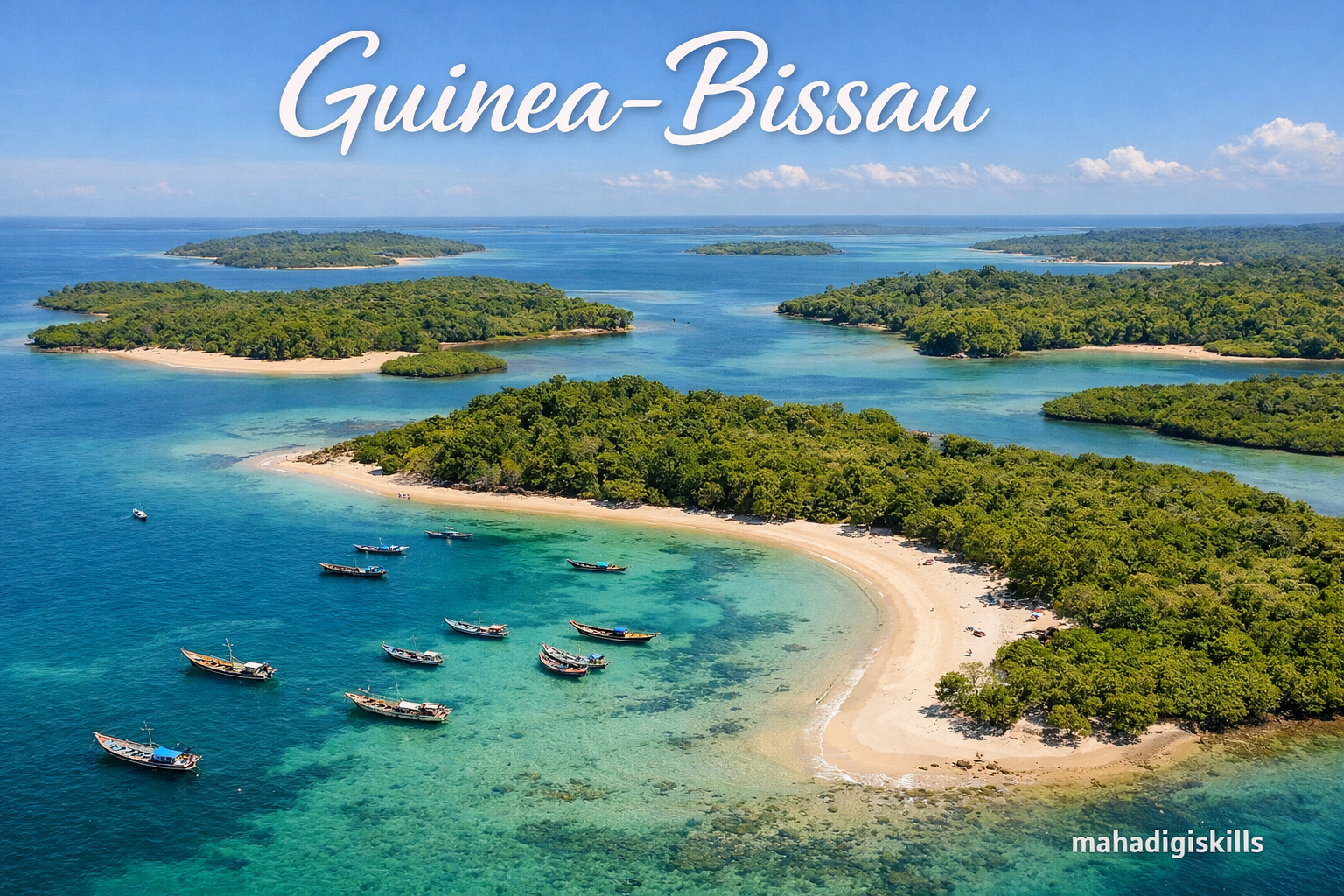
Introduction to Guinea-Bissau
Guinea-Bissau is a small yet fascinating country located on the western coast of Africa, known for its tropical landscapes, vibrant cultures, and unique island ecosystems. Despite being one of the smallest nations in West Africa, Guinea-Bissau offers a rich historical background, diverse ethnic traditions, and an extraordinary coastal environment filled with mangroves, rivers, and islands.
The nation sits along the Atlantic Ocean, bordered by Senegal to the north and Guinea to the south and east. This strategic coastal location helped shape the country’s historical connections with European traders and African kingdoms over several centuries.
Many travelers are drawn to Guinea-Bissau for its untouched nature, particularly the famous Bijagós Archipelago, a UNESCO Biosphere Reserve consisting of dozens of islands rich in wildlife and traditional island cultures. Beyond its natural beauty, the country offers a deep cultural heritage shaped by indigenous ethnic groups, Portuguese colonial influence, and a strong tradition of music and storytelling.
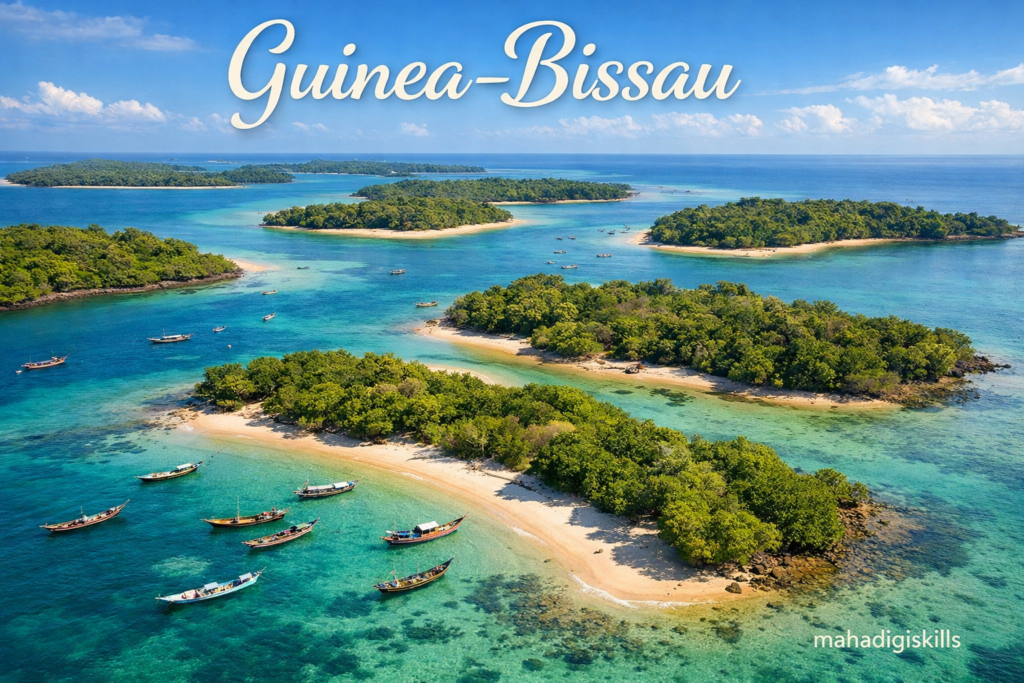
Although it is still developing economically, Guinea-Bissau has significant potential in agriculture, fisheries, tourism, and natural resources. The country is also an active member of international organizations and plays a role in regional cooperation in West Africa.
This comprehensive guide explores the history, geography, culture, economy, and travel opportunities of Guinea-Bissau in detail.
Historical Background
Early Civilizations and African Kingdoms
The history of Guinea-Bissau stretches back centuries before European contact. Early communities in this region were part of powerful West African trading networks linked to the Mali Empire and other regional kingdoms.
Several ethnic groups settled in the area, including:
- Balanta
- Fula (Fulani)
- Mandinka
- Papel
- Manjaco
These groups developed agricultural societies and maintained trade routes across West Africa. Rice farming became especially important in coastal regions due to the fertile mangrove environments.
The Mandinka people, connected to the Mali Empire, played a major role in regional commerce, spreading cultural traditions, languages, and Islam throughout the region.
Portuguese Arrival and Colonial Period
European influence began in the 15th century when Portuguese explorers arrived along the Atlantic coast. Portugal established trading posts that became part of a broader network of maritime trade routes connecting Africa, Europe, and the Americas.
During this time, the territory that is now Guinea-Bissau became involved in:
- The Atlantic slave trade
- Trade in ivory and spices
- Agricultural exports
Portuguese traders built settlements along the coast, gradually expanding influence inland. However, strong resistance from local communities meant that colonial control remained limited for many years.
By the 19th century, Portugal officially declared the region a colony known as Portuguese Guinea.
Struggle for Independence
The independence movement began gaining momentum during the mid-20th century. One of the most important figures in this struggle was Amílcar Cabral, a revolutionary leader and intellectual who founded the African Party for the Independence of Guinea and Cape Verde (PAIGC).
Cabral organized a powerful liberation movement against Portuguese rule. Guerrilla warfare and political mobilization eventually forced Portugal to reconsider its colonial presence.
In 1973, independence was declared unilaterally by the liberation movement. Portugal officially recognized the new nation in 1974 following political changes in Lisbon.
Since independence, Guinea-Bissau has experienced periods of political instability but continues to work toward democratic governance and economic development.
Geography and Natural Environment
Location and Coordinates
Guinea-Bissau is situated in West Africa along the Atlantic coast.
Geographic coordinates:
11.8037° N latitude, 15.1804° W longitude
Neighboring Countries
- Senegal (north)
- Guinea (south and east)
Total Area
Approximately 36,125 square kilometers.
Although relatively small, the country includes extensive wetlands, forests, rivers, and offshore islands.
Climate
The climate is tropical, characterized by two primary seasons:
Rainy Season
June – October
Heavy rainfall supports agriculture and lush vegetation.
Dry Season
November – May
Dry winds known as Harmattan blow from the Sahara Desert.
Average temperatures remain warm throughout the year, typically between 24°C and 30°C.
Rivers and Coastal Ecosystems
Several important rivers shape the landscape of Guinea-Bissau, including:
- Gebba River
- Corubal River
- Cacheu River
These waterways create extensive mangrove ecosystems, which are vital for fish breeding, wildlife habitats, and coastal protection.
Mangroves also support traditional rice farming techniques practiced by local communities.
One of the most remarkable features of Guinea-Bissau is the Bijagós Archipelago, a chain of more than 80 islands located in the Atlantic Ocean.
This island region is internationally recognized for its biodiversity and cultural heritage.
UNESCO Biosphere Reserve
The archipelago has been designated a UNESCO Biosphere Reserve, protecting fragile ecosystems and wildlife habitats.
Wildlife
The islands support many rare species:
- Saltwater hippos
- Sea turtles
- Dolphins
- Migratory birds
Indigenous Culture
The Bijagó people maintain strong traditional customs, including matriarchal social systems and ceremonial festivals.
Natural Landscapes
The environment of Guinea-Bissau includes several major ecosystems.
Mangrove Forests
These wetlands dominate coastal regions and support fisheries and birdlife.
Savanna Grasslands
Interior regions feature savanna landscapes with scattered trees and agricultural fields.
Tropical Forests
Small patches of forest remain, hosting diverse plant and animal species.
Major Cities of Guinea-Bissau
Bissau – The Capital City
The capital city Bissau serves as the political, economic, and cultural center of Guinea-Bissau.
Located along the Geba River estuary, the city developed as a colonial port and remains the country’s most important urban area.
Key Features
- Government institutions
- International airport
- Major port facilities
- Markets and cultural centers
Bandim Market
One of the most vibrant locations in the capital is Bandim Market, where visitors can explore local crafts, foods, textiles, and traditional goods.
Other Important Cities
Bafatá
A historical inland town and birthplace of Amílcar Cabral.
Gabú
An important commercial hub near the eastern border.
Cacheu
A historic town associated with early Portuguese trading posts.
Official Languages and Communication
The official language of Guinea-Bissau is Portuguese, reflecting the country’s colonial heritage.
However, Portuguese is mainly used in government, education, and official communication.
Most Widely Spoken Language
The most common everyday language is Guinea-Bissau Creole (Kriol).
This Portuguese-based Creole language allows communication between different ethnic groups.
Other Indigenous Languages
Several ethnic languages are widely spoken:
- Balanta
- Fula
- Mandinka
- Manjaco
- Papel
This linguistic diversity reflects the country’s rich cultural heritage.
DoFollow Sources
Reliable information about Guinea-Bissau can be found through:
These organizations provide economic, cultural, and development data.
Culture and Traditions of Guinea-Bissau
The cultural landscape of Guinea-Bissau is one of the most diverse in West Africa. The country is home to more than 20 ethnic groups, each maintaining its own traditions, languages, and social customs. These communities have preserved many ancient cultural practices despite centuries of outside influence.
Daily life in the West African republic is deeply connected to family traditions, village life, agriculture, and community celebrations. Music, storytelling, dance, and ceremonial rituals play an important role in maintaining social harmony and passing knowledge between generations.
The cultural heritage of Guinea-Bissau reflects a blend of indigenous African traditions, Portuguese colonial influences, and regional West African customs. In rural areas especially, traditional practices continue to shape social organization, marriage customs, and religious ceremonies.
Many communities maintain strong connections to nature, honoring forests, rivers, and animals through cultural beliefs and seasonal rituals.
Major Ethnic Groups
Several ethnic groups contribute to the cultural diversity of Guinea-Bissau.
Balanta
The Balanta people represent one of the largest ethnic communities in the country. They are widely respected for their rice farming expertise and strong agricultural traditions.
Balanta society traditionally values community cooperation, equality, and agricultural knowledge. Villages often organize farming collectively, sharing labor and harvest responsibilities.
Fula (Fulani)
The Fula people are widely distributed across West Africa and have played a major role in trade and pastoral farming. In this Atlantic coastal republic, the Fula community is known for cattle herding and commerce.
Islam strongly influences their cultural practices and social structures.
Mandinka
The Mandinka community traces its heritage to the powerful Mali Empire. They are historically associated with trade, craftsmanship, and storytelling traditions.
Mandinka griots, or traditional historians, continue to preserve oral histories through music and poetry.
Papel and Manjaco
These coastal ethnic groups are known for fishing, agriculture, and vibrant ceremonial traditions. Their cultural celebrations often include elaborate costumes, masks, and rhythmic drum music.
Religion and Spiritual Beliefs
Religion in Guinea-Bissau reflects a peaceful coexistence between multiple belief systems.
Islam
Islam is the largest religion, followed by approximately half of the population. Many Muslim communities belong to the Fula and Mandinka ethnic groups.
Mosques and Islamic schools play important roles in religious education and community life.
Christianity
Christianity represents another significant faith group. Roman Catholicism was introduced during the Portuguese colonial period, and churches remain active in many urban areas.
Indigenous Beliefs
Traditional African spiritual beliefs continue to influence many communities. These belief systems often include:
- Ancestral worship
- Sacred forests and natural spirits
- Ritual ceremonies to mark life events
In rural areas, spiritual leaders and elders often guide important rituals connected to agriculture, health, and community harmony.
Festivals and Celebrations
Cultural festivals are vibrant expressions of identity in Guinea-Bissau.
Carnival in Bissau
The Carnival celebration in Bissau is one of the most colorful events in the country. Inspired by Portuguese traditions but infused with African cultural elements, the festival includes:
- Elaborate costumes
- Street parades
- Traditional masks
- Music and dance performances
Communities from across the country participate, showcasing their regional cultures.
Independence Day
Independence Day is celebrated annually on September 24, commemorating the country’s liberation from Portuguese colonial rule.
National events include:
- Cultural performances
- Historical tributes
- Public celebrations in major cities
Music and Dance
Music is deeply embedded in daily life throughout Guinea-Bissau. Traditional music styles combine African rhythms, storytelling, and ceremonial dances.
Popular Instruments
Common musical instruments include:
- Djembé drums
- Balafon (wooden xylophone)
- Kora (string instrument)
- Traditional rattles and percussion
Music is often performed during weddings, harvest celebrations, and cultural festivals.
Gumbe Music
One of the most distinctive music styles is Gumbe, a rhythm originating from the fusion of African and Portuguese musical traditions.
Gumbe music often features acoustic instruments, rhythmic percussion, and lyrical storytelling about everyday life and social issues.
Cuisine and Traditional Food
Food in Guinea-Bissau reflects the country’s agricultural traditions and coastal location. Meals often include rice, fish, vegetables, and tropical fruits.
Rice is considered the national staple food, grown extensively in coastal mangrove areas.
Popular Traditional Dishes
Jollof Rice
A well-known West African dish combining rice with tomatoes, spices, and vegetables.
Caldo de Mancarra
A flavorful peanut stew prepared with meat or fish.
Grilled Fish
Fresh fish caught along the Atlantic coast is often grilled and served with rice and sauces.
Cassava Dishes
Cassava roots are widely used to prepare flour, porridges, and side dishes.
Tropical fruits such as mangoes, papayas, bananas, and coconuts are also commonly enjoyed.
Economy of Guinea-Bissau
The economy of Guinea-Bissau is largely based on agriculture, fishing, and natural resources. Although the country faces development challenges, several sectors offer strong growth potential.
Currency
The national currency used is the West African CFA Franc (XOF).
This currency is shared with several other West African countries within the West African Economic and Monetary Union (WAEMU).
Agriculture
Agriculture is the backbone of the economy and employs a large portion of the population.
Major Agricultural Products
- Cashew nuts
- Rice
- Peanuts
- Palm products
- Tropical fruits
Cashew production is especially important, making the country one of the world’s leading exporters of raw cashew nuts.
Fishing Industry
The Atlantic waters surrounding Guinea-Bissau are rich in marine resources.
Fishing supports:
- Local food supply
- Export industries
- Coastal employment
International fishing agreements also contribute to national revenue.
Trade Partners
Major trade partners include:
- India
- Vietnam
- Portugal
- Senegal
- China
Cashew exports dominate international trade, while imports often include manufactured goods, machinery, and fuel.
Development and Investment
International organizations such as the World Bank and United Nations support development programs focused on:
- Infrastructure improvement
- Education
- Agricultural productivity
- Economic diversification
Tourism is also considered a promising future sector due to the country’s natural beauty and cultural heritage.
Major Cities Beyond the Capital
Bafatá
Bafatá is one of the most historically significant cities in the country. Located inland along the Geba River, it played an important role during the colonial era.
The city is also the birthplace of Amílcar Cabral, the national independence hero.
Gabú
Gabú is a major commercial center in eastern Guinea-Bissau and has long served as a regional trading hub connecting neighboring countries.
Markets in the city offer agricultural goods, textiles, and livestock.
Cacheu
Cacheu is one of the oldest European settlements in the region. Portuguese traders established forts and trading posts here during the early colonial period.
Today the town retains historical landmarks and colonial architecture.
Transportation and Infrastructure
Travel infrastructure in Guinea-Bissau continues to develop.
Roads
Road networks connect major towns, although rural areas may have limited access during rainy seasons.
Air Travel
The Osvaldo Vieira International Airport in Bissau serves as the primary international gateway.
River Transport
Many communities rely on rivers and boats for transportation, especially within the island regions.
Tourism in Guinea-Bissau
Tourism in Guinea-Bissau is still developing, but the country offers extraordinary opportunities for travelers seeking untouched nature, cultural authenticity, and remote island experiences. Unlike many heavily visited destinations, this West African country remains largely undiscovered, making it ideal for adventurous travelers.
The natural environment includes mangrove forests, tropical islands, rivers, savannas, and diverse wildlife habitats. Visitors interested in eco-tourism, birdwatching, marine life, and cultural exploration will find many rewarding experiences.
One of the biggest tourism highlights is the Bijagós Archipelago, but the mainland also contains historic towns, wildlife reserves, and vibrant cultural traditions.
Tourism authorities and international organizations are working to promote sustainable tourism that protects natural ecosystems and benefits local communities.
Major Tourist Attractions
Bijagós Archipelago
The Bijagós Archipelago is the most famous destination associated with Guinea-Bissau tourism. This island chain includes more than 80 islands, many of which remain uninhabited.
The archipelago is internationally recognized for its biodiversity and traditional island culture.
UNESCO Biosphere Reserve
The islands are protected as a UNESCO Biosphere Reserve, highlighting their ecological significance and cultural heritage.
Wildlife
Visitors may encounter rare species including:
- Saltwater hippos that swim in the ocean
- Green sea turtles
- Migratory birds
- Dolphins and marine life
Cultural Heritage
The indigenous Bijagó people maintain unique traditions, including ceremonial festivals and matriarchal social structures.
Orango National Park
Orango National Park is located within the Bijagós islands and is one of the most remarkable wildlife areas in West Africa.
Highlights include:
- Rare saltwater hippos living near coastal lagoons
- Protected wetlands and mangrove forests
- Birdwatching opportunities
- Traditional island villages
The park demonstrates how conservation and cultural traditions can coexist.
Bolama Island
Bolama Island served as the former colonial capital during the Portuguese period.
Visitors can explore:
- Historic colonial architecture
- Old administrative buildings
- Quiet tropical beaches
Although many structures are now weathered by time, they provide a fascinating glimpse into the country’s colonial history.
Cacheu River Natural Park
The Cacheu River region contains extensive mangrove forests and diverse wildlife habitats.
Visitors can enjoy:
- Boat tours through mangrove channels
- Birdwatching excursions
- Cultural visits to local fishing communities
The park plays an important role in protecting marine ecosystems and supporting sustainable fishing.
Best Time to Visit Guinea-Bissau
Travel conditions vary depending on the season.
Dry Season (November – May)
This period is considered the best time to visit because:
- Roads are easier to travel
- Weather is warm but less humid
- Wildlife viewing conditions improve
Tourists often prefer these months for exploring the islands and coastal areas.
Rainy Season (June – October)
The rainy season brings lush green landscapes but can also create transportation challenges due to flooded roads.
However, nature lovers may appreciate the vibrant vegetation and bird migration season.
How to Travel Around the Country
Transportation options vary depending on location.
Domestic Flights
Small aircraft sometimes connect remote areas and islands.
Boats and Ferries
Boats are essential for reaching the Bijagós islands and coastal communities.
Road Travel
Road networks connect major towns and cities, although some rural roads remain unpaved.
Travelers often use:
- Shared taxis
- Private drivers
- Local minibuses
Infrastructure continues to improve with support from development organizations.
International Organizations and Global Relations
Guinea-Bissau participates in several international institutions that support diplomacy, development, and regional cooperation.
United Nations Membership
The country became a member of the United Nations in 1974, shortly after independence.
The UN works with the national government to support:
- Peacebuilding initiatives
- Economic development
- Humanitarian programs
- Democratic institutions
Other Global Organizations
The nation is also a member of:
- African Union (AU)
- Economic Community of West African States (ECOWAS)
- Community of Portuguese Language Countries (CPLP)
- West African Economic and Monetary Union (WAEMU)
These organizations promote economic cooperation, regional stability, and cultural collaboration.
For more information, readers can visit:
United Nations: https://www.un.org
UNESCO: https://www.unesco.org
World Bank: https://www.worldbank.org
(All are reliable DoFollow sources for research and statistics.)
Unique and Interesting Facts
Here are some fascinating facts about this West African nation.
1. A Country of Islands
The Bijagós Archipelago contains over 80 islands, creating one of Africa’s most unique coastal ecosystems.
2. Rare Saltwater Hippos
Orango National Park hosts hippopotamuses that swim in ocean waters, a rare phenomenon.
3. Cashew Export Leader
The country is among the largest producers of cashew nuts in the world, making cashews its primary export.
4. Cultural Diversity
More than 20 ethnic groups coexist, each maintaining distinct languages and traditions.
5. Creole Language
Guinea-Bissau Creole (Kriol) developed from Portuguese and African languages and serves as a common communication language across ethnic groups.
6. Untouched Tourism
Unlike many destinations, tourism remains relatively undeveloped, allowing travelers to experience authentic culture and natural landscapes.
Travel Tips for Visitors
Travelers planning to explore Guinea-Bissau should consider several practical tips.
Health and Safety
- Check recommended vaccinations before traveling
- Carry mosquito protection
- Drink bottled or filtered water
Currency and Payments
The West African CFA Franc is widely used, and cash is often preferred in many areas.
Cultural Etiquette
Visitors should respect local traditions by:
- Dressing modestly in rural communities
- Greeting elders respectfully
- Asking permission before photographing people
These small gestures help create positive cultural exchanges.
Final Summary
Guinea-Bissau is a small yet culturally rich nation located on the Atlantic coast of West Africa. Despite its modest size, the country offers remarkable natural beauty, diverse ethnic traditions, and a fascinating historical journey from ancient African kingdoms to independence in the modern era.
Its landscapes include mangrove forests, tropical islands, savannas, and wildlife reserves, making it a promising destination for eco-tourism and cultural travel.
The economy relies heavily on agriculture, fishing, and cashew exports, while international partnerships support development and infrastructure improvements.
From the vibrant streets of Bissau to the remote islands of the Bijagós Archipelago, this unique country offers visitors an opportunity to experience authentic West African culture and untouched natural environments.
As tourism and economic development continue to grow, Guinea-Bissau holds strong potential for becoming an important destination in the region.
Key Facts About Guinea-Bissau
| Category | Information |
|---|---|
| Capital | Bissau |
| Continent | Africa |
| Region | West Africa |
| Population | ~2 million |
| Official Language | Portuguese |
| Common Language | Guinea-Bissau Creole |
| Currency | West African CFA Franc (XOF) |
| Independence | 1973 (recognized 1974) |
| UN Membership | 1974 |
| Major Export | Cashew nuts |
| Climate | Tropical |
| Major Attraction | Bijagós Archipelago |
List of All 195 Countries
- Afghanistan
- Albania
- Algeria
- Andorra
- Angola
- Antigua and Barbuda
- Argentina
- Armenia
- Australia
- Austria
- Azerbaijan
- Bahamas
- Bahrain
- Bangladesh
- Barbados
- Belarus
- Belgium
- Belize
- Benin
- Bhutan
- Bolivia
- Bosnia and Herzegovina
- Botswana
- Brazil
- Brunei
- Bulgaria
- Burkina Faso
- Burundi
- Cabo Verde
- Cambodia
- Cameroon
- Canada
- Central African Republic
- Chad
- Chile
- China
- Colombia
- Comoros
- Congo (Congo-Brazzaville)
- Costa Rica

