



🌟 Introduction
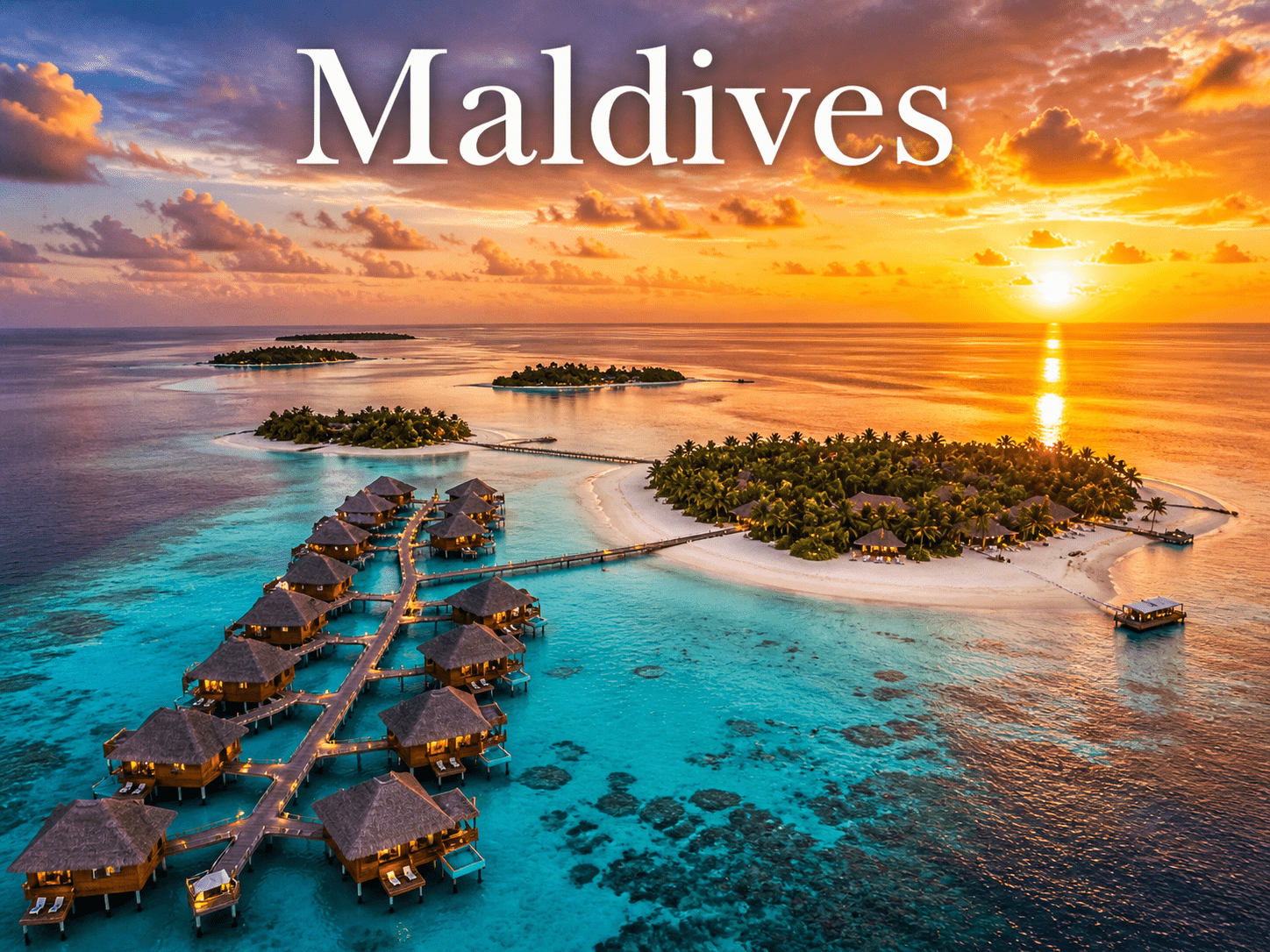
The island nation of Maldives is one of the most breathtaking tropical destinations in the world, located in the Indian Ocean. It is famous for crystal-clear waters, white sandy beaches, coral reefs, and luxury overwater villas.
Traveling through Maldives feels like entering a natural paradise, where ocean blues blend with soft skies and peaceful island life. It is made up of over 1,000 small coral islands grouped into 26 atolls.
Visitors to Maldives experience unmatched serenity, luxury, and marine beauty.
🏛 History of Maldives
Early Settlement
The islands were first inhabited over 2,000 years ago by settlers from South Asia and Arabia, creating a unique cultural blend.
Islamic Influence
In the 12th century, Islam became the dominant religion and remains central to culture today.
Colonial Era
The islands came under Portuguese, Dutch, and British influence before gaining independence.
Independence
The country became independent in 1965 and developed into a peaceful island nation.
🌍 Geography of Maldives
Location and Coordinates
Maldives is located in the Indian Ocean.
- Coordinates: 3.2028° N, 73.2207° E
- Region: South Asia / Indian Ocean
Island Structure
The country consists of:
- Coral islands
- Atolls
- Lagoons
Ocean Environment
Surrounded entirely by:
- Indian Ocean
The marine ecosystem is rich and diverse.
Climate
The climate is tropical:
- Warm all year
- Monsoon seasons
- High humidity
🐠 Marine Life & Ecosystem
Coral Reefs
The islands are surrounded by vibrant coral reefs.
Marine Species
Marine life includes:
- Tropical fish
- Sea turtles
- Manta rays
- Sharks
Environmental Importance
The ecosystem is sensitive and requires conservation efforts.
Organizations like:
- UNESCO
help protect marine biodiversity.
🎭 Culture of Maldives
Cultural Identity
Culture is influenced by South Asian, Arab, and African traditions.
Language
- Dhivehi (official language)
- English widely used
Religion
Islam is the official religion and plays a central role in daily life.
Traditions
Cultural life includes:
- Music
- Dance
- Traditional crafts
🏙 Major Areas of Maldives
Malé (Capital)
Malé is:
- Capital city
- Economic center
- One of the most densely populated cities
Addu City
Known for:
- Historical importance
- Southern islands
Atoll Regions
Each atoll offers:
- Unique islands
- Resorts
- Local communities
🌐 Maldives in Global Organizations
Maldives is a member of:
South Asian Association for Regional Cooperation
United Nations
💰 Economy of Maldives
Overview of the Economy
The economy of Maldives is heavily dependent on tourism and marine resources. Due to its unique geography of small coral islands, most economic activities are centered around the ocean and hospitality sector.
Over the years, Maldives has transformed into a global luxury tourism hub, attracting millions of visitors seeking beach resorts and underwater experiences.
Key Economic Sectors
1. Tourism Industry
Tourism is the backbone of the economy and the main source of income. It includes:
- Luxury resorts
- Eco-resorts
- Private island stays
The natural beauty of Maldives makes it one of the most desirable travel destinations in the world.
2. Fisheries
Fishing is the second major economic activity. It includes:
- Tuna fishing
- Traditional fishing methods
- Export of seafood
The ocean plays a vital role in supporting local livelihoods.
3. Transport and Services
Due to island geography, transport services are essential:
- Boats
- Seaplanes
- Ferries
Hospitality and services are also expanding rapidly.
Currency and Trade
- Currency: Maldivian Rufiyaa (MVR)
Major trade partners include:
- India
- Sri Lanka
- United Arab Emirates
Imports include food, fuel, and construction materials.
Economic Challenges
Key challenges include:
- Climate change
- Rising sea levels
- Limited land resources
- Dependence on tourism
International organizations such as:
- World Bank
support sustainable development initiatives.
🏝 Tourism in Maldives
Overview
Tourism is the most important sector and defines the global image of Maldives. It is known for luxury, privacy, and natural beauty.
🏖 Luxury Resorts
Resorts are often located on private islands and offer:
- Overwater villas
- Private beaches
- Spa experiences
These resorts are a signature attraction of Maldives.
🌴 Island Hopping
Visitors can explore multiple islands:
- Local islands
- Resort islands
- Uninhabited islands
Each offers a different experience.
🌅 Romantic Travel Destination
The islands are popular for:
- Honeymoons
- Weddings
- Private retreats
🐠 Marine Life Adventures
Snorkeling
Crystal-clear waters allow easy viewing of:
- Coral reefs
- Colorful fish
- Sea turtles
Diving Experiences
Scuba diving offers access to:
- Deep reefs
- Shipwrecks
- Manta ray zones
Whale Shark Encounters
Some areas allow sightings of:
- Whale sharks
- Dolphins
- Large marine species
🏝 Famous Islands & Atolls
North Malé Atoll
- North Malé Atoll
Known for:
- Luxury resorts
- Water sports
South Ari Atoll
- South Ari Atoll
Famous for:
- Whale shark sightings
- Diving spots
Baa Atoll
- Baa Atoll
A UNESCO Biosphere Reserve.
🚤 Water Activities
Jet Skiing
High-speed water sports for adventure seekers.
Kayaking
Peaceful exploration of lagoons.
Sailing
Traditional and modern sailing experiences across islands.
🌿 Environmental Importance
Coral Protection
Coral reefs are fragile and require protection.
Climate Change Impact
Rising sea levels are a major concern for Maldives.
Sustainability Efforts
Eco-tourism initiatives focus on:
- Marine protection
- Renewable energy
- Waste reduction
✨ Unique Facts
- Lowest-lying country in the world
- Over 99% water territory
- More than 1,000 islands
- One of the top honeymoon destinations
- Rich coral reef ecosystem
- Luxury tourism hub
🎭 Culture and Daily Life
Cultural Identity
Culture in Maldives is shaped by a unique blend of South Asian, Arab, and African influences. Life on the islands is peaceful, community-oriented, and deeply connected to the ocean.
Despite its global fame as a luxury destination, daily life in local islands remains traditional and simple.
Language and Communication
- Dhivehi (official language)
- English widely used in tourism
Language reflects centuries of cultural exchange across the Indian Ocean.
Religion and Values
Islam is the foundation of society and influences:
- Daily routines
- Festivals
- Laws and customs
Respect for tradition is an important part of life in Maldives.
Music and Dance
Traditional cultural expressions include:
- Boduberu drumming
- Folk songs
- Dance performances during festivals
These art forms are influenced by African and South Asian rhythms.
🎉 Festivals and Celebrations
Religious Festivals
Major celebrations include:
- Eid al-Fitr
- Eid al-Adha
These are widely celebrated with family gatherings and feasts.
National Day
A major patriotic celebration honoring independence and national pride.
Cultural Events
Tourism-related festivals showcase:
- Music
- Food
- Marine conservation awareness
🍽 Food Culture
Traditional Cuisine
Cuisine in Maldives is heavily based on seafood and coconut.
Popular dishes include:
- Garudhiya (fish soup)
- Mas Huni (tuna with coconut)
- Rihaakuru (fish paste)
Fish is the main source of protein.
Seafood Variety
The ocean provides:
- Tuna
- Reef fish
- Lobster
- Octopus
Fresh seafood is a daily staple.
Street Food & Snacks
Common snacks include:
- Short eats (fried snacks)
- Spicy fish rolls
- Coconut-based sweets
Beverages
Popular drinks include:
- Coconut water
- Tea
- Fruit juices
🗺 7-Day Travel Itinerary
Day 1: Arrival in Malé
Explore:
- Malé
- Local markets
- Cultural landmarks
Day 2: Resort Transfer
Move to a luxury island resort and enjoy ocean views.
Day 3: Snorkeling Adventure
Explore coral reefs and marine life in crystal waters.
Day 4: South Ari Atoll Experience
Visit:
- South Ari Atoll
Enjoy whale shark and manta ray sightings.
Day 5: Island Hopping
Explore:
- Local islands
- Uninhabited beaches
Day 6: Water Activities
Enjoy:
- Jet skiing
- Kayaking
- Diving
Day 7: Relax & Departure
Final relaxation before departure.
🌐 International Role
This island nation plays an important role in climate discussions and global tourism.
It is a member of:
- United Nations
- South Asian Association for Regional Cooperation
🤔 Interesting Facts
- One of the most geographically unique countries in the world
- Over 99% of territory is water
- Famous for luxury tourism and honeymoon trips
- Extremely rich coral reef ecosystems
- Low-lying islands vulnerable to climate change
- Strong focus on eco-tourism
🔗 Internal Link Suggestion
Explore next:
➡️ Kenya Travel Guide
📊 Final Summary
This island paradise is one of the most iconic travel destinations in the world, known for its turquoise waters, luxury resorts, and rich marine ecosystems. It offers a perfect blend of relaxation, adventure, and natural beauty.
From snorkeling in coral reefs to staying in overwater villas, Maldives delivers an unmatched tropical experience. Its culture, cuisine, and environment make it a dream destination for travelers worldwide.
📋 Key Facts Table
| Category | Details |
|---|---|
| Country | Maldives |
| Capital | Malé |
| Region | Indian Ocean |
| Coordinates | 3.2028° N, 73.2207° E |
| Language | Dhivehi, English |
| Currency | Maldivian Rufiyaa (MVR) |
| Population | ~500,000 |
| Geography | Islands, atolls, lagoons |
| Famous Feature | Coral reefs & overwater villas |
| Climate | Tropical |
| UN Membership | Yes |

