



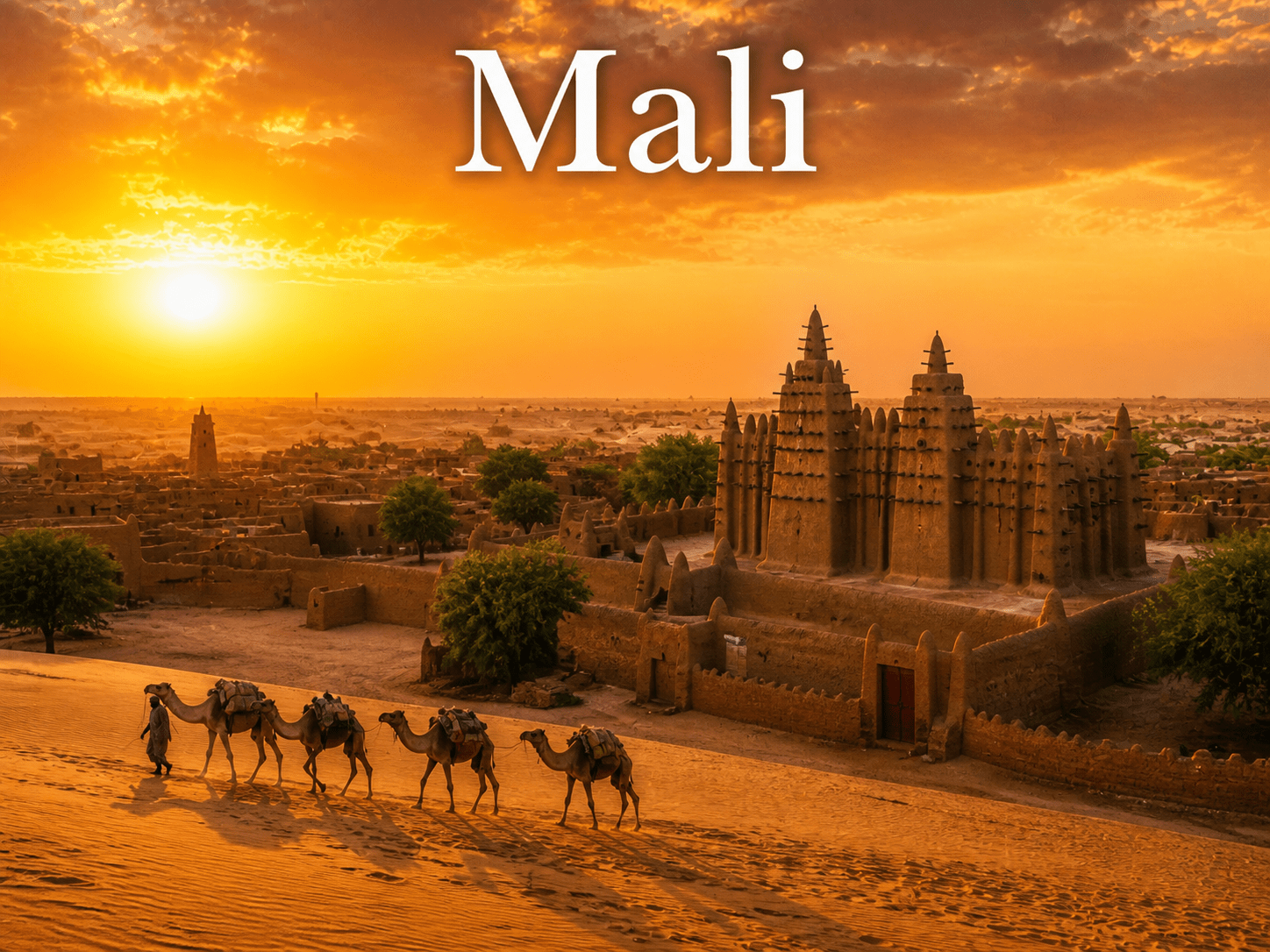
🌟 Introduction
The West African nation of Mali is a land of deep history, ancient empires, and vast desert landscapes. It is one of Africa’s most culturally rich countries, located in the heart of the Sahel region.
Traveling through Mali reveals a mix of Sahara desert scenery, historic trading cities, and vibrant traditions. The country is known for its historical importance in African civilization and its connection to ancient trade routes.
Visitors to Mali experience a blend of heritage, culture, and desert adventure.
🏛 History of Mali
Ancient Empires
The region was once home to powerful empires such as:
- Ghana Empire
- Mali Empire
- Songhai Empire
These empires were known for wealth, trade, and education.
Golden Age
During the 13th–16th centuries, the Mali Empire became one of the richest and most powerful civilizations in the world.
Colonial Era
The region later became part of French West Africa under colonial rule.
Independence
The country gained independence in 1960 and developed its modern national identity.
🌍 Geography of Mali
Location and Coordinates
Mali is located in West Africa.
- Coordinates: 17.5707° N, 3.9962° W
- Region: Sahel / West Africa
Neighboring Countries
Mali shares borders with:
- Algeria
- Niger
- Burkina Faso
- Senegal
Landscape Features
The geography includes:
- Sahara Desert
- Sahel grasslands
- Niger River basin
Climate
The climate varies:
- Desert climate in north
- Semi-arid in central regions
- Tropical in south
🏜 Sahara Desert Region
Desert Landscape
The northern region of Mali is dominated by the Sahara Desert with vast sand dunes and rocky terrain.
Desert Life
Life in desert regions includes:
- Nomadic communities
- Camel transport
- Traditional survival methods
Cultural Importance
The desert has shaped trade routes and ancient civilizations.
🌊 Niger River System
The Niger River is a lifeline for agriculture, transport, and settlements.
It supports:
- Farming
- Fishing
- Trade routes
🎭 Culture of Mali
Cultural Identity
Culture in Mali is deeply rooted in music, storytelling, and traditions passed down through generations.
Language
- French (official)
- Bambara (widely spoken)
Music Heritage
The country is famous for:
- Traditional drumming
- Griot storytelling
- World music influence
Traditions
Cultural traditions include:
- Festivals
- Oral history
- Community gatherings
🏙 Major Cities of Mali
Bamako (Capital)
Bamako is:
- Capital city
- Economic center
- Cultural hub
Timbuktu
One of the most famous historic cities in the world, known for:
- Ancient manuscripts
- Islamic scholarship
- Trade history
Gao
Gao is:
- Historic trading city
- Located along Niger River
🌐 Mali in Global Organizations
Mali is a member of:
African Union
United Nations
💰 Economy of Mali
Overview of the Economy
The economy of Mali is primarily based on agriculture, mining, and informal trade. As a landlocked West African nation, economic activity is strongly influenced by geography, climate, and river systems.
Despite challenges, Mali remains an important cultural and trading hub in the Sahel region.
Key Economic Sectors
1. Agriculture
Agriculture is the backbone of the economy. Major crops include:
- Cotton
- Millet
- Sorghum
- Rice
Farming depends heavily on rainfall and river irrigation.
2. Gold Mining
Gold is one of the most important export resources. Mining contributes significantly to national income and international trade.
3. Fishing Industry
The Niger River supports fishing communities and local markets, especially in southern regions.
4. Trade and Informal Economy
Local markets play a vital role in daily economic life:
- Street trading
- Craft sales
- Regional trade networks
Currency and Trade
- Currency: West African CFA Franc (XOF)
Major trade partners include:
- France
- China
- Ivory Coast
Exports include gold, cotton, and livestock.
Economic Challenges
Key challenges include:
- Climate change
- Desertification
- Infrastructure limitations
- Political instability
Development support is provided by organizations such as:
- World Bank
🏛 Tourism in Mali
Overview
Tourism in Mali is centered around history, culture, and desert landscapes. Although not a mass tourism destination, it offers unique experiences for cultural explorers.
🏜 Desert Tourism
The Sahara region offers:
- Sand dunes
- Camel trekking
- Nomadic culture
🏛 Cultural Tourism
Visitors explore ancient cities, traditions, and architecture.
🎶 Music Tourism
The country is globally recognized for its traditional and modern music scene.
🏙 Historic Cities
Timbuktu
- Timbuktu
One of the most legendary cities in world history, known for:
- Ancient manuscripts
- Islamic scholarship
- Trans-Saharan trade
Djenné
- Djenné
Famous for:
- Mud-brick architecture
- Great Mosque of Djenné
- UNESCO World Heritage status
Gao
- Gao
Known for:
- River trade history
- Ancient empire connections
🎭 Culture and Heritage
Griot Tradition
Storytellers known as griots preserve oral history through music and storytelling.
Traditional Arts
Art forms include:
- Wood carving
- Textile weaving
- Pottery
Festivals
Cultural festivals celebrate:
- Music
- Heritage
- Community unity
🎶 Music of Mali
Global Influence
Music from Mali has influenced global artists and genres.
Instruments
Traditional instruments include:
- Kora (string instrument)
- Djembe (drum)
- Balafon (xylophone)
Modern Music Scene
Modern artists blend traditional sounds with global music styles.
🌿 Nature & Environment
Sahel Region
The Sahel zone is a transitional area between desert and savanna.
Niger River Ecosystem
The river supports:
- Agriculture
- Wildlife
- Transportation
Environmental Challenges
Issues include:
- Drought
- Land degradation
- Water scarcity
🚵 Adventure Experiences
Desert Exploration
Activities include:
- Camel trekking
- Camping in dunes
- Cultural visits
River Exploration
The Niger River offers:
- Boat travel
- Fishing tours
- Village visits
Cultural Tours
Travelers explore:
- Ancient architecture
- Local markets
- Traditional villages
✨ Unique Facts
- Home to one of the richest medieval empires in history
- Timbuktu was a global center of learning
- Strong musical heritage with global influence
- Vast Sahara desert region
- Niger River is a lifeline for communities
- Rich oral storytelling tradition
🎭 Culture and Daily Life
Cultural Identity
Culture in Mali is one of the richest in West Africa, deeply rooted in oral traditions, music, and community life. Social structure is strongly influenced by family ties, elders, and traditional roles that have existed for centuries.
Life in both urban and rural regions reflects a balance between modern development and ancient customs.
Ethnic Diversity
The population is made up of several ethnic groups, including:
- Bambara
- Tuareg
- Fulani
- Songhai
Each group contributes unique traditions, languages, and lifestyles.
Language and Communication
- French (official language)
- Bambara (most widely spoken)
Local languages play a strong role in daily communication.
Traditions and Beliefs
Traditional beliefs often coexist with Islam, influencing ceremonies, social values, and cultural identity.
Music and Storytelling
Music and storytelling are central to life in Mali:
- Griots preserve history through song
- Traditional instruments are widely used
- Music is part of every celebration
🎉 Festivals and Celebrations
Cultural Festivals
Festivals celebrate:
- Heritage
- Music
- Community unity
Religious Events
Islamic festivals are widely observed:
- Eid celebrations
- Ramadan gatherings
Music Festivals
Events such as desert music festivals showcase traditional and modern sounds.
🍽 Food Culture
Traditional Cuisine
Cuisine in Mali is simple, hearty, and based on local ingredients.
Common dishes include:
- Tô (grain-based dish)
- Rice with sauce
- Peanut-based stews
Street Food
Street food culture includes:
- Grilled meat skewers
- Fried snacks
- Fresh fruits
River-Based Food
Along the Niger River:
- Fresh fish dishes are common
- Smoked fish is widely consumed
Beverages
Popular drinks include:
- Hibiscus tea
- Millet-based drinks
- Local herbal teas
🗺 7-Day Travel Itinerary
Day 1: Arrival in Bamako
Explore:
- Bamako
- Local markets
- Cultural centers
Day 2: City Exploration
Visit:
- Museums
- Niger River banks
- Traditional craft markets
Day 3: Journey to Djenné
Travel to:
- Djenné
Explore its famous mud architecture.
Day 4: Great Mosque Visit
Discover:
- Great Mosque of Djenné
One of the most iconic buildings in Africa.
Day 5: Timbuktu Journey
Travel to:
- Timbuktu
Explore ancient manuscripts and history.
Day 6: Desert Experience
Enjoy:
- Camel trekking
- Sahara views
- Nomadic culture
Day 7: Return to Bamako
Final shopping and cultural visits before departure.
🌐 International Role
This West African nation plays a role in regional and global cooperation.
It is a member of:
- United Nations
- African Union
🤔 Interesting Facts
- Home to legendary city Timbuktu
- One of Africa’s richest historical empires
- Strong oral storytelling tradition
- Famous for traditional music worldwide
- Vast Sahara desert region
- Niger River is central to life and culture
🔗 Internal Link Suggestion
Explore next:
➡️ Haiti Travel Guide
📊 Final Summary
This West African nation is a land of ancient empires, rich cultural traditions, and vast desert landscapes. From the historic streets of Timbuktu to the flowing Niger River, it offers a deep connection to Africa’s past and present.
Travelers exploring Mali experience a unique blend of history, music, architecture, and desert adventure. Its cultural richness and historical importance make it one of Africa’s most fascinating destinations.
📋 Key Facts Table
| Category | Details |
|---|---|
| Country | Mali |
| Capital | Bamako |
| Region | West Africa |
| Coordinates | 17.5707° N, 3.9962° W |
| Language | French, Bambara |
| Currency | West African CFA Franc (XOF) |
| Population | ~22 million |
| Geography | Desert, savanna, river basin |
| Famous Cities | Timbuktu, Djenné |
| Climate | Hot desert & semi-arid |
| UN Membership | Yes |

