



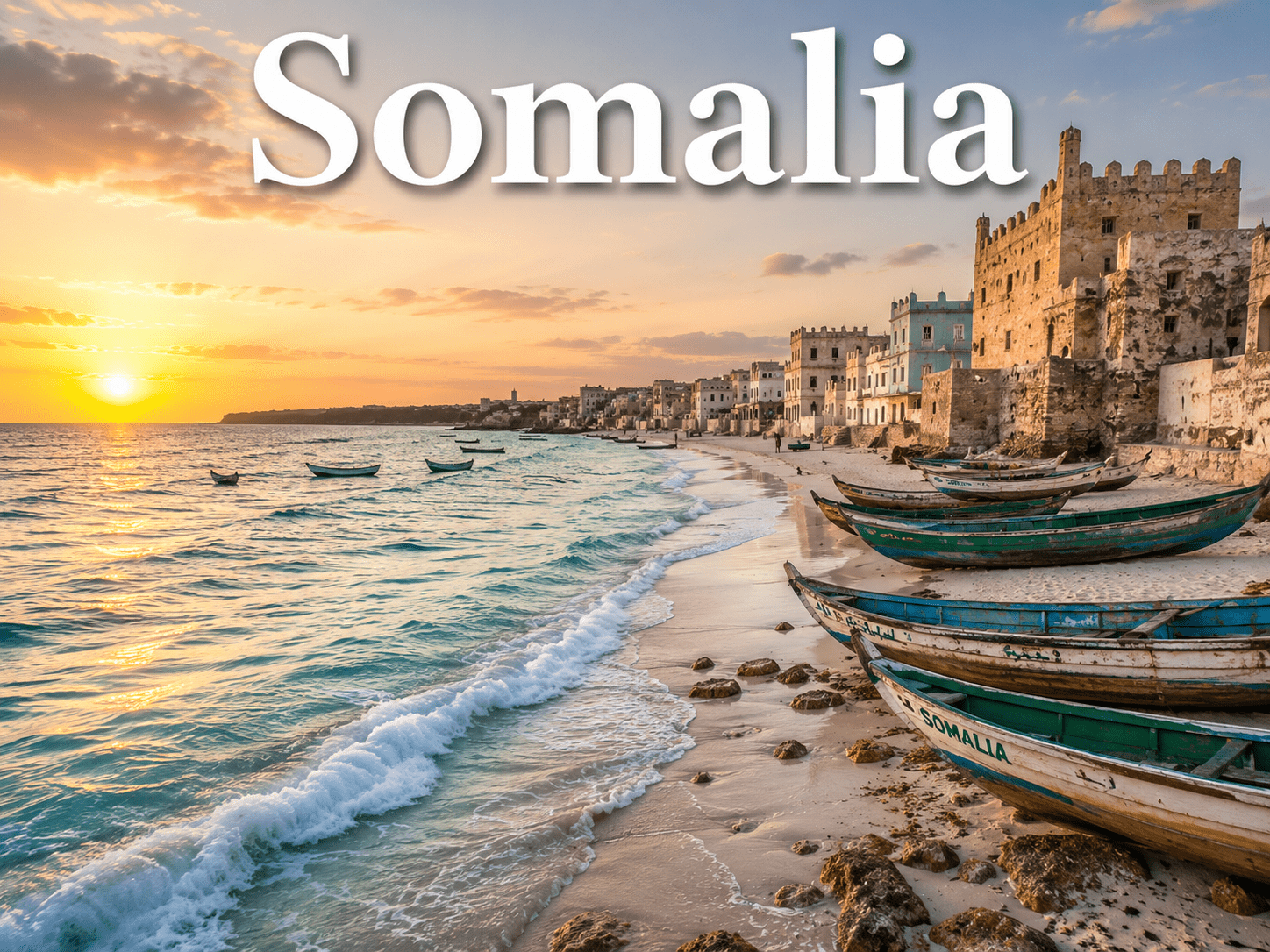
Introduction to Somalia
Somalia is a fascinating country located in the Horn of Africa, known for its long coastline, rich cultural traditions, ancient trade history, and diverse landscapes. Positioned along important maritime routes connecting Africa, the Middle East, and Asia, Somalia has historically served as a center for commerce and cultural exchange.
The country offers travelers unique experiences through:
- Indian Ocean beaches
- Historic cities
- Nomadic traditions
- Ancient ports
- Desert landscapes
- Vibrant cultural heritage
Modern Somalia is increasingly recognized for:
- Long coastal scenery
- Traditional Somali culture
- Livestock economy
- Historic Islamic architecture
- Maritime significance
- Growing urban development
The natural beauty and cultural identity of Somalia continue attracting international attention and tourism potential.
Historical Background of Somalia
Early History of Somalia
The territory of modern Somalia has been inhabited for thousands of years. Ancient communities developed trade connections with regions including:
- Egypt
- Arabia
- Persia
- India
Because of its strategic location near the Red Sea and Indian Ocean, Somalia became an important center for maritime trade.
Ancient Trade Networks
Ancient merchants in Somalia traded valuable products such as:
- Frankincense
- Myrrh
- Spices
- Livestock
- Gold
The coastal cities of Somalia became prosperous commercial centers connected to global trade routes.
Islamic Influence
Islam arrived in Somalia very early in history and became deeply connected to cultural and social life.
Mosques, Islamic schools, and religious traditions remain important across Somalia today.
Colonial Period
During the colonial era, different parts of Somalia came under British and Italian administration.
Colonial influence affected:
- Infrastructure
- Governance
- Urban planning
- Education systems
Independence of Somalia
Somalia became independent in 1960 after the unification of British Somaliland and Italian Somaliland.
Since independence, the country has experienced political changes and periods of reconstruction while maintaining strong cultural identity and traditions.
Geography and Location of Somalia
Where Is Somalia Located?
Somalia is located in the Horn of Africa in East Africa.
Neighboring countries include:
- Ethiopia
- Djibouti
- Kenya
The country also borders:
- Gulf of Aden
- Indian Ocean
The coastline of Somalia is among the longest in mainland Africa.
Geographic Coordinates
- Latitude: Approximately 5° North
- Longitude: Approximately 46° East
Landscapes and Natural Features
The geography of Somalia includes:
- Coastal plains
- Desert regions
- Plateaus
- Grasslands
- River valleys
- Beaches
The Indian Ocean coastline is one of the most scenic natural features of Somalia.
Climate of Somalia
Somalia has a generally hot and dry climate with seasonal rainfall.
Climate Features
- Warm temperatures
- Dry seasons
- Coastal humidity
- Desert conditions
- Seasonal monsoon winds
The climate strongly influences agriculture and nomadic lifestyles in Somalia.
Culture and Traditions in Somalia
Cultural Identity of Somalia
The culture of Somalia is shaped by:
- Islamic traditions
- Nomadic heritage
- Poetry
- Oral storytelling
- Music
- Community values
Somali culture is especially famous for its poetry traditions and strong family connections.
Traditional Lifestyle
Many communities in Somalia traditionally practiced pastoral nomadism.
Livestock such as:
- Camels
- Goats
- Sheep
- Cattle
remain important parts of cultural and economic life.
Religion in Somalia
Islam is the dominant religion in Somalia, and religious traditions strongly influence daily life, architecture, festivals, and social customs.
Mosques and Islamic education remain central to communities across the country.
Music and Poetry
Poetry holds a unique cultural position in Somalia.
Traditional poetry is used for:
- Storytelling
- Social commentary
- Historical preservation
- Cultural expression
Music and dance also remain important during celebrations and cultural events.
Cuisine of Somalia
Food Culture in Somalia
The cuisine of Somalia combines African, Arab, and Indian influences.
Meals often include:
- Rice
- Meat
- Spices
- Flatbread
- Pasta
- Tea
Traditional Somali food is known for aromatic flavors and rich spices.
Popular Dishes in Somalia
Bariis Iskukaris
Bariis Iskukaris is a popular rice dish in Somalia, often prepared with meat, vegetables, and spices.
Canjeero
Canjeero is a traditional flatbread commonly eaten during breakfast in Somalia.
Camel Meat Dishes
Camel meat is widely consumed in Somalia and is considered culturally significant.
Somali Tea
Spiced tea is an important part of hospitality culture in Somalia.
Tea is often flavored with:
- Cardamom
- Cinnamon
- Cloves
Languages Spoken in Somalia
Official Languages
The official languages of Somalia are:
- Somali
- Arabic
Other Languages
English and Italian are also used in education, business, and government sectors in Somalia.
Major Cities in Somalia
Mogadishu – Capital of Somalia
Mogadishu is the capital and largest city of Somalia.
The city is known for:
- Indian Ocean coastline
- Historic districts
- Markets
- Cultural landmarks
- Growing urban development
Mogadishu serves as the economic and political center of Somalia.
Hargeisa
Hargeisa is an important city in northern Somalia and a center for trade, education, and culture.
Kismayo
Kismayo is a coastal city in southern Somalia known for:
- Beaches
- Port activities
- Fishing industry
Bosaso
Bosaso is an important commercial port city in northeastern Somalia.
Tourism in Somalia
Why Visit Somalia?
Tourism in Somalia has potential because of:
- Long beaches
- Historical sites
- Islamic heritage
- Cultural traditions
- Coastal scenery
- Marine tourism
Travelers interested in history and authentic cultural experiences may find Somalia fascinating.
Famous Tourist Attractions in Somalia
Liido Beach
Liido Beach in Mogadishu is one of the most famous coastal attractions in Somalia.
Laas Geel
Laas Geel contains ancient rock art and archaeological discoveries that are historically important in Somalia.
Mogadishu Historic Districts
Historic architecture and coastal scenery attract visitors exploring the capital city.
Indian Ocean Coastline
The coastline of Somalia offers:
Marine tourism potential
White sand beaches
Fishing opportunities
Ocean views
External DoFollow Links
- United Nations Somalia Profile: https://www.un.org/en/member-states/somalia
- UNESCO Information: https://whc.unesco.org
- World Bank Somalia Overview: https://www.worldbank.org/en/country/somalia
Economy of Somalia
Overview of the Economy of Somalia
The economy of Somalia is based mainly on livestock, agriculture, fishing, trade, telecommunications, and remittance services. Because of its strategic location along important maritime trade routes, Somalia has historically played a major role in regional commerce and transportation.
Modern economic development in Somalia continues focusing on:
- Infrastructure rebuilding
- Trade expansion
- Port development
- Telecommunications growth
- Agricultural production
- Fisheries
The entrepreneurial spirit of local communities contributes significantly to economic activity across Somalia.
Currency Used in Somalia
The official currency of Somalia is the Somali shilling.
Currency Facts
- Currency Name: Somali Shilling
- Currency Code: SOS
- Central Bank: Central Bank of Somalia
US dollars are also commonly used in many business transactions within Somalia.
Main Industries in Somalia
Livestock Industry
Livestock is one of the most important industries in Somalia.
Main livestock products include:
- Camels
- Goats
- Sheep
- Cattle
Livestock exports contribute significantly to trade and employment.
Fishing Industry
Because of its long coastline, Somalia has strong fishing potential.
Marine resources include:
- Tuna
- Lobster
- Shrimp
- Reef fish
Fishing communities remain important along coastal regions.
Agriculture
Agriculture supports rural livelihoods in Somalia.
Main agricultural products include:
- Bananas
- Sorghum
- Corn
- Sesame
- Fruits
- Vegetables
River valleys provide fertile land for farming.
Telecommunications
The telecommunications sector in Somalia has developed rapidly in recent years.
Mobile communication and internet services continue expanding across urban areas.
Trade and International Business
Main Trade Partners of Somalia
Somalia trades with countries across Africa, the Middle East, and Asia.
Important trade partners include:
- United Arab Emirates
- Ethiopia
- Kenya
- Turkey
- China
Exports from Somalia mainly include:
- Livestock
- Fish
- Agricultural products
Ports and Maritime Trade
Ports are economically important in Somalia because of the country’s strategic coastal location.
Major ports support:
- International shipping
- Fishing industries
- Commercial trade
- Transportation
Nature and Wildlife in Somalia
Natural Beauty of Somalia
Nature in Somalia includes:
- Beaches
- Desert landscapes
- Grasslands
- Coastal cliffs
- River valleys
The country’s long Indian Ocean coastline remains one of its most valuable natural features.
Coastal Ecosystems
Marine ecosystems in Somalia support:
- Coral reefs
- Fish populations
- Sea turtles
- Dolphins
The coastal environment offers tourism and fishing opportunities.
Wildlife in Somalia
Wildlife species found in Somalia include:
- Gazelles
- Hyenas
- Ostriches
- Antelopes
- Monkeys
Birdlife is also diverse in wetland and coastal regions.
Coastal Tourism in Somalia
Beaches of Somalia
The beaches of Somalia are known for:
- White sand
- Warm ocean water
- Scenic coastlines
- Tropical weather
Large sections of the coastline remain relatively untouched by mass tourism.
Marine Tourism Potential
Marine tourism opportunities in Somalia include:
- Fishing
- Boating
- Beach tourism
- Snorkeling
- Coastal exploration
The Indian Ocean environment provides strong tourism potential.
Historical Coastal Cities
Historic port cities in Somalia reflect centuries of maritime trade and cultural exchange.
These cities contain:
- Historic mosques
- Traditional architecture
- Markets
- Cultural landmarks
Transportation in Somalia
Transportation System
Transportation in Somalia includes:
- Roads
- Ports
- Domestic flights
- Public buses
- Taxis
Infrastructure development continues improving transportation networks.
Airports in Somalia
Major airports in Somalia support domestic and international travel.
Important airports include:
- Aden Adde International Airport
- Hargeisa Airport
- Bosaso Airport
Maritime Transportation
Because of the long coastline, maritime transportation remains important for:
- Trade
- Fishing
- Cargo shipping
- Regional travel
Ports continue supporting economic development in Somalia.
Festivals and Cultural Events in Somalia
Religious Celebrations
Islamic celebrations are important cultural events in Somalia.
Communities gather during:
- Eid celebrations
- Religious holidays
- Community feasts
Traditional Cultural Events
Traditional celebrations in Somalia often feature:
- Poetry
- Music
- Dance
- Camel traditions
- Storytelling
These events preserve cultural identity and heritage.
Nightlife in Somalia
Social and Community Life
Nightlife in Somalia is generally centered around:
- Restaurants
- Tea houses
- Community gatherings
- Family events
Social interaction remains strongly connected to hospitality traditions.
Coastal Dining
Coastal cities in Somalia offer seafood restaurants and oceanfront dining experiences.
Fresh seafood remains a major attraction for visitors.
Best Time to Visit Somalia
Dry Season Travel
The dry season is generally considered the best time to visit Somalia because of:
- Lower rainfall
- Comfortable travel conditions
- Coastal tourism opportunities
Coastal Climate Travel
Warm temperatures throughout the year make beach tourism possible across many parts of Somalia.
Interesting Facts About Somalia
Unique Facts About Somalia
- Somalia has one of the longest coastlines in mainland Africa.
- Ancient trade routes connected Somalia to Arabia and Asia.
- Poetry is deeply respected in Somali culture.
- Camels are culturally and economically important.
- The country has strong maritime traditions.
- Traditional nomadic lifestyles remain influential.
- Ancient rock art sites exist in northern regions.
International Organizations and Global Relations
United Nations Membership
Somalia is a member of the United Nations and participates in international development and peacebuilding programs.
Other International Memberships
Somalia is also connected with:
- African Union
- Arab League
- World Bank
- International Monetary Fund
- Organization of Islamic Cooperation
International cooperation supports reconstruction and economic development.
Food and Culinary Experiences in Somalia
Traditional Cuisine of Somalia
The cuisine of Somalia reflects African, Arab, Indian, and Mediterranean influences developed through centuries of trade and cultural exchange. Traditional meals are known for aromatic spices, rice dishes, grilled meats, and flavorful tea.
Food culture in Somalia is strongly connected to:
- Hospitality
- Family gatherings
- Religious celebrations
- Community traditions
Meals are often shared communally and prepared using fresh local ingredients.
Popular Dishes in Somalia
Bariis Iskukaris
Bariis Iskukaris is one of the most popular dishes in Somalia.
The rice dish is commonly prepared with:
- Meat
- Vegetables
- Cardamom
- Cinnamon
- Cloves
It is frequently served during celebrations and family gatherings.
Canjeero
Canjeero is a traditional flatbread eaten throughout Somalia, especially during breakfast.
It is often served with:
- Honey
- Tea
- Stews
Suqaar
Suqaar is a flavorful meat dish prepared with spices and vegetables.
It remains widely enjoyed across Somalia.
Somali Tea
Tea culture is an important social tradition in Somalia.
Traditional Somali tea includes spices such as:
- Cardamom
- Cinnamon
- Ginger
- Cloves
Tea is commonly served during social visits and hospitality gatherings.
Shopping in Somalia
Shopping Experiences in Somalia
Shopping in Somalia combines traditional markets with modern urban businesses.
Visitors can purchase:
- Handmade crafts
- Traditional clothing
- Jewelry
- Spices
- Leather goods
- Textiles
Markets remain important centers of daily life and commerce.
Traditional Markets
Traditional markets in Somalia are known for:
- Fresh produce
- Livestock trading
- Local foods
- Cultural interaction
These markets provide authentic experiences for visitors exploring Somali culture.
Handicrafts and Souvenirs
Popular souvenirs from Somalia include:
- Woven baskets
- Traditional fabrics
- Wood carvings
- Handmade jewelry
Artisan traditions remain important across local communities.
Education System in Somalia
Development of Education
Education continues improving in Somalia through government programs and international support.
The education system includes:
- Primary schools
- Secondary schools
- Universities
- Religious education centers
Efforts continue focusing on literacy and access to education.
Universities in Somalia
Higher education institutions in Somalia offer programs in:
- Medicine
- Engineering
- Agriculture
- Business
- Islamic studies
Universities contribute to workforce development and national reconstruction.
Sports and Recreation in Somalia
Popular Sports in Somalia
Sports are widely enjoyed in Somalia, especially among younger generations.
Popular sports include:
- Football
- Basketball
- Athletics
- Martial arts
Football is particularly popular throughout the country.
Traditional Recreation
Traditional recreational activities in Somalia include:
- Camel racing
- Poetry competitions
- Cultural performances
- Community gatherings
These traditions remain culturally significant.
Coastal Activities
The long coastline of Somalia supports activities such as:
- Fishing
- Swimming
- Beach recreation
- Boating
Marine tourism potential continues growing.
Travel Tips for Somalia
Entry and Visa Information
Travel requirements for Somalia may vary depending on nationality and regional travel conditions.
Visitors should check:
- Visa regulations
- Travel advisories
- Passport validity
- Health requirements
Currency and Payments
The Somali shilling is the official currency of Somalia, although US dollars are commonly used in many cities.
Cash is widely preferred for daily transactions.
Internet and Communication
Telecommunications services in Somalia have expanded significantly in recent years.
Mobile networks and internet access are increasingly available in urban areas.
Safety and Health in Somalia
Travel Safety Considerations
Travel conditions in Somalia can vary by region.
Visitors should:
- Follow current travel advisories
- Arrange trusted local transportation
- Stay informed about regional conditions
Careful planning is important when traveling within Somalia.
Healthcare Services
Healthcare infrastructure in Somalia continues developing.
Major cities offer better medical facilities compared to rural regions.
Travel insurance is strongly recommended.
Outdoor Adventures in Somalia
Coastal Exploration
The coastline of Somalia offers:
- White sand beaches
- Ocean scenery
- Fishing opportunities
- Coastal tourism potential
Many coastal areas remain peaceful and naturally beautiful.
Historical Exploration
Travelers interested in history can explore:
- Ancient ports
- Historic mosques
- Archaeological sites
- Rock art locations
The historical heritage of Somalia reflects centuries of trade and cultural exchange.
Desert and Nature Landscapes
The landscapes of Somalia include:
- Desert scenery
- Grasslands
- River valleys
- Coastal cliffs
Nature enthusiasts may enjoy the country’s unique East African environment.
Why Somalia Is Unique
The Identity of Somalia
The uniqueness of Somalia comes from its combination of:
- Ancient maritime history
- Long Indian Ocean coastline
- Strong Islamic heritage
- Nomadic traditions
- Poetry culture
- Strategic geographic location
The country’s cultural identity remains deeply connected to oral storytelling, hospitality, and community traditions.
Travelers interested in authentic East African and Horn of Africa experiences may find Somalia culturally fascinating.
Final Summary
Somalia is a historically rich country located in the Horn of Africa with a remarkable blend of culture, coastline, trade history, and traditional heritage. From ancient ports and Islamic architecture to long Indian Ocean beaches and nomadic traditions, the country offers unique experiences connected to African and maritime history.
The cultural traditions, entrepreneurial spirit, and strategic coastal location continue shaping the future of Somalia.
Travelers exploring Somalia can discover:
- Historic coastal cities
- Traditional Somali culture
- Indian Ocean beaches
- Ancient trade heritage
- Local markets
- Authentic cuisine
- Maritime landscapes
With its fascinating history and distinctive cultural identity, Somalia remains one of East Africa’s most historically important nations.
Key Facts About Somalia
| Category | Information |
|---|---|
| Country Name | Somalia |
| Continent | Africa |
| Region | Horn of Africa |
| Capital City | Mogadishu |
| Official Languages | Somali, Arabic |
| Currency | Somali Shilling (SOS) |
| Climate | Hot and Dry |
| Main Industries | Livestock, Fishing, Trade |
| Famous Attraction | Liido Beach |
| Major Religion | Islam |
| Coastline | One of Africa’s Longest |
| Best Time to Visit | Dry Season |

