



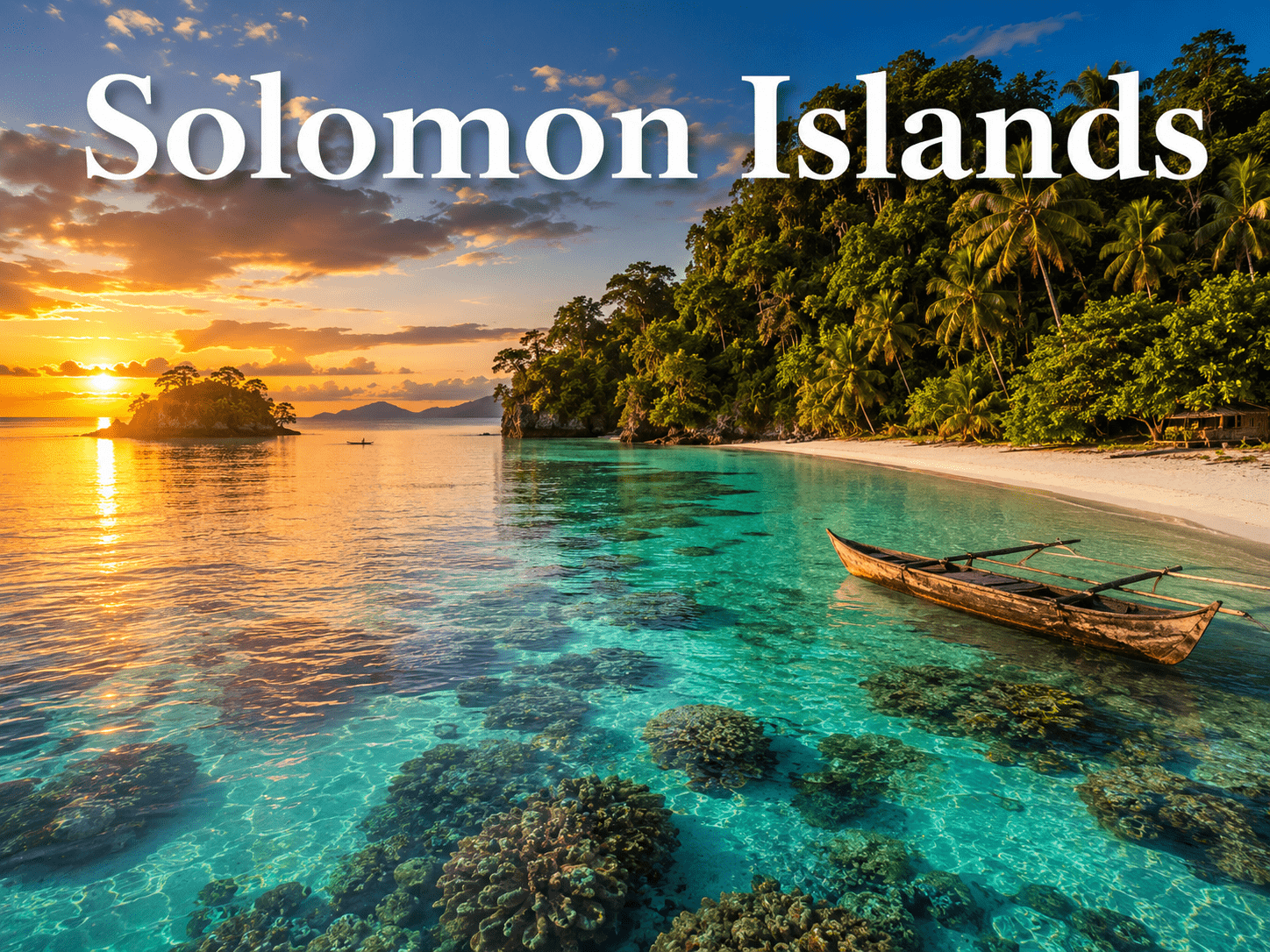
Introduction to Solomon Islands
Solomon Islands is one of the most beautiful and least explored destinations in the Pacific Ocean. Known for tropical beaches, coral reefs, rainforest landscapes, island culture, and incredible marine biodiversity, Solomon Islands offers authentic travel experiences far from crowded tourist routes.
Located in Oceania, Solomon Islands consists of hundreds of islands scattered across the southwestern Pacific Ocean. Travelers visit Solomon Islands for:
- Tropical island scenery
- Scuba diving
- World War II history
- Indigenous culture
- Eco-tourism
- Marine adventures
The country remains one of the Pacific region’s hidden gems because of its natural beauty and peaceful island atmosphere.
Modern Solomon Islands is recognized for:
- Coral reefs
- Traditional villages
- Rainforests
- Diving tourism
- Cultural diversity
- Sustainable tourism potential
Historical Background of Solomon Islands
Early History of Solomon Islands
The islands of Solomon Islands have been inhabited for thousands of years by Melanesian communities.
Early societies developed:
- Fishing traditions
- Canoe navigation
- Agriculture
- Tribal cultures
- Trade networks between islands
Traditional customs continue shaping life across Solomon Islands today.
European Exploration
European explorers arrived in Solomon Islands during the 16th century.
Spanish explorers named the islands after the biblical King Solomon because they believed the region contained great riches and resources.
Later, British colonial influence expanded across Solomon Islands during the 19th century.
World War II History
Solomon Islands became internationally significant during World War II because of major battles fought in the Pacific region.
The Battle of Guadalcanal was one of the most important military campaigns of the war.
Historical sites related to World War II remain important tourism attractions in Solomon Islands.
Independence of Solomon Islands
Solomon Islands gained independence from the United Kingdom in 1978.
Since independence, the country has worked toward:
- Economic development
- Infrastructure improvement
- Tourism growth
- Environmental conservation
Traditional culture remains strongly connected to national identity.
Geography and Location of Solomon Islands
Where Are Solomon Islands Located?
Solomon Islands is located in the southwestern Pacific Ocean in Oceania.
Nearby regions and countries include:
- Papua New Guinea
- Vanuatu
- Australia
The island nation lies east of Papua New Guinea and northeast of Australia.
Geographic Coordinates
- Latitude: Approximately 9° South
- Longitude: Approximately 160° East
Islands and Landscapes
Solomon Islands consists of hundreds of islands featuring:
- Tropical beaches
- Volcanic mountains
- Coral reefs
- Rainforests
- Lagoons
- Rivers
The islands are known for extraordinary biodiversity and natural beauty.
Climate of Solomon Islands
Solomon Islands has a tropical climate with warm temperatures throughout the year.
Climate Features
- Tropical rainfall
- Warm ocean temperatures
- Humid weather
- Wet and dry seasons
The tropical environment supports rich marine ecosystems and rainforest vegetation.
Culture and Traditions in Solomon Islands
Cultural Identity of Solomon Islands
The culture of Solomon Islands reflects Melanesian traditions and strong community values.
Traditional life includes:
- Tribal customs
- Storytelling
- Wood carving
- Canoe building
- Dance performances
- Music traditions
Many communities in Solomon Islands continue preserving ancient customs and cultural practices.
Religion in Solomon Islands
Christianity is the dominant religion in Solomon Islands, although traditional beliefs and customs remain culturally important.
Churches and religious celebrations play major roles in community life.
Traditional Music and Dance
Music and dance are essential cultural expressions in Solomon Islands.
Traditional performances often include:
- Drumming
- Bamboo music
- Ceremonial dances
- Group singing
Cultural festivals help preserve artistic traditions across the islands.
Cuisine of Solomon Islands
Food Culture in Solomon Islands
The cuisine of Solomon Islands is based on fresh local ingredients and island traditions.
Common ingredients include:
- Fish
- Coconut
- Sweet potatoes
- Taro
- Tropical fruits
- Rice
Seafood plays a major role in daily meals throughout Solomon Islands.
Popular Foods in Solomon Islands
Fresh Seafood
Fresh fish and seafood are central to the cuisine of Solomon Islands.
Popular dishes include:
- Grilled fish
- Coconut fish stew
- Shellfish dishes
Taro and Root Vegetables
Taro and sweet potatoes are widely eaten traditional foods in Solomon Islands.
Tropical Fruits
Tropical fruits available in Solomon Islands include:
- Papaya
- Pineapple
- Banana
- Coconut
- Mango
Fresh fruits are commonly served in local meals and markets.
Languages Spoken in Solomon Islands
Official Language
The official language of Solomon Islands is English.
Local Languages
More than 70 indigenous languages are spoken across Solomon Islands.
Solomon Islands Pijin is widely used as a common language between different communities.
Major Cities and Islands in Solomon Islands
Honiara – Capital of Solomon Islands
Honiara is the capital and largest city of Solomon Islands.
Located on Guadalcanal Island, Honiara is known for:
- Markets
- Museums
- Historical sites
- Coastal scenery
The city serves as the economic and transportation center of Solomon Islands.
Guadalcanal
Guadalcanal is historically famous because of World War II battles fought in Solomon Islands.
The island now attracts travelers interested in:
- Military history
- Nature tourism
- Diving
Gizo
Gizo is one of the most popular tourism destinations in Solomon Islands because of:
- Coral reefs
- Diving sites
- Beaches
- Island resorts
Malaita
Malaita is one of the most populated islands in Solomon Islands and is culturally significant for traditional village life.
Tourism in Solomon Islands
Why Visit Solomon Islands?
Tourism in Solomon Islands is growing because travelers seek:
- Untouched tropical landscapes
- Diving adventures
- Authentic island culture
- Eco-tourism
- Historical tourism
The peaceful atmosphere and natural beauty attract adventure travelers and nature enthusiasts.
Famous Tourist Attractions in Solomon Islands
Coral Reefs and Diving Sites
The coral reefs of Solomon Islands are among the most spectacular in the Pacific Ocean.
Divers explore:
- Shipwrecks
- Coral gardens
- Marine biodiversity
- Tropical fish
World War II Historical Sites
Historical tourism is important in Solomon Islands because of preserved military sites from World War II.
Marovo Lagoon
Marovo Lagoon is one of the largest saltwater lagoons in the world and a major natural attraction in Solomon Islands.
Rainforest Adventures
Rainforest regions offer:
- Hiking
- Birdwatching
- Wildlife observation
- Eco-tourism experiences
Internal Links
- Read also: Argentina travel guide
- Explore more: Barbados tourism guide
External DoFollow Links
World Bank Solomon Islands Overview: https://www.worldbank.org/en/country/solomonislands
United Nations Solomon Islands Profile: https://www.un.org/en/member-states/solomon-islands
UNESCO Information: https://whc.unesco.org
Economy of Solomon Islands
Overview of the Economy of Solomon Islands
The economy of Solomon Islands is based mainly on agriculture, fishing, forestry, tourism, and natural resources. Although still developing, Solomon Islands continues improving infrastructure, transportation, and international trade opportunities.
Because of its island geography and natural environment, the economy of Solomon Islands relies heavily on marine resources and rural industries. Tourism also plays a growing role as international travelers discover the country’s tropical beauty and diving destinations.
Modern Solomon Islands is recognized for:
- Fishing industries
- Eco-tourism
- Forestry
- Agriculture
- Marine resources
- Cultural tourism
Currency Used in Solomon Islands
The official currency of Solomon Islands is the Solomon Islands dollar.
Currency Facts
- Currency Name: Solomon Islands Dollar
- Currency Code: SBD
- Central Bank: Central Bank of Solomon Islands
Cash remains commonly used across many parts of Solomon Islands, especially in rural communities.
Main Industries in Solomon Islands
Fishing Industry
Fishing is one of the most important industries in Solomon Islands.
Marine resources support:
- Employment
- Food supply
- Export income
- Coastal communities
Tuna fishing is particularly important in international trade.
Tourism Industry
Tourism in Solomon Islands is growing because of:
- Scuba diving
- Coral reefs
- Tropical islands
- World War II history
- Eco-tourism
- Adventure travel
Travelers appreciate the peaceful and uncrowded tourism experiences available across the islands.
Agriculture
Agriculture remains essential in rural areas of Solomon Islands.
Main agricultural products include:
- Coconut
- Cocoa
- Palm oil
- Sweet potatoes
- Taro
- Tropical fruits
Traditional farming practices continue supporting local communities.
Forestry
Forestry contributes significantly to export earnings in Solomon Islands, although sustainable management is increasingly important for environmental protection.
Trade and International Business
Main Trade Partners of Solomon Islands
Solomon Islands trades with countries throughout the Asia-Pacific region.
Important trade partners include:
- Australia
- China
- Japan
- Papua New Guinea
- New Zealand
Exports from Solomon Islands include:
- Fish products
- Timber
- Agricultural products
Infrastructure Development
Infrastructure development in Solomon Islands continues improving transportation and communication systems.
Key development areas include:
- Roads
- Ports
- Airports
- Telecommunications
- Energy systems
International partnerships help support modernization projects.
Nature and Wildlife in Solomon Islands
Natural Beauty of Solomon Islands
Nature is one of the greatest attractions of Solomon Islands.
The country features:
- Tropical forests
- Coral reefs
- Lagoons
- Volcanoes
- Beaches
- Rivers
Large areas of Solomon Islands remain environmentally protected and relatively untouched by mass tourism.
Coral Reefs of Solomon Islands
The coral reefs surrounding Solomon Islands are among the richest marine ecosystems in the Pacific Ocean.
Visitors can experience:
- Snorkeling
- Scuba diving
- Coral gardens
- Tropical fish
- Sea turtles
Marine biodiversity is one of the country’s most valuable natural resources.
Rainforests and Ecosystems
Rainforests in Solomon Islands contain:
- Rare bird species
- Tropical plants
- Reptiles
- Insects
- Freshwater ecosystems
Eco-tourism supports conservation and environmental awareness.
Wildlife in Solomon Islands
Wildlife found in Solomon Islands includes:
- Exotic birds
- Sea turtles
- Dolphins
- Reef fish
- Flying foxes
Many species are unique to the Pacific region.
Diving Tourism in Solomon Islands
Why Diving Is Famous in Solomon Islands
Diving tourism is one of the main attractions in Solomon Islands because of:
- Clear waters
- Coral reefs
- Shipwrecks
- Marine biodiversity
- Warm tropical seas
Divers from around the world visit Solomon Islands for world-class underwater experiences.
Shipwreck Diving
World War II shipwrecks are major diving attractions in Solomon Islands.
Divers explore:
- Sunken ships
- Aircraft wrecks
- Underwater battle sites
The combination of history and marine life creates unique diving experiences.
Popular Diving Areas
Popular diving destinations in Solomon Islands include:
- Gizo
- Munda
- Guadalcanal
- Marovo Lagoon
These areas offer exceptional visibility and rich marine ecosystems.
Transportation in Solomon Islands
Public Transportation
Transportation in Solomon Islands includes:
- Boats
- Domestic flights
- Buses
- Taxis
Because the country consists of many islands, water transportation is especially important.
Domestic Flights
Domestic air travel helps connect distant islands in Solomon Islands.
Small regional airports support:
- Tourism
- Business travel
- Community transportation
Ports and Maritime Transport
Ports play a vital role in transportation and trade across Solomon Islands.
Boats and ferries are commonly used for:
- Passenger travel
- Cargo transportation
- Inter-island connections
Festivals and Cultural Events in Solomon Islands
Traditional Festivals
Traditional festivals in Solomon Islands celebrate:
- Island culture
- Music
- Dance
- Canoe traditions
- Community life
These events help preserve indigenous heritage and local identity.
Cultural Performances
Cultural events in Solomon Islands often include:
- Bamboo music
- Tribal dances
- Storytelling
- Ceremonial costumes
Visitors enjoy learning about Melanesian traditions through these performances.
Nightlife in Solomon Islands
Entertainment and Social Life
Nightlife in Solomon Islands is generally relaxed and centered around:
- Beach resorts
- Restaurants
- Local music
- Community gatherings
The atmosphere is peaceful compared to larger international tourism destinations.
Coastal Dining Experiences
Visitors often enjoy seafood dining experiences near beaches and lagoons throughout Solomon Islands.
Fresh seafood and tropical scenery create memorable travel experiences.
Best Time to Visit Solomon Islands
Dry Season Travel
The dry season is considered the best time to visit Solomon Islands because of:
- Better weather
- Calmer seas
- Diving visibility
- Outdoor activities
This period is especially popular for eco-tourism and marine adventures.
Tropical Climate Travel
Warm temperatures throughout the year make Solomon Islands suitable for tropical tourism in all seasons.
Rainfall can be heavier during the wet season.
Interesting Facts About Solomon Islands
Unique Facts About Solomon Islands
- Solomon Islands consists of hundreds of islands in the Pacific Ocean.
- The country contains some of the world’s richest coral reef ecosystems.
- Marovo Lagoon is one of the largest saltwater lagoons in the world.
- World War II history remains important in tourism.
- Traditional canoe culture is still preserved.
- More than 70 indigenous languages are spoken across Solomon Islands.
- Scuba diving is internationally famous in the country.
International Organizations and Global Relations
United Nations Membership
Solomon Islands is a member of the United Nations and participates in international cooperation programs.
Other International Memberships
Solomon Islands is also connected with:
- Pacific Islands Forum
- Commonwealth of Nations
- World Bank
- International Monetary Fund
International partnerships support development and environmental conservation.
Food and Culinary Experiences in Solomon Islands
Traditional Cuisine of Solomon Islands
The cuisine of Solomon Islands reflects tropical island traditions and the natural resources of the Pacific Ocean. Meals are often prepared using fresh seafood, coconut, tropical fruits, root vegetables, and locally grown ingredients.
Food culture in Solomon Islands is closely connected to:
- Community gatherings
- Family traditions
- Fishing culture
- Agricultural lifestyles
Many traditional recipes are cooked using simple methods that preserve natural flavors.
Popular Foods in Solomon Islands
Fresh Seafood
Fresh seafood is central to the cuisine of Solomon Islands.
Popular seafood dishes include:
- Grilled fish
- Coconut fish curry
- Shellfish meals
- Reef fish specialties
Coastal villages often prepare meals using fish caught on the same day.
Root Vegetables
Traditional meals in Solomon Islands commonly include:
- Taro
- Sweet potatoes
- Cassava
- Yam
These foods provide an important source of nutrition in rural communities.
Coconut-Based Dishes
Coconut is widely used in the cuisine of Solomon Islands.
Coconut milk is often added to:
- Soups
- Fish dishes
- Rice meals
- Desserts
Tropical Fruits
Fresh tropical fruits available in Solomon Islands include:
- Mango
- Banana
- Papaya
- Pineapple
- Coconut
Fruit markets are common in local communities and coastal towns.
Shopping in Solomon Islands
Shopping Experiences in Solomon Islands
Shopping in Solomon Islands mainly focuses on traditional crafts, local products, and handmade souvenirs.
Travelers often purchase:
- Wood carvings
- Shell jewelry
- Handmade baskets
- Traditional artwork
- Island crafts
Local markets provide authentic cultural experiences.
Traditional Handicrafts
Traditional handicrafts in Solomon Islands reflect Melanesian artistic traditions.
Popular handmade products include:
- Canoe carvings
- Tribal masks
- Woven decorations
- Shell ornaments
These items represent the cultural identity of island communities.
Local Markets
Markets in Solomon Islands are important social and economic centers.
Visitors can find:
- Fresh seafood
- Tropical fruits
- Local vegetables
- Handmade goods
- Traditional foods
Honiara hosts some of the largest local markets in the country.
Education System in Solomon Islands
Development of Education
Education continues improving across Solomon Islands, with government efforts focused on literacy, rural access, and infrastructure development.
The education system includes:
- Primary schools
- Secondary schools
- Vocational institutions
- Teacher training centers
International partnerships support educational progress.
Higher Education
Higher education opportunities in Solomon Islands continue expanding.
Students often study:
- Marine sciences
- Agriculture
- Environmental studies
- Teaching
- Public administration
Education plays an important role in national development.
Sports and Recreation in Solomon Islands
Popular Sports in Solomon Islands
Sports are an important part of community life in Solomon Islands.
Popular sports include:
- Football
- Rugby
- Basketball
- Volleyball
- Canoeing
Local sporting events often bring communities together.
Water Activities
Because of the tropical island geography, water sports are highly popular in Solomon Islands.
Travelers enjoy:
- Swimming
- Snorkeling
- Kayaking
- Scuba diving
- Fishing
Marine tourism continues attracting adventure travelers.
Eco-Tourism Adventures
Eco-tourism experiences in Solomon Islands include:
- Rainforest hiking
- Wildlife observation
- Birdwatching
- Island exploration
- Cultural village visits
The country remains ideal for travelers seeking nature-based tourism.
Travel Tips for Solomon Islands
Entry and Visa Information
Travel requirements for Solomon Islands may vary depending on nationality.
Visitors should check:
- Passport validity
- Visa requirements
- Health recommendations
- Travel advisories
Currency and Payments
The Solomon Islands dollar is used throughout Solomon Islands.
Cash is commonly preferred in rural areas, while hotels and larger businesses may accept electronic payments.
Internet and Communication
Internet access in Solomon Islands continues improving, although connectivity may be slower in remote island areas.
Travelers visiting isolated regions should prepare for limited communication services.
Safety and Health in Solomon Islands
Is Solomon Islands Safe for Tourists?
Solomon Islands is generally considered peaceful for travelers, especially in tourism regions and island resorts.
Visitors should still follow basic travel precautions and respect local customs.
Healthcare Services
Healthcare infrastructure in Solomon Islands is developing, with the best medical facilities available in Honiara.
Travel insurance is strongly recommended for international visitors.
Outdoor Adventures in Solomon Islands
Island Hopping
Island hopping is one of the most exciting experiences in Solomon Islands.
Travelers can explore:
- Tropical beaches
- Traditional villages
- Coral lagoons
- Hidden islands
Boat transportation connects many tourism regions.
Diving and Marine Exploration
The marine environments of Solomon Islands are internationally respected for:
- Coral biodiversity
- Shipwreck diving
- Tropical marine life
- Crystal-clear water
Scuba diving remains one of the country’s biggest tourism attractions.
Rainforest Exploration
Rainforests in Solomon Islands offer opportunities for:
- Hiking
- Eco-tourism
- Wildlife photography
- Cultural exploration
Nature tourism continues growing because of the country’s untouched landscapes.
Why Solomon Islands Is Unique
The Identity of Solomon Islands
The uniqueness of Solomon Islands comes from its combination of:
- Tropical island scenery
- Marine biodiversity
- Traditional Melanesian culture
- Historical significance
- Peaceful tourism experiences
Unlike crowded tourism destinations, Solomon Islands offers authentic cultural interaction and untouched natural beauty.
Travelers often appreciate the friendly communities and relaxed island atmosphere.
Final Summary
Solomon Islands is one of the Pacific Ocean’s most beautiful and unexplored destinations. From coral reefs and tropical beaches to rainforest adventures and World War II history, the country offers unforgettable travel experiences for nature lovers and adventure travelers.
The combination of island culture, marine biodiversity, and peaceful landscapes continues attracting visitors seeking authentic Pacific tourism.
Travelers visiting Solomon Islands can enjoy:
- Scuba diving
- Coral reef exploration
- Tropical island hopping
- Traditional village culture
- Rainforest adventures
- Historical tourism
- Eco-tourism experiences
With warm hospitality, untouched scenery, and extraordinary marine ecosystems, Solomon Islands remains one of Oceania’s hidden treasures.
Key Facts About Solomon Islands
| Category | Information |
|---|---|
| Country Name | Solomon Islands |
| Continent | Oceania |
| Region | Pacific Ocean |
| Capital City | Honiara |
| Official Language | English |
| Common Language | Solomon Islands Pijin |
| Currency | Solomon Islands Dollar (SBD) |
| Climate | Tropical |
| Main Industries | Fishing, Agriculture, Tourism |
| Famous Attraction | Marovo Lagoon |
| Major Religion | Christianity |
| Best Time to Visit | Dry Season |

