



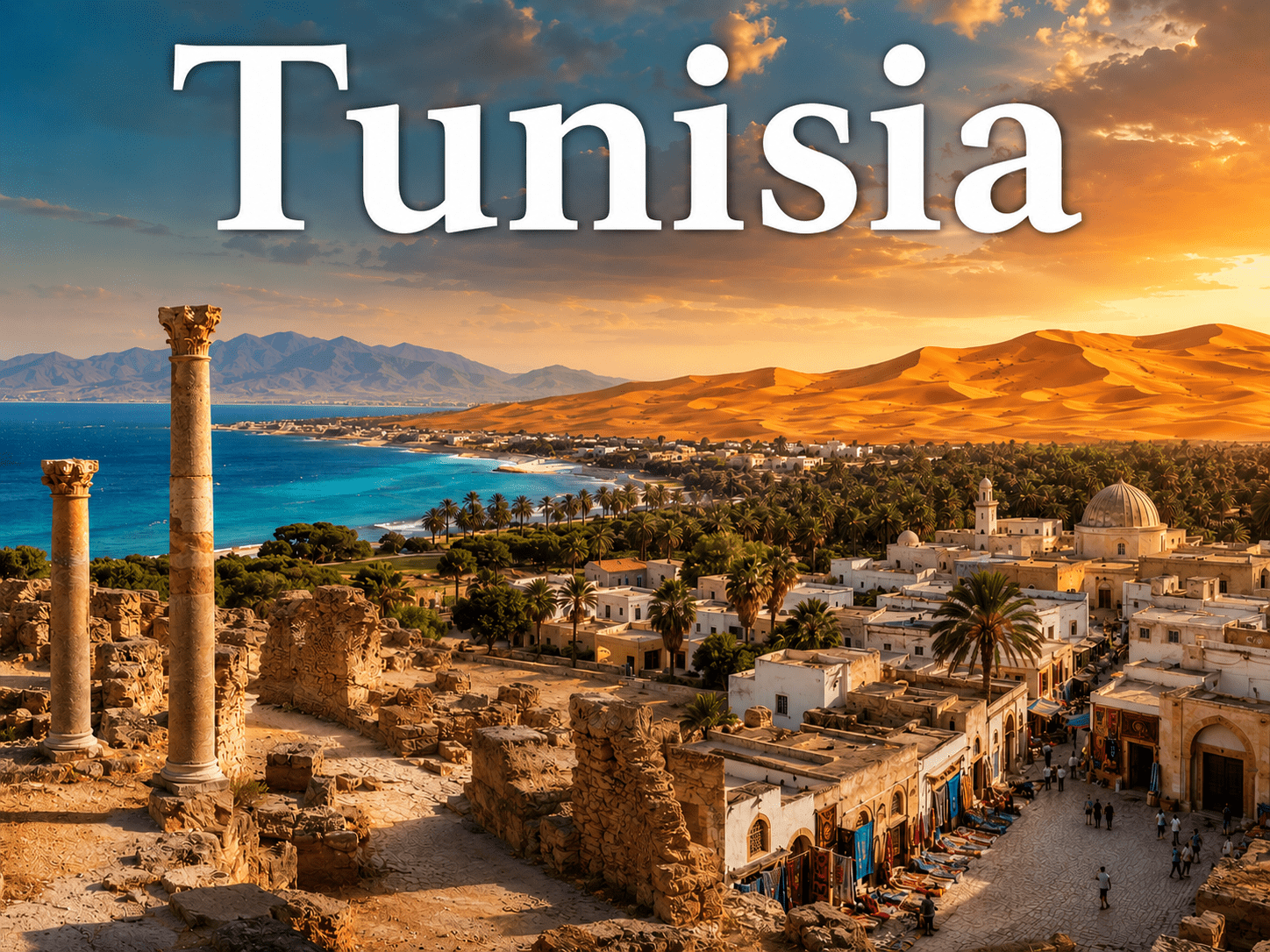
Introduction to Tunisia
Tunisia is a fascinating North African country known for Mediterranean beaches, Roman ruins, desert landscapes, and vibrant cultural traditions. Located between Algeria and Libya along the Mediterranean Sea, Tunisia blends Arab, Berber, African, and European influences into a unique travel destination.
Travelers visit Tunisia for:
- Sahara Desert adventures
- Ancient historical sites
- Mediterranean beaches
- Traditional markets and medinas
- North African cuisine
- Coastal resorts and cultural tourism
Modern Tunisia combines historical heritage with modern tourism infrastructure and welcoming hospitality.
Historical Background of Tunisia
Ancient History of Tunisia
The history of Tunisia dates back thousands of years and includes some of the Mediterranean region’s most influential civilizations.
Early civilizations in Tunisia developed:
- Maritime trade routes
- Agriculture and farming
- Ancient cities and ports
- Cultural and artistic traditions
Carthage and Roman Influence
One of the most famous historical civilizations connected to Tunisia was Carthage, a powerful ancient city-state.
Later, Roman influence transformed Tunisia through:
- Amphitheaters and architecture
- Trade expansion
- Road systems
- Cultural development
Roman ruins remain among the top attractions in Tunisia today.
Modern Development of Tunisia
Modern Tunisia gained independence in the 20th century and developed strong tourism, education, and service sectors.
Today, Tunisia is known for:
- Historical tourism
- Mediterranean resorts
- Cultural diversity
- Handicrafts and cuisine
Geography and Location of Tunisia
Where Is Tunisia Located?
Tunisia is located in North Africa and borders:
- Algeria
- Libya
The country also has a long coastline along the Mediterranean Sea.
Geographic Features
The geography of Tunisia includes:
- Mediterranean beaches
- Desert landscapes
- Mountain regions
- Salt lakes
- Fertile northern plains
The southern part of Tunisia is dominated by the Sahara Desert.
Climate of Tunisia
The climate in Tunisia varies by region:
- Mediterranean climate in the north
- Hot desert climate in the south
- Warm coastal weather year-round
Spring and autumn are especially pleasant seasons in Tunisia.
Culture and Society in Tunisia
Cultural Identity of Tunisia
Culture in Tunisia reflects Arab, Berber, Mediterranean, and African influences.
Important cultural elements in Tunisia include:
- Traditional music and dance
- Islamic architecture
- Artisan crafts
- Hospitality traditions
- Family-centered society
Languages Spoken in Tunisia
The official language of Tunisia is Arabic.
French is also widely spoken throughout Tunisia, especially in business and tourism.
Religion in Tunisia
Islam is the dominant religion in Tunisia, influencing architecture, festivals, and cultural traditions.
Mosques and historical Islamic sites are important landmarks across Tunisia.
Arts and Traditional Crafts
Traditional arts in Tunisia include:
- Pottery and ceramics
- Carpet weaving
- Leather craftsmanship
- Mosaic art
- Metalwork and jewelry
Markets and artisan shops are popular cultural attractions in Tunisia.
Cuisine of Tunisia
Food Culture in Tunisia
The cuisine of Tunisia combines Mediterranean and North African flavors with spices, olive oil, seafood, and grains.
Common ingredients in Tunisia include:
- Couscous
- Olive oil
- Seafood
- Harissa chili paste
- Lamb and vegetables
Famous Foods in Tunisia
Couscous
Couscous is one of the most famous dishes in Tunisia, served with vegetables, meat, or seafood.
Brik
Brik is a popular pastry dish in Tunisia, often filled with egg, tuna, or meat.
Harissa
Harissa is a spicy chili paste widely used in cooking throughout Tunisia.
Seafood Dishes
Fresh seafood is especially popular in coastal areas of Tunisia.
Major Cities in Tunisia
Tunis – Capital City
Tunis is the capital and largest city of Tunisia.
The city is known for:
- Historic medinas
- Museums and architecture
- Markets and cafés
- Coastal scenery
Sousse
Sousse is famous for beaches and historical attractions.
Hammamet
Hammamet is one of the top resort destinations in Tunisia.
Djerba
Djerba is known for island beaches and cultural heritage.
Tourism in Tunisia
Why Visit Tunisia?
Tourism in Tunisia attracts visitors interested in:
- Ancient ruins and archaeology
- Mediterranean beaches
- Desert adventures
- Traditional markets
- North African culture
Famous Attractions in Tunisia
Carthage
Carthage is one of the most important ancient archaeological sites in Tunisia.
El Jem Amphitheatre
Amphitheatre of El Jem is a famous Roman monument and UNESCO World Heritage Site.
Medina of Tunis
Medina of Tunis is known for historic streets, markets, and Islamic architecture.
Internal Links
- Read also: South Korea travel guide
- Explore more: Egypt tourism guide
External DoFollow Links
World Bank Tunisia Data: https://www.worldbank.org/en/country/tunisia
Tunisia Tourism Official: https://www.discovertunisia.com
UNESCO Tunisia Sites: https://whc.unesco.org/en/statesparties/tn
Economy of Tunisia
The economy of Tunisia is supported by tourism, agriculture, manufacturing, trade, mining, and service industries. Due to its Mediterranean location, Tunisia has long served as an important commercial connection between Africa, Europe, and the Middle East.
Major industries in Tunisia include:
- Tourism and hospitality
- Agriculture and olive production
- Textile manufacturing
- Mining and energy
- Technology and service sectors
Tourism remains one of the most important contributors to the economy of Tunisia.
Agriculture in Tunisia
Agriculture plays a significant role in Tunisia, especially in rural regions and fertile northern areas.
Important agricultural products in Tunisia include:
- Olive oil
- Dates
- Citrus fruits
- Wheat and grains
- Vegetables and seafood
Olive oil production from Tunisia is internationally recognized.
Currency of Tunisia
The official currency of Tunisia is the Tunisian Dinar (TND).
Currency Details:
- Currency: Tunisian Dinar
- Code: TND
- Central Bank: Central Bank of Tunisia
Cash and digital payments are both commonly used throughout Tunisia.
Transportation in Tunisia
Public Transport in Tunisia
Transportation in Tunisia includes:
- Trains and railways
- Buses and taxis
- Metro systems in urban areas
- Domestic flights
Public transport is affordable and widely used in Tunisia.
Railways in Tunisia
Rail systems connect major cities and tourist destinations across Tunisia.
Train travel is a convenient option for exploring coastal regions of Tunisia.
Airports in Tunisia
Major airports in Tunisia include:
- Tunis–Carthage International Airport
- Enfidha–Hammamet International Airport
- Djerba–Zarzis International Airport
These airports connect Tunisia with Europe, Africa, and the Middle East.
Sahara Desert and Nature in Tunisia
Sahara Desert in Tunisia
The Sahara Desert is one of the most famous natural attractions in Tunisia.
Desert tourism activities include:
- Camel trekking
- Desert camping
- Oasis exploration
- Jeep tours across sand dunes
The southern landscapes of Tunisia offer dramatic desert scenery.
Natural Beauty of Tunisia
Nature in Tunisia includes:
- Mediterranean beaches
- Salt lakes
- Desert oases
- Mountain landscapes
- Coastal lagoons
The geographic diversity of Tunisia makes it ideal for both cultural and adventure tourism.
National Parks in Tunisia
Ichkeul National Park
Ichkeul National Park is a UNESCO-listed wetland and bird sanctuary.
Jebil National Park
Jebil National Park is known for desert landscapes and Sahara wildlife.
Boukornine National Park
Boukornine National Park is famous for forests and mountain scenery.
Beaches and Resorts in Tunisia
Mediterranean Coastline
The Mediterranean coastline of Tunisia attracts travelers with:
- Sandy beaches
- Coastal resorts
- Water sports
- Relaxed seaside towns
Beach tourism is one of the most popular travel experiences in Tunisia.
Famous Beach Destinations
Hammamet
Hammamet is known for luxury resorts and beautiful beaches.
Sousse
Sousse combines historical attractions with coastal tourism.
Djerba
Djerba is famous for island beaches and cultural heritage.
Festivals and Traditions in Tunisia
Cultural Traditions in Tunisia
Traditional customs remain important in Tunisia.
Cultural traditions include:
- Family celebrations
- Traditional music
- Religious holidays
- Artisan craftsmanship
- Regional food traditions
Festivals in Tunisia
Festivals in Tunisia celebrate:
- Music and arts
- Cultural heritage
- Religious events
- Film and tourism
These festivals showcase the diversity and creativity of Tunisia.
Traditional Markets in Tunisia
Markets known as medinas are famous cultural attractions in Tunisia.
Visitors can find:
- Carpets and textiles
- Pottery and ceramics
- Spices and perfumes
- Leather goods and jewelry
Education System in Tunisia
Structure of Education
Education in Tunisia includes:
- Primary education
- Secondary schooling
- Vocational training
- Universities and technical institutes
Education standards in Tunisia are among the strongest in North Africa.
Higher Education in Tunisia
Universities in Tunisia focus on:
- Engineering
- Medicine
- Business studies
- Technology and sciences
Best Time to Visit Tunisia
Seasonal Travel Guide
The best time to visit Tunisia depends on travel interests:
- March–May: Pleasant weather and sightseeing
- June–August: Beach tourism season
- September–November: Comfortable temperatures and cultural travel
- December–February: Cooler weather and desert exploration
Interesting Facts About Tunisia
- Tunisia was home to the ancient civilization of Carthage
- The Sahara Desert covers much of southern Tunisia
- Olive oil production is important to the economy
- The country has both Mediterranean and desert landscapes
- Roman ruins are major tourist attractions in Tunisia
- Traditional medinas are UNESCO heritage treasures
International Relations of Tunisia
United Nations Membership
Tunisia is a member of the United Nations and participates in regional Mediterranean and African partnerships.
Regional Organizations
Tunisia is also involved in:
- African Union (AU)
- Arab League
- Mediterranean cooperation initiatives
Food and Culinary Culture in Tunisia
The cuisine of Tunisia is a flavorful blend of Mediterranean, Arab, Berber, and North African traditions. Food culture in Tunisia is known for aromatic spices, olive oil, seafood, and rich traditional recipes passed through generations.
Meals in Tunisia commonly include:
- Couscous dishes
- Seafood and grilled meats
- Fresh vegetables
- Olive oil and spices
- Bread and pastries
The spicy chili paste called harissa is an essential ingredient in many dishes throughout Tunisia.
Famous Foods in Tunisia
Couscous
Couscous is one of the most famous dishes in Tunisia, often served with vegetables, lamb, chicken, or seafood.
Brik
Brik is a crispy pastry dish in Tunisia filled with egg, tuna, potatoes, or meat.
Harissa
Harissa is a spicy chili condiment widely used in Tunisia and known internationally.
Seafood Specialties
Fresh seafood meals are especially popular in coastal cities across Tunisia.
Shopping and Lifestyle in Tunisia
Shopping Experience in Tunisia
Shopping in Tunisia combines traditional medinas with modern shopping centers and coastal markets.
Visitors can buy:
- Handmade carpets
- Ceramics and pottery
- Leather goods
- Traditional jewelry
- Spices and perfumes
The traditional markets of Tunisia are colorful cultural experiences.
Medina Markets in Tunisia
Historic medinas in Tunisia are famous for:
- Narrow alleyways
- Artisan workshops
- Textile shops
- Local cafés and street food
These medinas reflect the country’s rich architectural heritage.
Lifestyle in Tunisia
Life in Tunisia combines:
- Mediterranean coastal living
- Traditional family values
- Café culture
- Religious and cultural traditions
- Modern urban lifestyles
The relaxed hospitality of Tunisia makes it appealing to travelers from around the world.
Sports and Recreation in Tunisia
Popular Sports in Tunisia
Sports in Tunisia include:
- Football (soccer)
- Handball
- Athletics
- Tennis and martial arts
Football is the most popular sport in Tunisia.
Outdoor Activities in Tunisia
Outdoor recreation in Tunisia includes:
- Desert excursions
- Camel trekking
- Beach tourism
- Diving and water sports
- Mountain hiking
Adventure tourism continues growing in Tunisia.
Travel Safety in Tunisia
Safety for Tourists
Tunisia is a popular travel destination for international tourists. Visitors should:
- Respect local customs and traditions
- Dress appropriately at religious sites
- Use trusted transportation services
- Stay informed about travel advisories
Health and Travel Tips
Travelers visiting Tunisia should:
- Stay hydrated in warm desert climates
- Carry sunscreen for coastal and desert travel
- Prepare for temperature differences between regions
- Respect cultural etiquette in traditional areas
Why Tunisia Is Unique
Cultural and Natural Identity
The uniqueness of Tunisia comes from its combination of:
- Ancient Roman and Carthaginian history
- Mediterranean beaches and resorts
- Sahara Desert adventures
- Islamic architecture and medinas
- North African cuisine and traditions
- Coastal and desert landscapes
Few destinations combine Mediterranean and desert experiences as effectively as Tunisia.
Final Summary
Tunisia is one of North Africa’s most fascinating destinations, offering ancient ruins, Mediterranean beaches, desert landscapes, and vibrant cultural traditions. From the historical streets of Tunis and Carthage to the golden dunes of the Sahara, Tunisia provides unforgettable experiences for history lovers, adventure travelers, and beach tourists alike.
Visitors to Tunisia can enjoy:
- Roman archaeological sites
- Sahara Desert adventures
- Coastal resorts and beaches
- Traditional medinas and markets
- North African cuisine and culture
- Relaxing Mediterranean scenery
With its mix of history, nature, and hospitality, Tunisia remains one of the Mediterranean region’s most rewarding travel destinations.
Key Facts About Tunisia
| Category | Information |
|---|---|
| Country Name | Tunisia |
| Region | North Africa |
| Capital | Tunis |
| Currency | Tunisian Dinar (TND) |
| Official Language | Arabic |
| Famous For | Sahara Desert, Roman ruins |
| Major Attraction | Carthage |
| Popular Sport | Football |
| Geography | Mediterranean coast and desert |
| Best Time to Visit | March to May |

