



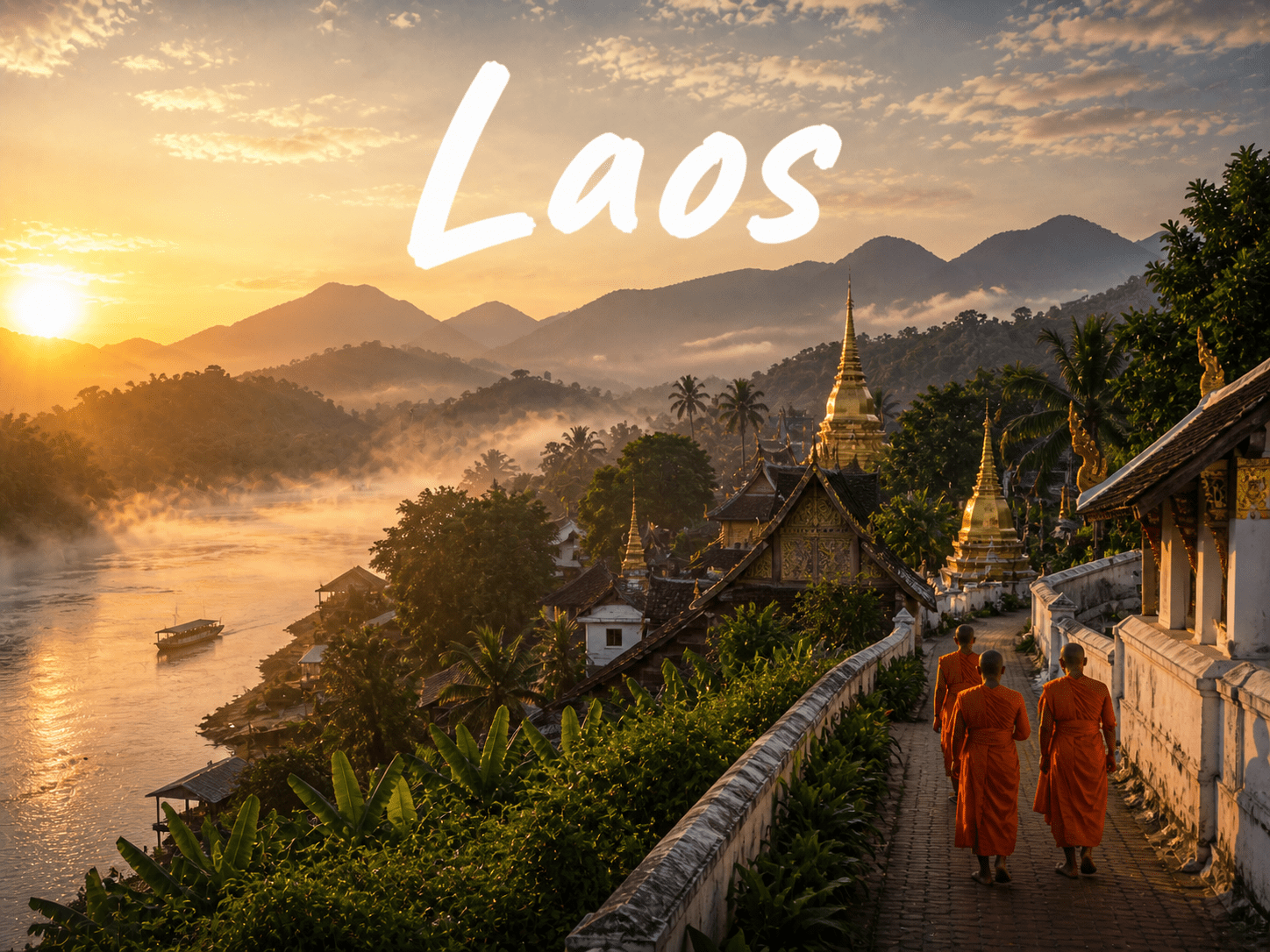
🌍 Introduction
Laos is a landlocked country in Southeast Asia known for its peaceful atmosphere, rich Buddhist culture, and stunning natural landscapes. Unlike many of its neighbors, this nation remains quiet, less commercialized, and deeply connected to tradition.
Traveling through Laos offers a calm and authentic experience filled with golden temples, slow-flowing rivers, misty mountains, and friendly local communities.
Visitors often describe Laos as one of the most relaxed destinations in Asia, perfect for travelers seeking nature, spirituality, and cultural depth.
🏛 History of Laos
Ancient Kingdoms
The early history of this region is linked to the powerful Kingdom of Lan Xang, established in the 14th century. This kingdom played a major role in shaping cultural identity and Buddhism in modern Laos.
Colonial Era
In the 19th century, the region became part of French Indochina. During this period, architecture, education systems, and infrastructure were influenced by French colonial rule.
Independence
In 1953, Laos gained independence and later formed a republic. Since then, it has developed gradually while maintaining cultural traditions.
🌍 Geography of Laos
Location and Coordinates
Laos is located in Southeast Asia.
- Coordinates: 19.8563° N, 102.4955° E
- Region: Southeast Asia
Neighboring Countries
This country is surrounded by:
- Thailand
- Vietnam
- Cambodia
- China
- Myanmar
Landscape Features
The geography of Laos includes:
- Mountains
- Dense forests
- River valleys
- Limestone cliffs
It is one of the most naturally green countries in the region.
Climate
The climate is tropical monsoon:
- Rainy season (May–October)
- Dry season (November–April)
🎭 Culture of Laos
Buddhist Influence
Culture in Laos is deeply influenced by Theravāda Buddhism. Temples and monasteries are central to daily life and spiritual practice.
Traditional Lifestyle
Many communities still follow traditional lifestyles based on agriculture, fishing, and small village living.
Festivals and Celebrations
Important festivals include:
- Pi Mai (Lao New Year)
- That Luang Festival
- Boat racing festivals
These events are colorful, spiritual, and community-centered.
Language
- Lao is the official language
- French and English are also used in some areas
🏙 Major Cities of Laos
Vientiane (Capital)
Vientiane is:
- Capital city
- Political and cultural center
- Home to temples and monuments
Luang Prabang
Luang Prabang is:
- UNESCO World Heritage city
- Famous for temples and heritage architecture
Pakse
Pakse is:
- Southern gateway city
- Known for waterfalls and Bolaven Plateau
🌐 Laos in Global Organizations
Laos is a member of:
ASEAN
United Nations
💰 Economy of Laos
Overview of the Economy
The economy of this Southeast Asian country is developing and largely based on agriculture, hydropower, tourism, and natural resources. It remains one of the more rural economies in the region, with a strong dependence on natural landscapes and river systems.
Over the past decades, gradual development has improved infrastructure and international trade connections, while still maintaining a traditional economic base.
Key Economic Sectors
1. Agriculture
Agriculture is the backbone of rural life. A large portion of the population depends on farming activities such as:
- Rice cultivation
- Vegetable farming
- Livestock rearing
The fertile river valleys of Laos support seasonal agriculture and village-based farming systems.
2. Hydropower and Energy
One of the fastest-growing sectors is hydropower. Due to its rivers and mountainous terrain, the country exports electricity to neighboring nations.
Dams along the Mekong River system play a major role in energy production.
3. Tourism Industry
Tourism is expanding steadily, especially eco-tourism and cultural travel. Visitors are attracted to:
- Temples
- Waterfalls
- Mountains
- River cruises
4. Mining and Natural Resources
The country also has mineral resources such as:
- Gold
- Copper
- Tin
Mining contributes to export revenue and economic growth.
Currency and Trade
- Currency: Lao Kip (LAK)
Trade partners include:
- Thailand
- China
- Vietnam
- South Korea
Exports include electricity, minerals, and agricultural goods.
Economic Challenges
Challenges include:
- Limited industrialization
- Infrastructure gaps
- Rural poverty
- Dependence on neighboring trade routes
International support from organizations like the
- World Bank
helps support development projects and economic growth.
🌊 Mekong River & Natural Beauty
Importance of the Mekong River
The Mekong River is one of the most important natural features in Laos. It supports:
- Agriculture
- Transportation
- Fishing
- Hydropower
Many cities and villages are built along its banks.
Waterfalls and Nature Sites
Famous natural attractions include:
- Kuang Si Falls
- Tad Fane Waterfalls
- Bolaven Plateau
These sites are known for lush greenery and scenic beauty.
Forests and Biodiversity
Large areas are covered by tropical forests, home to diverse wildlife and plant species.
🏞 Tourism in Laos
Overview of Tourism
Tourism in this country is centered around slow travel, nature exploration, and cultural immersion. It is ideal for travelers seeking peace and authenticity.
🏛 Luang Prabang Heritage Zone
A UNESCO World Heritage site known for:
- Ancient temples
- Colonial architecture
- Spiritual atmosphere
🌊 Mekong River Cruises
River cruises offer:
- Sunset views
- Village visits
- Cultural experiences
🏔 Mountain Adventures
Northern regions offer:
- Trekking routes
- Hill tribe villages
- Scenic landscapes
🏙 Vientiane Attractions
The capital features:
- Buddha Park
- Pha That Luang
- Riverside promenades
🚵 Adventure Activities
Trekking and Hiking
Mountain trails offer opportunities to explore remote villages and natural landscapes.
Cave Exploration
The country has many limestone caves used historically for shelter and cultural rituals.
Cycling and Slow Travel
Cycling through rural areas is popular for eco-tourists who want immersive experiences.
🌿 Unique Landscapes
Limestone Mountains
Karst formations create dramatic scenery across northern regions.
Rice Fields
Terraced rice fields are common in rural areas and create stunning landscapes.
River Islands
The southern region features river islands known for relaxed lifestyles and nature tourism.
✨ Unique Facts
- One of the most peaceful countries in Southeast Asia
- The Mekong River shapes daily life and economy
- Strong Buddhist cultural influence nationwide
- Slow travel culture is widely embraced
- Rich biodiversity and forest coverage
- Rural life still dominates population structure
🎭 Culture and Daily Life
Spiritual Lifestyle
Life in this Southeast Asian nation is deeply influenced by Buddhism. Monasteries and temples are central to communities, and many people participate in daily rituals such as offering food to monks in the early morning.
Spirituality is not separate from daily life—it is woven into routines, festivals, and social behavior across Laos.
Traditional Values
Respect, humility, and simplicity are important cultural values. Elders are highly respected, and community harmony is prioritized over individual expression.
Monastic Life
Young men often spend time in monasteries as monks, even if temporarily. This practice is seen as an important rite of passage and contributes to spiritual development.
Arts and Craftsmanship
Traditional crafts include:
- Handwoven textiles
- Wood carving
- Bamboo crafts
- Silver jewelry
These crafts are still widely produced in rural communities and sold in local markets.
Music and Dance
Folk music uses traditional instruments such as the khene, a bamboo mouth organ. Performances often tell stories of history, nature, and spirituality.
🍽 Food Culture
Traditional Cuisine
Food in Laos is fresh, aromatic, and often shared communally. It balances herbs, rice, vegetables, and fish.
Popular dishes include:
- Sticky rice (khao niao)
- Larb (minced meat salad)
- Tam mak hoong (papaya salad)
- Grilled river fish
Sticky rice is a staple food eaten with nearly every meal.
Street Food Culture
Street food is widely available in towns and cities:
- Noodle soups
- Grilled skewers
- Fresh fruit shakes
- Fried snacks
Markets are lively centers of food culture.
Beverages
Popular drinks include:
- Herbal teas
- Local rice wine
- Fresh sugarcane juice
Coffee culture is also growing, especially in urban areas.
🗺 7-Day Travel Itinerary
Day 1: Arrival in Vientiane
Explore:
- Riverside promenade
- Night markets
- Local temples
Day 2: Capital Exploration
Visit:
- Pha That Luang
- Buddha Park
Day 3: Travel to Luang Prabang
Discover:
- UNESCO heritage streets
- Colonial architecture
- Riverside views
Day 4: Cultural Immersion
Experience:
- Monk almsgiving ceremony
- Temple visits
- Traditional crafts
Day 5: Kuang Si Waterfalls
Visit:
- Kuang Si Falls
Enjoy swimming and forest scenery.
Day 6: Mekong River Journey
Activities:
- Boat cruise
- Village visits
- Sunset photography
Day 7: Relax & Departure
Final shopping and cultural exploration.
🌐 International Relations
This country participates in global diplomacy and regional cooperation through major organizations.
It is a member of:
- United Nations
- ASEAN
🤔 Interesting Facts
- One of the most peaceful countries in Southeast Asia
- Buddhism shapes daily life and culture
- Sticky rice is eaten with almost every meal
- Mekong River is central to transportation and economy
- Slow travel culture is widely embraced
- Rich biodiversity with forests and waterfalls
🔗 Internal Link Suggestion
Explore next:
➡️ Guyana Travel Guide
📊 Final Summary
This Southeast Asian destination offers a calm and spiritual travel experience unlike most modern tourist hotspots. With its golden temples, lush mountains, powerful river systems, and welcoming communities, it is a perfect destination for slow and meaningful travel.
Unlike heavily commercialized countries, it preserves authenticity, making it ideal for travelers seeking culture, nature, and peace.
From the ancient streets of Luang Prabang to the Mekong River’s quiet beauty, Laos delivers a deeply enriching journey.
📋 Key Facts Table
| Category | Details |
|---|---|
| Country | Laos |
| Capital | Vientiane |
| Region | Southeast Asia |
| Coordinates | 19.8563° N, 102.4955° E |
| Language | Lao |
| Currency | Lao Kip (LAK) |
| Population | ~7.5 million |
| Geography | Mountains, rivers, forests |
| Famous River | Mekong River |
| Religion | Buddhism |
| UN Membership | Yes |
List of All 195 Countries
- Afghanistan
- Albania
- Algeria
- Andorra
- Angola
- Antigua and Barbuda
- Argentina
- Armenia
- Australia
- Austria
- Azerbaijan
- Bahamas
- Bahrain
- Bangladesh
- Barbados
- Belarus
- Belgium
- Belize
- Benin
- Bhutan
- Bolivia
- Bosnia and Herzegovina
- Botswana
- Brazil
- Brunei
- Bulgaria
- Burkina Faso
- Burundi
- Cabo Verde
- Cambodia
- Cameroon
- Canada
- Central African Republic
- Chad
- Chile
- China
- Colombia
- Comoros
- Congo (Congo-Brazzaville)
- Costa Rica

